
Albrecht Altdorfer: Pioneer of Northern Renaissance Landscape Painting
German painter, printmaker and architect (c.1480–1538) central to the Danube School; known for expressive landscapes, the Battle of Issus and innovations in small-format printmaking.
Albrecht Altdorfer (c.1480 – 12 February 1538) was an important figure of the Northern Renaissance noted for his paintings, print work and involvement in civic architecture. He is generally associated with southern Germany and spent most of his working life in Regensburg, where records place him as an artist and municipal official. Exact details of his birthplace remain uncertain, with Altdorf and Regensburg both proposed by scholars.
Image gallery
8 Images


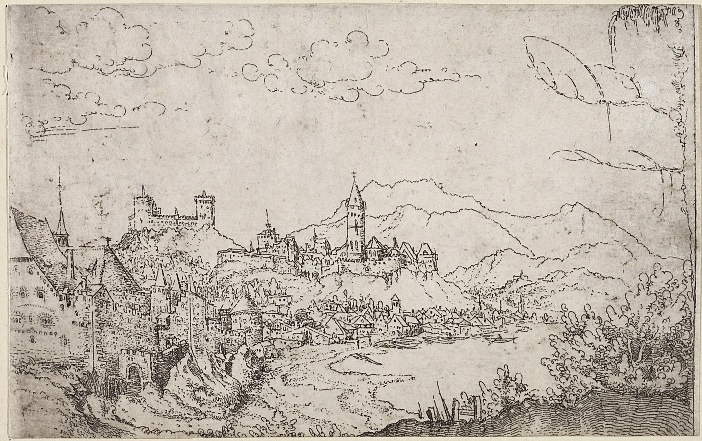
Artistic profile and the Danube School
Altdorfer is widely regarded as a leading voice of the so-called Danube School, a regional movement that emphasized dramatic, emotive landscapes and luminous atmospheres along the Danube valley, active in parts of Germany and Austria. Alongside contemporaries such as Wolf Huber, he helped shift attention in Northern art toward nature as a subject in its own right rather than merely a backdrop for narrative scenes.
Works, techniques and subjects
His output includes large panel paintings, woodcuts and engravings. One of his best-known paintings, the Battle of Alexander (often called The Battle of Issus, 1529), combines a sweeping landscape with minute, animated figures to create both a historical tableau and a cosmic panorama. He also produced intimate landscapes and religious works in which sky, light and terrain play leading roles. As a printmaker he experimented with small-format compositions and precise engraving methods, contributing to the Northern tradition of reproductive and original prints.
Altdorfer’s activity extended beyond easel painting: he worked as a designer and builder in civic contexts, reflecting his practical engagement with Renaissance architectural and municipal projects. He appears in contemporary records as a master involved in construction and town affairs, a role that influenced his standing in Regensburg.
Connections and legacy
Though part of a broader network of German artists and influenced by the innovations of figures such as Albrecht Dürer, Altdorfer developed a distinctive visual language—especially in his treatment of atmosphere, color and landscape scale. His small-format prints link him to the print culture of places like Nuremberg, and his work is often discussed in relation to the so-called Kleinmeister or "Little Masters" whose finely wrought engravings reached collectors across Europe.
- Dates: born c.1480; died 12 February 1538.
- Major themes: landscape as subject, historical battle-paintings, religious imagery.
- Techniques: panel painting, woodcut and copper engraving (engraver).
- Civic role: active as a Renaissance builder and municipal artist in Regensburg.
Today Altdorfer is valued as a pioneer who helped establish landscape as a principal genre in European art and whose imaginative fusion of nature, narrative and decorative precision marks a distinctive chapter in Northern Renaissance culture.
Tags
Related articles
Author
AlegsaOnline.com Albrecht Altdorfer: Pioneer of Northern Renaissance Landscape Painting Leandro Alegsa
URL: https://en.alegsaonline.com/art/2172