
Cinnabar: the red mercury sulfide mineral and its uses
Cinnabar (HgS) is the principal ore of mercury, known for its bright red color and use as vermilion pigment; it has two crystal forms, a long mining history, and significant toxicity and environmental impacts.
Overview
Cinnabar is the common name for mercuric sulfide, chemical formula HgS. It is the chief ore from which elemental mercury has been obtained for millennia and is widely recognized for its vivid red color when found in the more common crystal form. Cinnabar occurs both as crystalline specimens and as compact, massive deposits that have been mined and processed across many cultures.
Image gallery
8 Images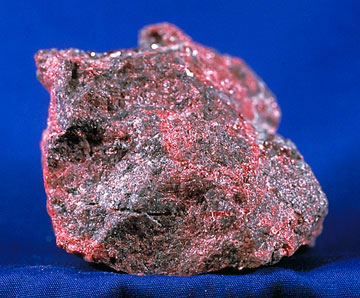



Physical and chemical characteristics
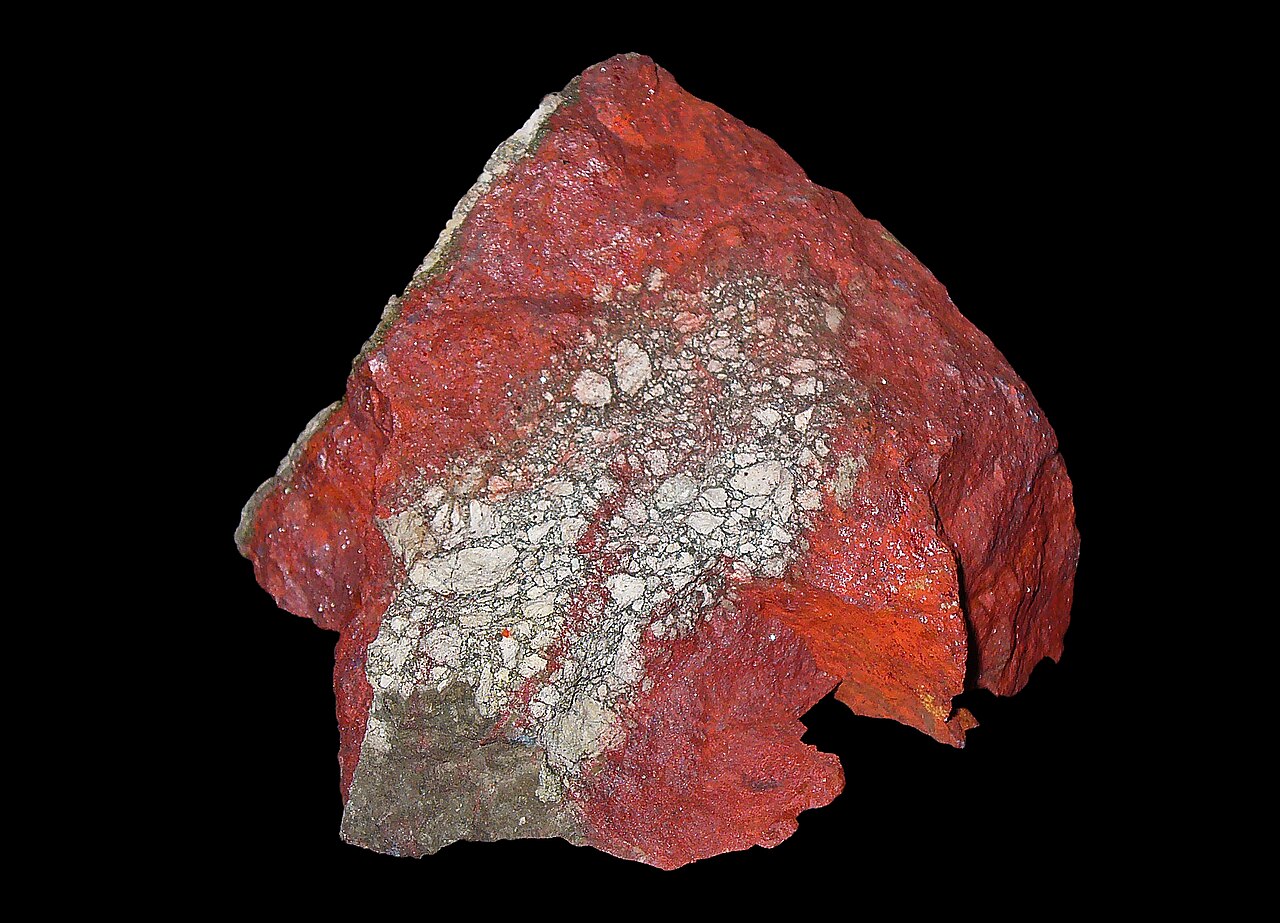
In its red variety cinnabar displays an intense scarlet to brick-red hue with an adamantine to resinous luster and a relatively low Mohs hardness (about 2–2.5). It is a dense mineral because of the heavy mercury atom in its structure. The chemical behavior of HgS is distinct from many common sulfides: it is insoluble in water and stable under normal conditions but will release mercury when heated, a property exploited in historical extraction methods.
Crystal forms and alteration
Cinnabar has two principal crystalline modifications. The red, trigonal form is the traditional pigment and ore. A second, darker cubic form (commonly called metacinnabar) appears black. Over time and under certain environmental conditions — for example exposure to light, atmospheric pollutants or chlorine compounds — red cinnabar and pigments made from it can darken, sometimes forming blackened surfaces or altered phases.
History, mining and cultural uses
Cinnabar has been exploited since prehistoric times. It appears in Neolithic burials and was valued in ancient China, the Roman world and in Mesoamerican cultures for pigment, burial rites and ritual use. The red pigment produced from cinnabar, known as vermilion, has been used in painting, lacquerware and decoration. Historical methods of obtaining mercury involved heating roasted cinnabar to drive off mercury vapor and condense liquid mercury — a process described in early texts and practiced in many mining districts.
Uses, examples and notable facts
- Primary ore for mercury extraction; historically important for mining and metallurgy. Ore
- Source of the pigment vermilion used in art and lacquer. Pigment
- Specimens are collected for their striking color and crystal habit. Crystals
- Known to darken or alter with age, a conservation issue for artworks. Color change
- Has a low hardness and distinct streak often used in identification. Identification
Health, safety and environmental concerns
Cinnabar is a mercury compound and thus poses toxicity risks if inhaled as dust or vapors during heating, or if improperly disposed of. Historical processing and modern spills have led to environmental contamination and bioaccumulation of mercury in food chains. Occupational exposure in mining and pigment manufacture has been a serious health concern, and many modern uses are restricted for safety and environmental protection.
For more technical details, mineralogical context or conservation guidance see resources and databases linked here: mineral data, toxicology summaries, conservation notes, mining history, archaeological reports and chemical references.
Related articles
Author
AlegsaOnline.com Cinnabar: the red mercury sulfide mineral and its uses Leandro Alegsa
URL: https://en.alegsaonline.com/art/20415
Sources
- doi.org : 10.1007/BF01922425
- worldcat.org : 0014-4754
- pubmed.ncbi.nlm.nih.gov : 7649232