
Chili pepper: overview, characteristics, history, uses and distinctions
Summary of the chili pepper (Capsicum): botanical background, origin in the Americas, culinary and medicinal uses, major varieties, cultivation notes and its distinction from black pepper.
Overview
The chili pepper is the edible fruit of plants in the genus Capsicum, members of the nightshade family. In English the name is often written "chili", "chile" or "chilli"; it should not be confused with the country Chile. The pepper is botanically a fruit but is commonly used as a spice or a vegetable depending on culinary context.
Image gallery
10 Images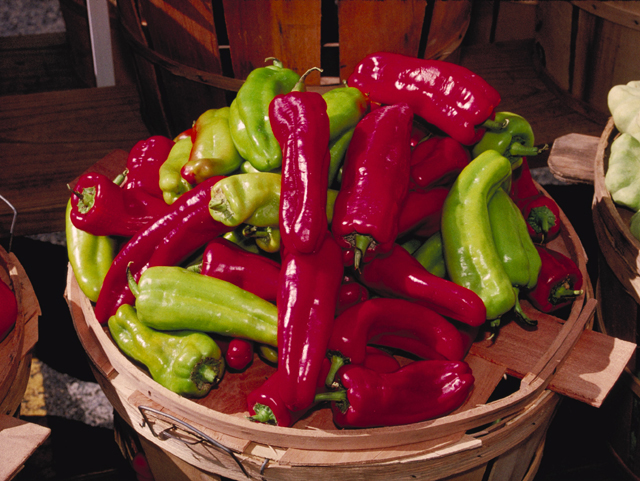


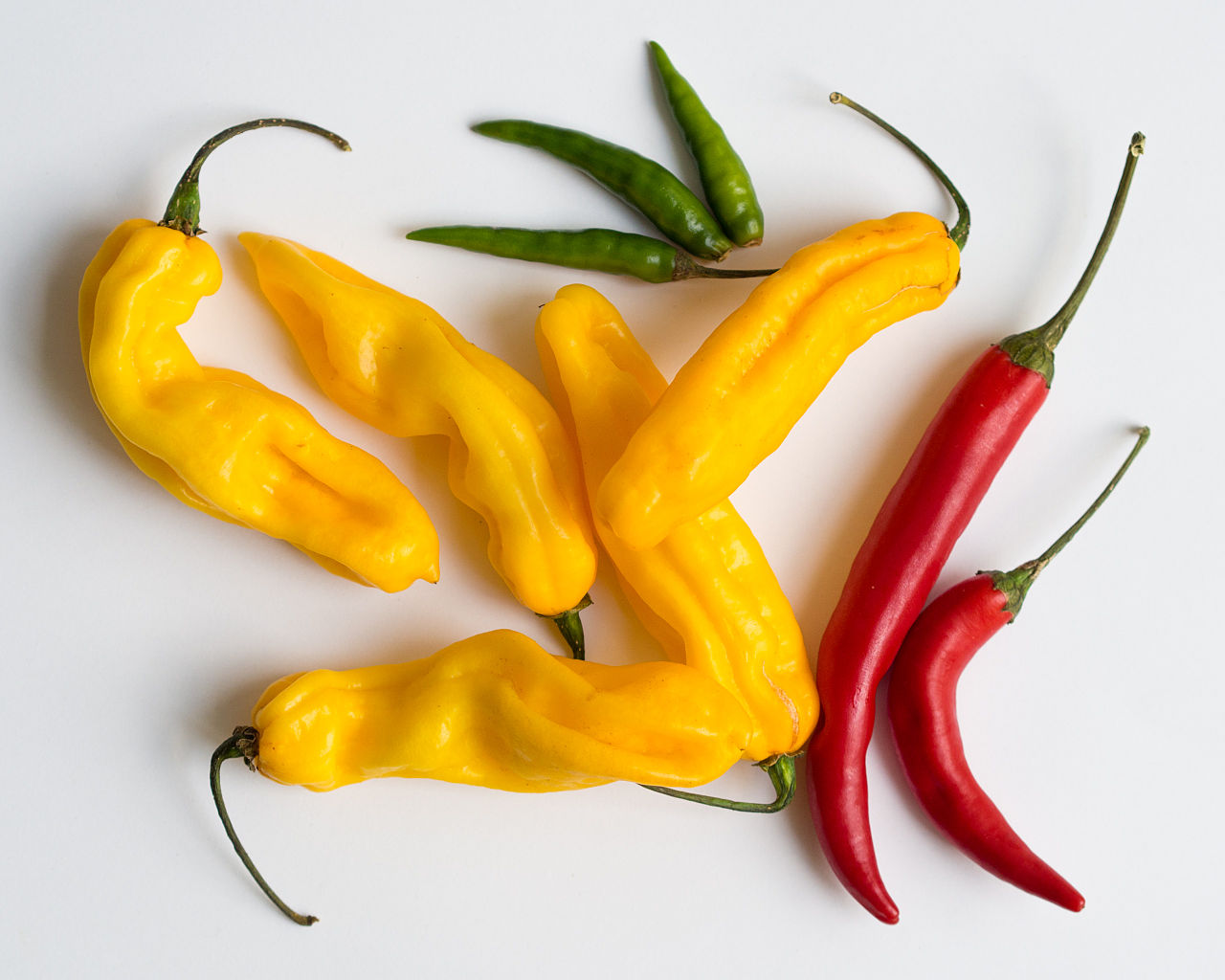


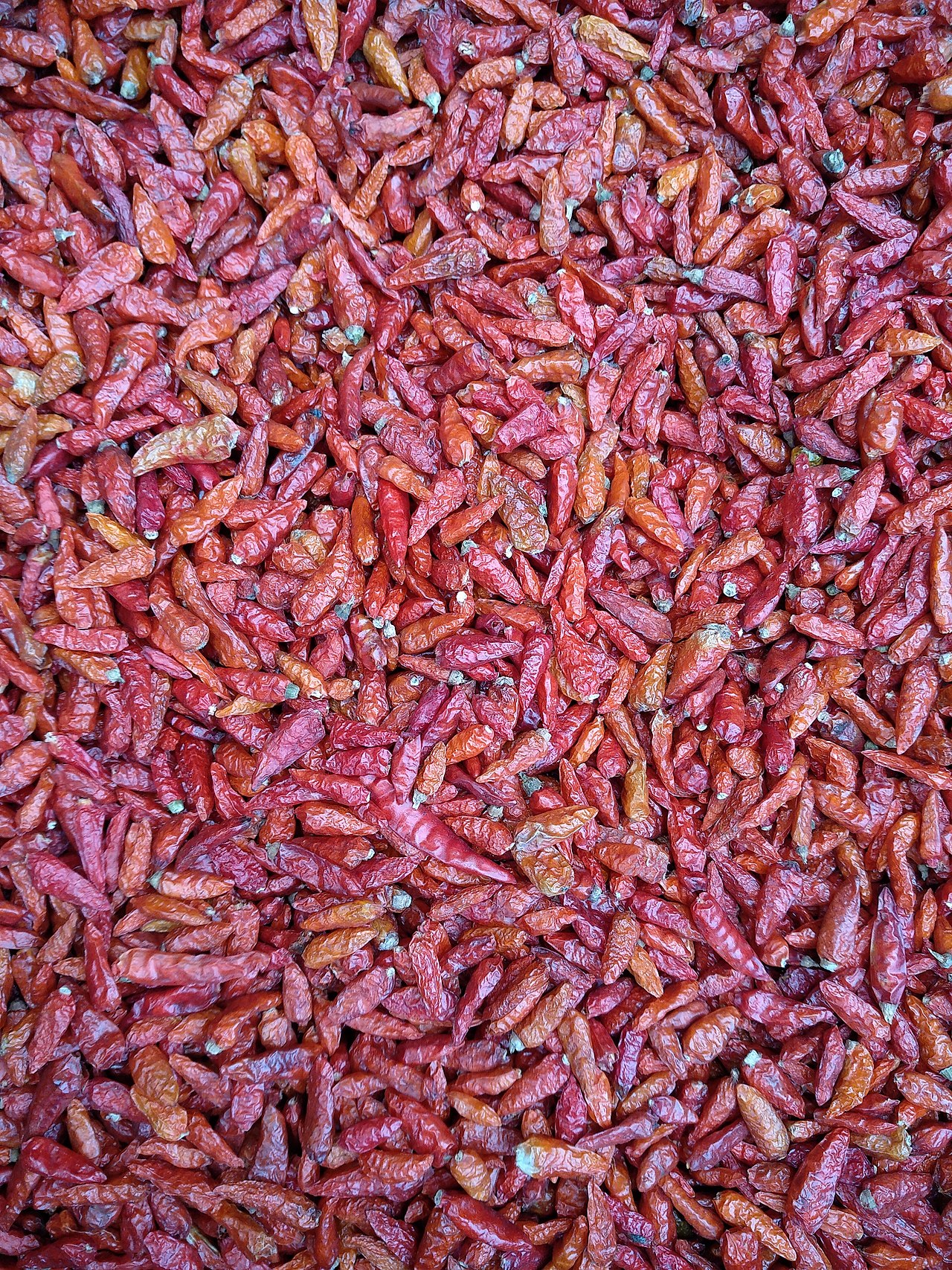

Botanical characteristics
Chili plants (Capsicum species) vary from low annuals to perennial shrubs in warm climates. The visible part called the pepper comprises a skin, a fleshy wall, a central placenta and the seeds. Heat is produced by capsaicinoid compounds (capsaicin being the most cited) concentrated in the inner tissues; heat intensity is measured empirically on scales such as the Scoville scale.
Origin and global spread
Domesticated in the Americas, especially regions of Mexico and Central and South America, chilies were carried worldwide after contact between the Old and New Worlds. Within a few centuries they became integral to cuisines in Asia, Africa and Europe, adapting to many local agricultural and culinary traditions.
Uses and importance
Chilies are used fresh, dried, smoked, pickled, powdered and processed into sauces. They function as spices to add heat and flavor, or as vegetables in salads, sautés and stuffed preparations. Capsaicin also has medicinal and industrial roles: topical analgesics, digestive aids in some traditions, and as an active compound in animal repellents and law-enforcement sprays.
Cultivation, varieties and examples
Gardeners select varieties for heat level, flavor, color and shape. Some types are grown ornamentally for their bright fruits. Typical categories include mild sweet peppers, medium-heat types and very hot cultivars. Common examples include:
- Jalapeño and serrano — medium heat and common in fresh cooking
- Cayenne and paprika types — often dried and powdered
- Habanero and similar cultivars — high heat, fruity aromas
- Bell peppers — sweet, non-pungent varieties
Notable facts and distinctions
Chilies are a rich source of vitamins (notably vitamin C and provitamin A) and antioxidants. They are botanically unrelated to black pepper (Piper nigrum), which comes from a different plant family. For further botanical or culinary reference see resources on Capsicum species and historical summaries of their diffusion from Mexico to global cuisine. Academic and cooking texts provide additional details on cultivation, pungency measurement and culinary techniques involving chilies.
Related articles
Author
AlegsaOnline.com Chili pepper: overview, characteristics, history, uses and distinctions Leandro Alegsa
URL: https://en.alegsaonline.com/art/19692
Sources
- commons.wikimedia.org : Chili peppers
- en.wikibooks.org : Cookbook
- en.wikibooks.org : capsicum
- eurekalert.org : "Birthplace of the domesticated chili pepper identified in Mexico" Eurekalert April 21, 2014
- hort.purdue.edu : Progress in new crops
- i.word.com : "chili" from Merriam-Webster
- thehindubusinessline.com : "Fall in exports crushes chilli prices in Guntur"
- sundaytimes.lk : "Chilli, Capsicum and Pepper are spicy plants grown for the pod. Green chilli is a culinary requirement in any Sri Lankan household"