
Cattle egret: a widespread heron that follows livestock
A compact, white heron (Bubulcus ibis) known for feeding beside cattle and other large mammals. Cosmopolitan distribution, colonial nesting, breeding plumes, and both beneficial and problematic interactions with humans.
Overview
The cattle egret (Bubulcus ibis) is a small, stocky heron-like bird notable for its association with grazing mammals. It is the sole species in the genus Bubulcus and belongs to the broader heron group within the Ardeidae family. This species has a very broad, nearly cosmopolitan distribution and is commonly split into two regional subspecies. Its unusual ecology — feeding on land rather than primarily in water — distinguishes it from most other members of the heron family.
Image gallery
10 Images


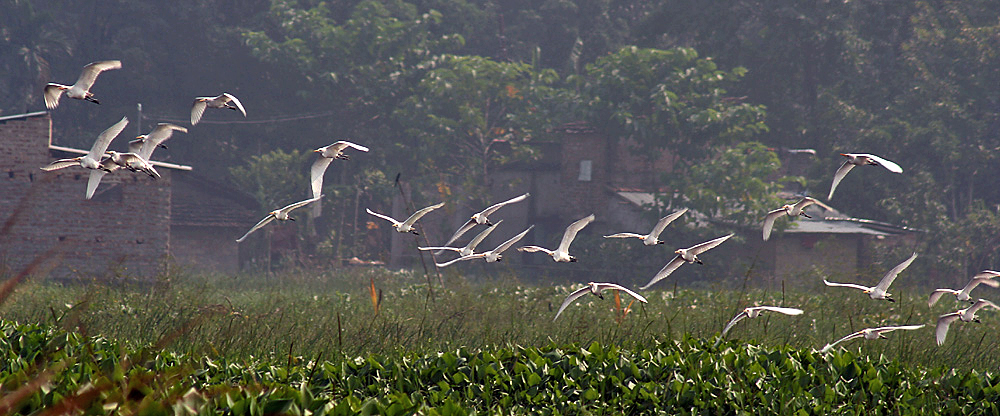
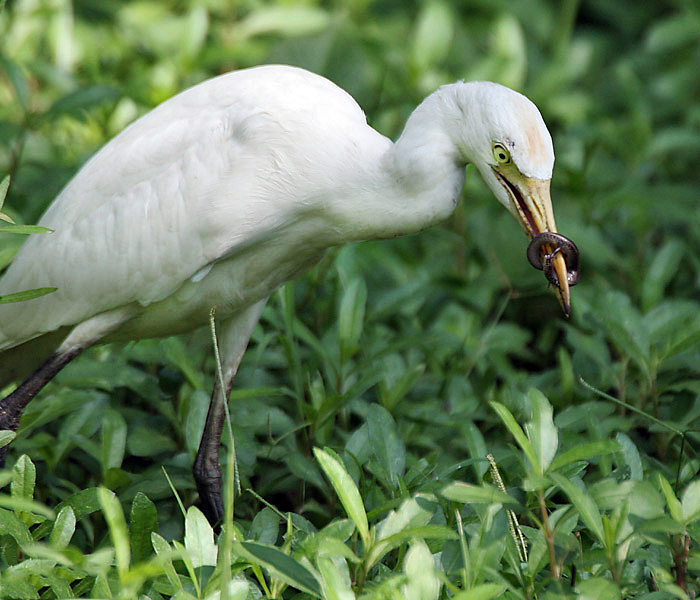


Appearance
Cattle egrets are compact and mainly white, gaining attractive colored feathers in the breeding season. Their base coloration of white plumage contrasts with short, buff to orange breeding plumes on the head, chest and back. They have a relatively short neck, a stout yellow bill, and legs that range from yellowish to grayish. In non-breeding months their profile is plain white, while breeding birds are more ornate and conspicuous.
Feeding and behaviour
Unlike most herons, cattle egrets routinely feed in dry, short grass and cultivated fields. They often follow large mammals — particularly cattle, horses and other grazing animals — to capture invertebrates and small vertebrates that the mammals disturb. Their diet consists mainly of insects but may include other small vertebrates when available. They will also pick ectoparasites such as ticks from the hides of livestock.
Breeding, movement and colonies
Cattle egrets nest in colonies, usually in trees or shrubs near water or wetlands, and commonly share rookeries with other wading birds. They lay eggs in communal nests and display the characteristic buff breeding plumage at that time of year. Some populations are migratory, while others disperse more locally after breeding and establish new colonies when opportunities arise.
Origin, expansion and relationship with humans
Native to parts of Asia, Africa and Europe, the cattle egret expanded rapidly during the 19th and 20th centuries and has colonised large areas of the Americas, Australasia and many islands. This range expansion is closely linked to the worldwide spread of domesticated cattle and other grazing livestock, and to human changes in land use that create suitable feeding habitat.
Importance and notable facts
- Ecological role: can reduce pest insects and remove ticks from livestock, offering a form of natural pest control.
- Human conflicts: can be a hazard at airports due to flocking behaviour and has been implicated in the movement and local spread of ticks and associated diseases.
- Recognition: easy to identify by its compact shape, white body and orange-buff breeding feathers, and its habit of feeding beside large mammals.
Overall, the cattle egret is an adaptable bird that illustrates how a species can exploit niche opportunities created by human agriculture and global animal movements.
Range overview | Herons | Ardeidae family | Plumage | Breeding plumage | Large mammals | Diet items | Asia | Africa | Europe | Colonisation | Domesticated cattle | Migration
Questions and answers
Q: What is the cattle egret?
A: The cattle egret is a species of heron found in the tropics, subtropics and warm temperate zones.
Q: How many subspecies of cattle egret are there?
A: There are two subspecies of the cattle egret – the western cattle egret and the eastern cattle egret.
Q: What is the appearance of the cattle egret?
A: The cattle egret is a white bird with buff plumes in the breeding season.
Q: Where does the cattle egret usually nest?
A: The cattle egret usually nests in colonies near bodies of water, often with other wading birds.
Q: What is the diet of the cattle egret?
A: The cattle egret feeds in dry grassy habitats and feeds on insect and small vertebrate prey disturbed by cattle and other large mammals. It also captures ticks and flies from cattle.
Q: Why has the distribution of the cattle egret expanded rapidly?
A: The distribution of the cattle egret has expanded rapidly because humans now raise domesticated cattle throughout most of the world.
Q: What are some potential dangers of the cattle egret?
A: The cattle egret can be a safety hazard at airfields and has been implicated in the spread of tick-borne animal diseases.
Related articles
Author
AlegsaOnline.com Cattle egret: a widespread heron that follows livestock Leandro Alegsa
URL: https://en.alegsaonline.com/art/17661
Sources
- iucnredlist.org : "Bubulcus ibis"
- bna.birds.cornell.edu : The Birds of North America Online
- dx.doi.org : 10.2173/bna.113
- jstor.org : jstor.org/stable/1521386
- birds.cornell.edu : "Cattle Egret"
- elibrary.unm.edu : "Spread of the Cattle Egret in the Western Hemisphere"
- news.bbc.co.uk : "First cattle egrets breed in UK"
- britishbirds.co.uk : "Recent reports"
- independent.ie : "Flying in to make new friends"
- notornis.org.nz : "Cattle Egrets: South to Tasmania and New Zealand for the winter"
- zoosprint.org : "Cattle egret as a biocontrol agent"
- jstor.org : "The Food of the Cattle Egret"
- doi.org : 10.2307/2402882
- jstor.org : "Foraging success of Cattle Egrets, Bubulcus ibis"
- doi.org : 10.2307/2424157