
Caudipteryx — a small feathered oviraptorosaur
Small Early Cretaceous oviraptorosaur from northeastern China with bird-like feathers and short forelimbs; key fossil linking non-avian dinosaurs and birds.
Overview
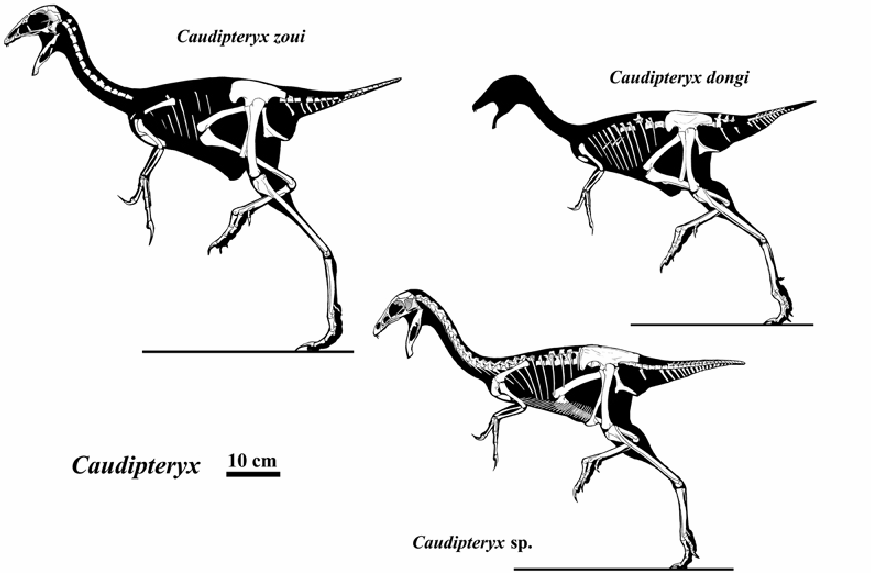
Caudipteryx is a small, bipedal dinosaur from the Early Cretaceous of northeastern China (Liaoning Province). Measuring under a metre in total length, it combined a bird-like external appearance with a skeleton that places it among the oviraptorosaur theropods rather than within modern birds.
Image gallery
10 Images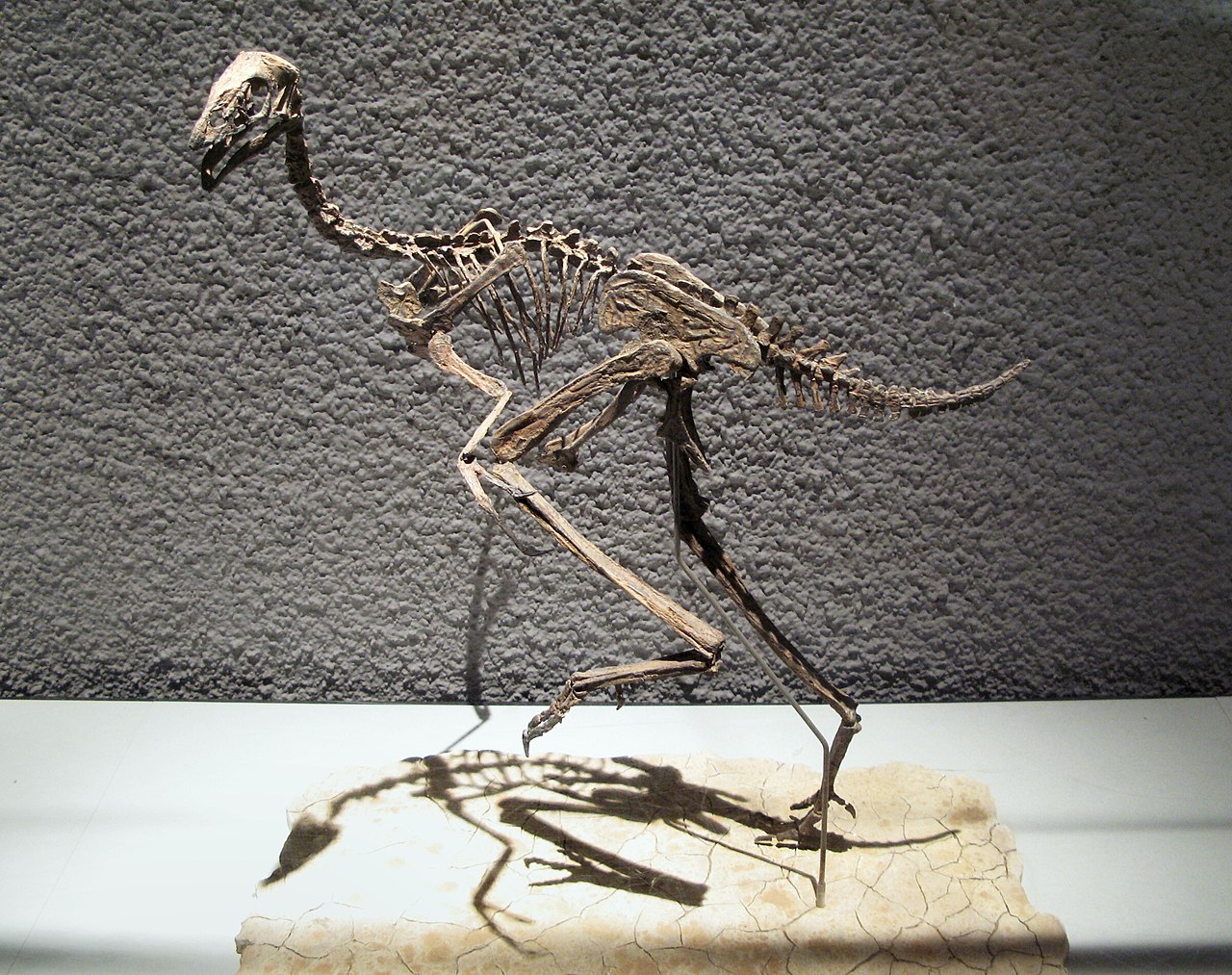


Anatomy and feathers
The animal had a short, robust skull with a beak-like front and small teeth toward the back of the jaws. It bore a fan of paired tail feathers and a fringe of well-developed, pennaceous feathers along the arms. These feathers were structurally very similar to those of living birds, showing a central shaft and vanes, but they were largely symmetrical and the forelimbs were too short to support powered flight—so their function was likely display, insulation or brooding rather than sustained flying. In appearance Caudipteryx is often compared to Archaeopteryx, though the two occupy different positions on the dinosaur–bird family tree.
Classification and discovery
Fossils of Caudipteryx were unearthed in the rich fossil beds of northeastern China and described from multiple specimens. Paleontologists classify it as a member of the oviraptorosaur group and note close affinities with taxa such as Oviraptor and the related genus Protarchaeopteryx. Early discussion debated whether such forms were primitive birds or non-avian dinosaurs, but the prevailing view treats Caudipteryx as a non-avian theropod that retained many bird-like traits.
Paleobiology and significance
Dietary interpretations vary: jaw shape and comparisons with related animals suggest an omnivorous to insectivorous habit, and some authors have described it as an insectivore or seed-eater. Long legs indicate it was a capable running animal. Caudipteryx is important because its preserved feathers provide clear evidence that complex, pennaceous feathers evolved in non-avian theropods and were not unique to flight-capable birds.
Notable features
- Small size: less than one metre long, lightweight and bipedal.
- Feathered tail and arm fringes resembling modern bird feathers.
- Arms too short for flight; feathers likely used for display, insulation, or brooding.
- Clarified the evolutionary relationship between birds and certain theropod dinosaurs.
Further reading on Caudipteryx can be found through museum summaries and peer-reviewed literature that discuss Liaoning fossils and oviraptorosaur anatomy. For general comparisons and broader context see sources on early feathered theropods and bird origins.
dinosaur | feathered | Oviraptor | Archaeopteryx | Protarchaeopteryx | China | insectivore
Related articles
Author
AlegsaOnline.com Caudipteryx — a small feathered oviraptorosaur Leandro Alegsa
URL: https://en.alegsaonline.com/art/17685