
Castilleja (Indian paintbrush): hemiparasitic wildflowers of the Americas and Eurasia
Castilleja, known as Indian paintbrush or prairie‑fire, is a genus of ~200 hemiparasitic annual and perennial herbs with colorful bracts, native to the Americas and parts of northern Eurasia.
Overview
Castilleja is a genus of roughly 200 species commonly called Indian paintbrush or prairie‑fire. The group is best known for showy, brightly colored bracts that surround relatively small flowers. For a general genus summary see Castilleja (genus).
Image gallery
10 Images




Description and biology
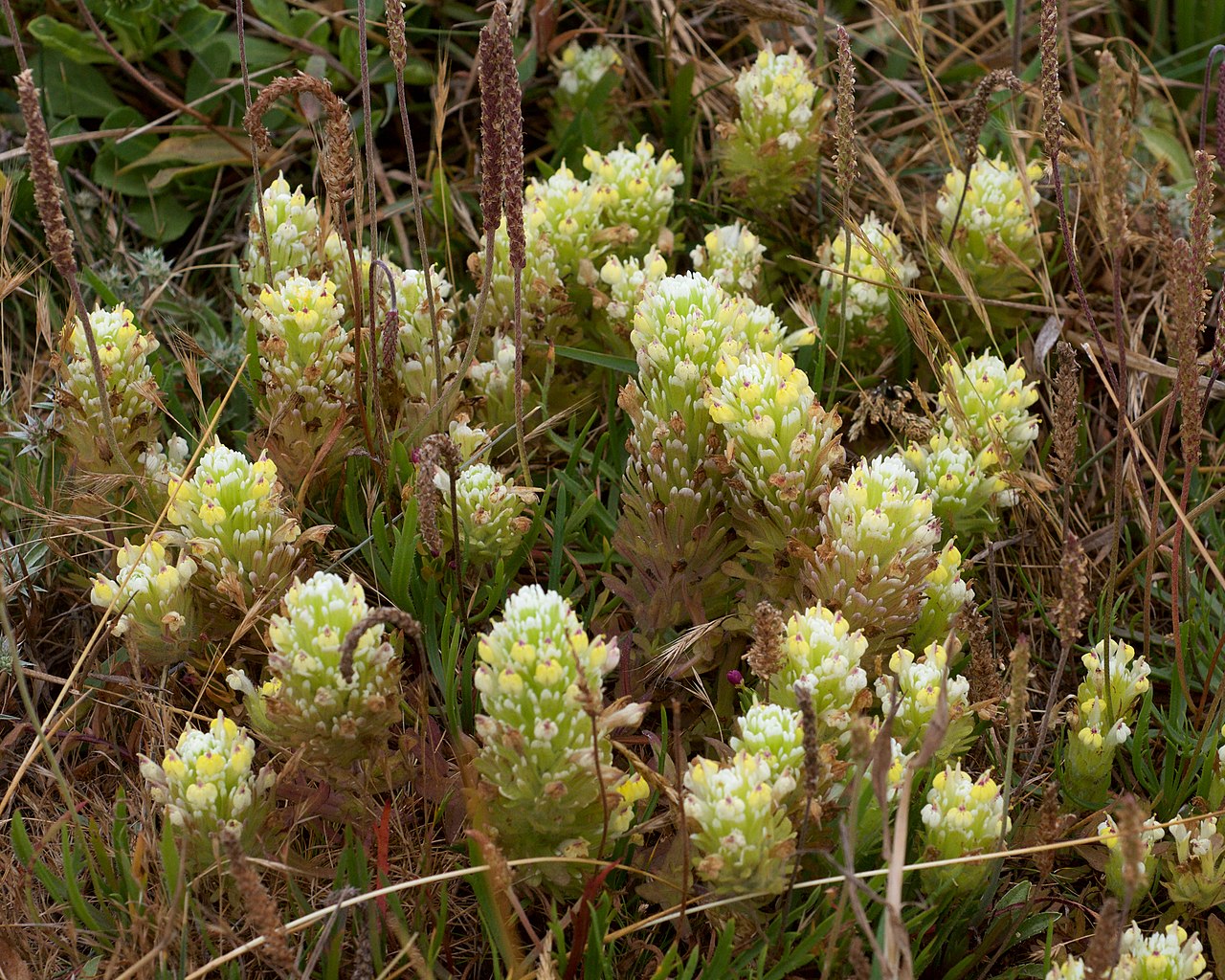
Plants in this genus may be annual or perennial herbs. The vivid colors often attributed to their blooms are usually bracts rather than petals. Castilleja species are hemiparasitic: they photosynthesize but form haustorial connections to the roots of neighboring plants to obtain water and nutrients.
Distribution and habitat
Most Castilleja species occur in the western Americas. Populations range from Alaska southward through western North America to the highlands and montane regions as far as the Andes. A number of species occupy temperate meadows, prairies, sagebrush steppe and alpine slopes in the western Americas, and a few extend into northern Asia and far northwestern Europe, with one reported as far west as the Kola Peninsula.
Ecology and pollination
Castilleja plants play distinctive roles in plant communities because of their parasitic habit and their relationships with pollinators. Tubular flowers and bright bracts attract hummingbirds, butterflies and bees; in many regions hummingbirds are important pollinators. The hemiparasitism can influence local vegetation composition by selectively drawing resources from host species.
Uses, cultural notes, and conservation
Several species are cultivated for ornamental use because of their bold colors. Indigenous peoples used some species for medicinal and dyeing purposes in traditional contexts. Castilleja can be problematic for grazing animals when abundant—some species are considered mildly toxic to livestock. Conservation status varies: while many species are common, a number have restricted ranges and are of conservation concern.
Notable species and distinctions
Well‑known members include scarlet and crimson types often called scarlet paintbrush; others are famed for their size or high‑elevation habitat. The genus is readily distinguished from similar wildflowers by its combination of colorful bracts, small tubular flowers and hemiparasitic root connections.
For further information and species lists consult regional floras and resources: general overview, distribution summaries for the western Americas, and specific range notes such as Alaska, the Andes and the Kola Peninsula.
Related articles
Author
AlegsaOnline.com Castilleja (Indian paintbrush): hemiparasitic wildflowers of the Americas and Eurasia Leandro Alegsa
URL: https://en.alegsaonline.com/art/17502