
Carboxylic acid
Organic compounds containing a carboxyl (COOH) group; weak acids common in biology, food and industry with characteristic structure, reactions, and applications.
A carboxylic acid is an organic molecule that contains the carboxyl functional group, commonly written as COOH. This group combines a carbonyl portion with a hydroxyl bound to the same carbon atom and gives the compound its characteristic chemical behavior. Carboxylic acids range from simple molecules such as formic and acetic acid to long-chain fatty acids found in biological lipids.
Image gallery
4 Images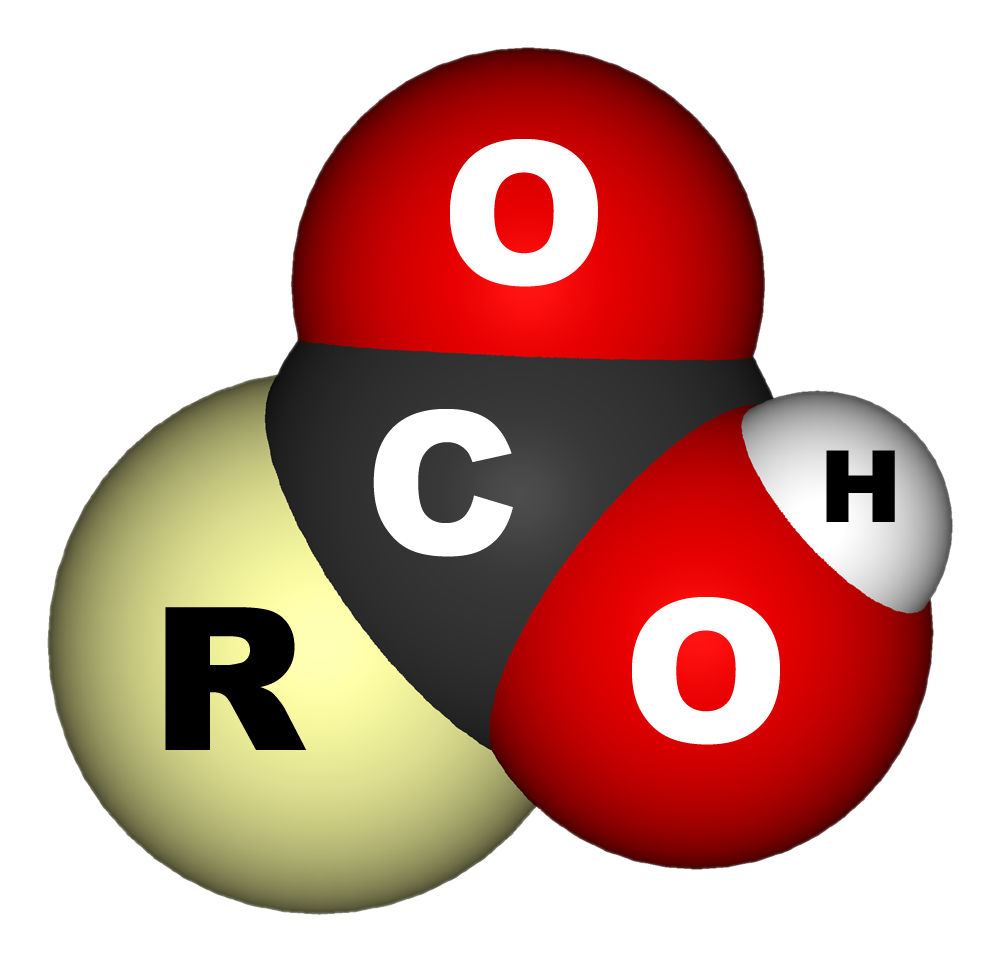


Structure and acidity
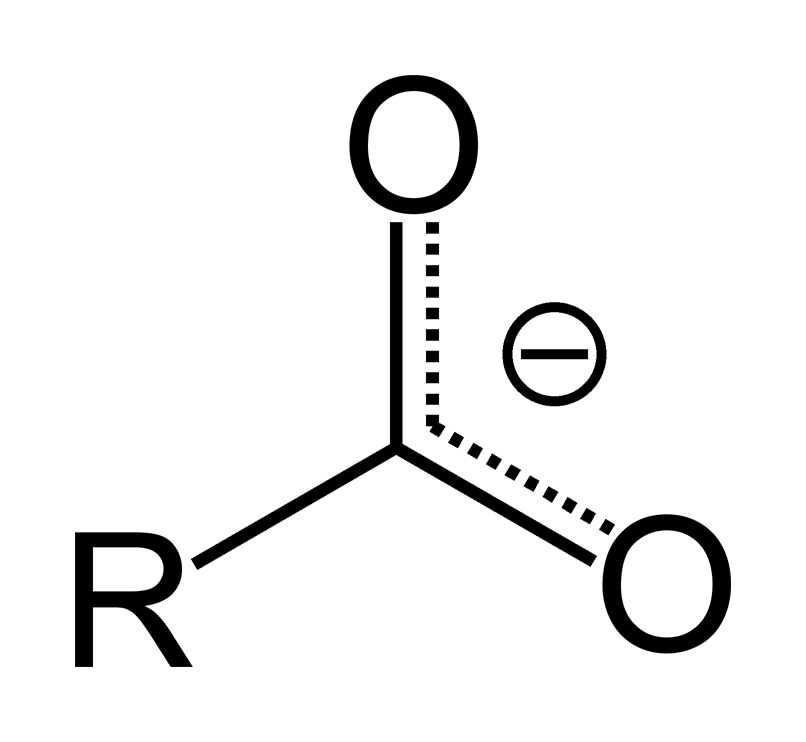
The defining feature of these compounds is the carboxyl group (COOH), which includes a carbonyl center (a C=O double bond) adjacent to an −OH unit. The proximity of the carbonyl stabilizes the negative charge that forms when the hydroxyl proton is lost, so carboxylic acids can donate a proton to bases more readily than ordinary alcohols. Even relatively weak bases can deprotonate many carboxylic acids; see a typical weak base for comparison. This acidity underlies many characteristic reactions such as neutralization, esterification and formation of acid derivatives.
Occurrence and common examples
Carboxylic acids are widespread in nature and everyday materials. A familiar example is acetic acid, the main component of household vinegar. Short-chain carboxylic acids contribute to the taste and smell of foods and beverages and are present in many natural products; they appear throughout food chemistry. Long-chain carboxylic acids form the building blocks of fats and oils—often referenced as fatty acids—and are components of items like chocolate and coconut oil.
Uses, reactions and derivatives
Because of their reactivity, carboxylic acids are central to synthetic chemistry and industry. They are precursors to esters, amides and anhydrides, and are used in producing polymers, pharmaceuticals, fragrances and food preservatives. Their surfactant derivatives and salts play a major role in cleansers; ordinary soaps are produced by converting triglycerides into carboxylate salts. In the laboratory, common transformations include reduction to alcohols and conversion to acid chlorides for further coupling.
Physical properties and solubility
Physical behavior depends strongly on chain length and substitution. Small carboxylic acids are typically miscible with water because they can hydrogen-bond with solvent, while larger, nonpolar chains are soluble mainly in organic solvents. Many show characteristic odors, and their boiling points are often higher than comparable hydrocarbons due to intermolecular hydrogen bonding. Nomenclature follows systematic rules (IUPAC names end in "-oic acid"), but common trivial names remain widely used.
- Key characteristics: carboxyl functional group, acidic proton, ability to form esters and salts.
- Biological importance: metabolic intermediates, components of fats and amino acid side chains.
- Industrial roles: solvents, precursors, surfactants and food additives.
For further reading on structure, reactivity and applications, consult introductory texts on organic chemistry or specialized reviews on fatty acids and industrial organic synthesis.
Tags
Related articles
Author
AlegsaOnline.com Carboxylic acid Leandro Alegsa
URL: https://en.alegsaonline.com/art/16901