
Carbon tetrachloride (CCl4)
Carbon tetrachloride is a colorless, nonflammable chlorinated solvent (CCl4) historically used in industry and refrigeration; now limited because of toxicity and ozone depletion.
Overview
Carbon tetrachloride is an inorganic organic halide with the formula CCl4. It is a dense, colorless liquid with a sweet, ether-like odor. Once widely used as a solvent, refrigerant component and fire-extinguishing agent, its use has declined because of human health risks and its role in stratospheric ozone depletion. For basic chemical data see chemical profiles.
Image gallery
9 Images



Properties and structure
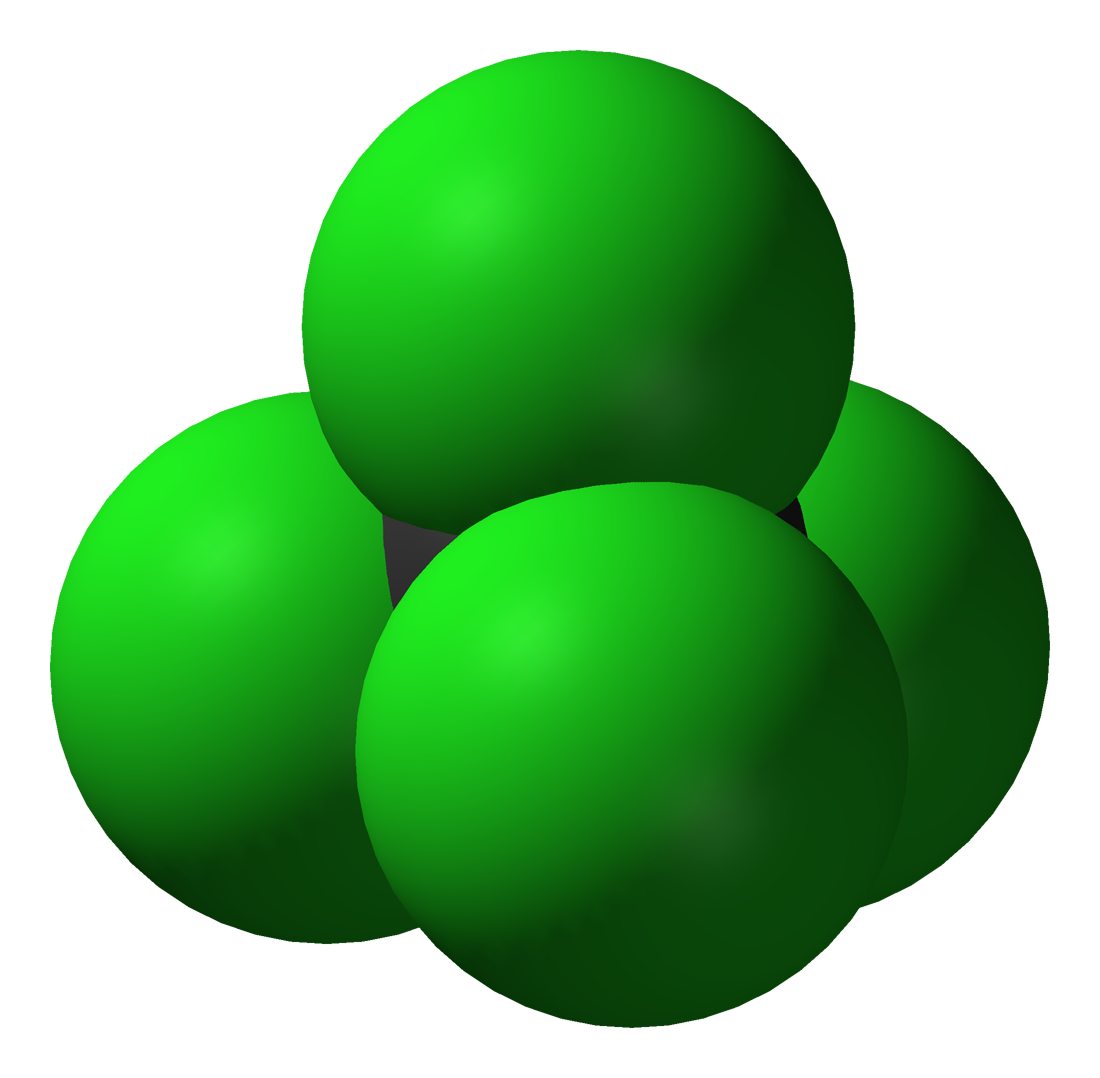
CCl4 has a tetrahedral molecular geometry: a central carbon atom bonded to four chlorine atoms. The molecule is nonpolar and immiscible with water, which made it an effective solvent for oils and greases. It is relatively volatile and heavier than water. For notes on the carbon oxidation state and bonding see oxidation state resources and bonding summaries.
History and production
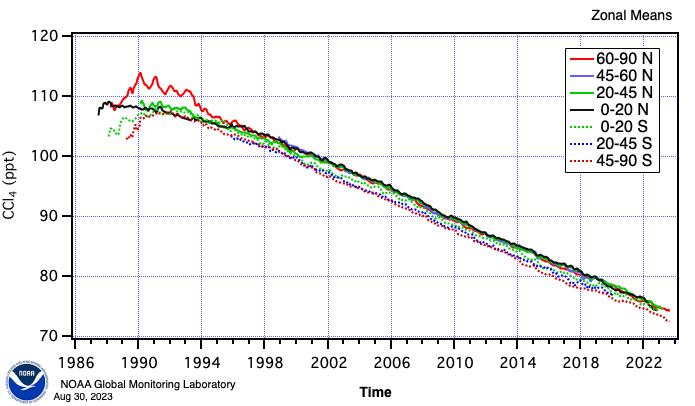
Discovered in the 19th century as a laboratory compound, carbon tetrachloride became a common industrial chemical during the 20th century. It was manufactured by chlorinating methane or other hydrocarbons. Widespread applications and emissions led to its identification as an ozone-depleting substance; production and dispersive uses have been largely curtailed under international agreements and national regulations. Historical manufacturing notes are summarized at industry histories.
Uses and applications
- Solvent for organic compounds in laboratory and limited industrial settings.
- Formerly used in dry cleaning, metal degreasing, and as a fire suppressant.
- Reagent or intermediate in chemical synthesis and occasional use in spectroscopic standards.
Most consumer and large-scale uses have been phased out; continuing applications are tightly controlled. For regulatory guidance and safe-handling, consult safety information.
Health, environmental effects, and distinctions
Carbon tetrachloride is toxic to the liver and kidneys and can depress the central nervous system. Its metabolic activation in the liver can produce reactive species that cause tissue injury. It is also long-lived in the atmosphere relative to many industrial solvents and contributes to ozone depletion; for these reasons it is treated as a hazardous substance in many jurisdictions. Unlike chloroform, CCl4 contains no hydrogen atoms; unlike chlorofluorocarbons, its production and use have been greatly restricted because of environmental impact. Reliable sources should be consulted for exposure limits and remediation practices.
Related articles
Author
AlegsaOnline.com Carbon tetrachloride (CCl4) Leandro Alegsa
URL: https://en.alegsaonline.com/art/16891