
Capparaceae (caper family): overview, traits, classification and uses
Capparaceae, the caper family, comprises mostly tropical trees, shrubs, lianas and some herbs. It includes about 16 genera and up to 480 species, notable for the genus Capparis and the culinary caper bud.
Overview
The Capparaceae, commonly called the caper family, is a group of flowering plants that includes shrubs, small trees, climbing lianas and a few herbaceous species. Members of this family are best known for the caper, the pickled bud of some Capparis species. Estimates vary, but the family is generally treated as containing around 16 genera and up to 480 species, though modern molecular studies have revised which genera properly belong here.
Image gallery
2 Images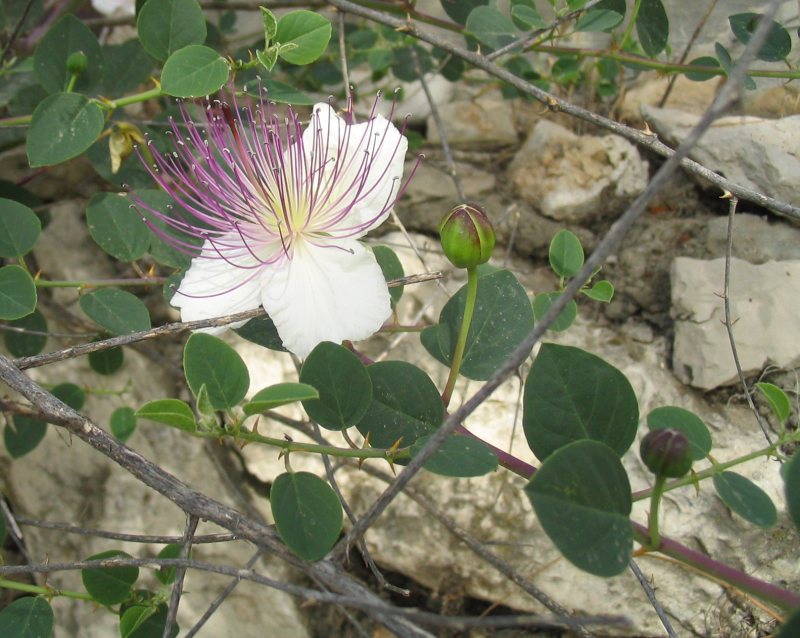

Characteristics
Plants in the Capparaceae show diverse growth forms — from erect shrubs to climbing vines and occasional herbs — and are often adapted to warm climates. Many species have simple leaves and conspicuous flowers with numerous stamens, giving a showy appearance. Some produce spiny branches or thorns. Fruits range from fleshy berries to elongated pods; several species yield edible buds or fruits used in regional cuisines. These growth forms and reproductive features help distinguish the group in the field.
Taxonomy and selected genera
The circumscription of Capparaceae has changed over time as botanists applied molecular data to traditional classifications. Historically associated with the order Capparales, these plants are now placed in the order Brassicales, and several genera have been transferred to the related family Cleomaceae. Well-known and relatively large genera include:
- Capparis (about 150 species) — includes the caper bush.
- Maerua (about 100 species) — mostly African and tropical Asian shrubs and trees.
- Boscia (around 37 species) — drought-tolerant shrubs and trees.
- Cadaba (about 30 species) — shrubs with often showy flowers.
Distribution and ecology
Capparaceae are primarily tropical and subtropical, occurring in Africa, Asia, Australia and the Americas, with a few species adapted to Mediterranean climates. Many occupy dry, open habitats such as scrublands and savannas; others grow in forest margins or as climbers in wetter zones. Flowers attract a variety of pollinators, and fruits or buds are eaten by birds and mammals, aiding seed dispersal in many species.
Uses and importance
Several species have economic and cultural value. The most familiar use is culinary: pickled caper buds harvested from some Capparis species are a classic condiment in Mediterranean cuisine. Other species have traditional medicinal uses, and some are grown as ornamentals for their attractive flowers. In arid regions certain genera provide forage or local food sources. Research continues into their phytochemistry and potential applications.
Notable facts and distinctions
Because the family includes both woody and herbaceous plants, it can be mistaken for related groups; careful attention to floral structure and genetic data is often needed for precise identification. Modern phylogenetic work has clarified relationships but also led to redefinition of family boundaries, so botanical treatments may differ. For concise identification guides and further reading, consult specialist floras or botanical databases that treat trees, shrubs and lianas alongside smaller herbs.
Related articles
Author
AlegsaOnline.com Capparaceae (caper family): overview, traits, classification and uses Leandro Alegsa
URL: https://en.alegsaonline.com/art/16781