
Cave of Altamira: prehistoric polychrome paintings in Cantabria, Spain
Altamira is a decorated Paleolithic cave near Santillana del Mar in Cantabria, noted for naturalistic polychrome paintings of bison, horses and hand stencils. The site is protected as a UNESCO World Heritage site.
Altamira is a decorated cave near the town of Santillana del Mar in Cantabria, in northern Spain. Carved in limestone, the cavity extends for roughly 300 metres and contains one of the best-known ensembles of Upper Paleolithic figurative art. The painted ceiling and walls include multi-coloured compositions that rank among the most celebrated examples of prehistoric visual expression in Europe.
Image gallery
6 Images

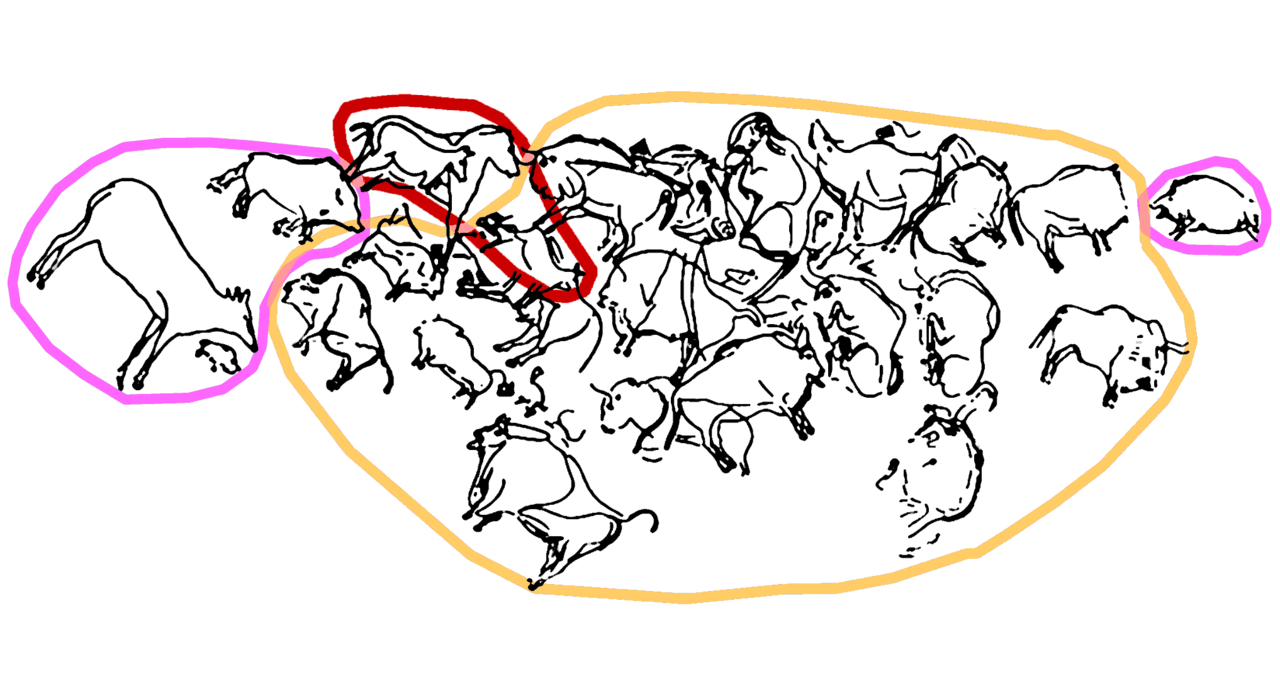


Description and principal motifs
The painted repertoire emphasizes large wild mammals—notably bison, horses and deer—rendered with a strong sense of volume and movement. Artists used charcoal and iron-rich pigments to produce black and red tones, applying them as outlines, washes and stippling. The irregular surface of the rock and its natural bulges were exploited to enhance anatomical features. In addition to animal figures, the cave displays hand stencils and schematic marks that form part of a broader visual program whose full meaning remains the subject of study.
Chronology and archaeological context
Altamira's paintings are conventionally attributed to the Upper Paleolithic, particularly to phases often associated with the Magdalenian tradition, and are generally regarded as Late Ice Age art. Archaeological work in and around the site has recovered tools, faunal remains and other material culture that help place the paintings within human occupations of the region during the last Ice Age. Scientific analyses—including pigment study and stratigraphic investigation—have refined understanding of technique and relative chronology, while some absolute dating methods have been applied cautiously to overcome preservation challenges.
Discovery, interpretation and scholarship
The cave came to modern scholarly attention in the late 19th century and initially provoked debate about the authorship and age of the images. Over time, accumulating evidence supported their prehistoric origin, and Altamira became central to debates about the cognitive and artistic capacities of Paleolithic peoples. Ongoing research continues to address questions of technique, symbolic practice and the social contexts in which the paintings were produced.
Conservation, access and replicas
Conservation of the paintings is a principal concern: changes in microclimate, human presence and biological growth can damage fragile pigments and the rock surface. To limit impact, public access has been strictly regulated and the original chambers are monitored. Public interpretation relies on high-quality replicas and museum displays that allow visitors to appreciate the cave art without endangering the originals. These measures form part of a broader protective strategy endorsed by national and international bodies.
Significance and heritage status
Altamira is widely regarded as a cornerstone for the study of prehistoric art because of its naturalistic style, technical refinement and complex iconography. The cave complex was inscribed on the World Heritage list in recognition of its outstanding universal value, a designation administered by UNESCO. Scholars, conservators and the public continue to regard Altamira both as an archaeological treasure and as a key reference point for understanding human creativity in the Paleolithic.
- Key features: polychrome depictions of large mammals, hand stencils and use of rock relief to create three-dimensional effects.
- Materials and technique: charcoal, ochres and iron-rich pigments applied by brushing, blowing and finger work.
- Management: restricted access, environmental monitoring, detailed study and use of replicas for education and tourism.
Altamira remains an essential site for anyone studying the origins of figurative art and the cultural life of Upper Paleolithic communities. It continues to attract interdisciplinary attention from archaeologists, conservators and historians of art while its protective measures seek to ensure its survival for future study and appreciation.
Related articles
Author
AlegsaOnline.com Cave of Altamira: prehistoric polychrome paintings in Cantabria, Spain Leandro Alegsa
URL: https://en.alegsaonline.com/art/17731
Sources
- nybooks.com : Secrets of the Cave Paintings
- nybooks.com : The New York Review of Books
- doi.org : 10.1126/science.1219957