
City of David: archaeological site and historic quarter of Jerusalem
The City of David is an archaeological area south of Jerusalem's Old City walls, associated with ancient Jerusalem in biblical tradition, notable for Hezekiah's tunnel, stepped masonry and ongoing debates over interpretation.
Overview
The City of David (Hebrew: Ir David, Arabic: Wadi Hilweh) is an archaeological and historic district adjacent to the south‑eastern corner of Jerusalem's Old City walls. It is widely regarded as the area that contained the earliest urban core of Jerusalem in antiquity and is connected in tradition with the biblical figures of David and later Judean kings. The location is also identified by precise coordinates used in mapping and research.
Image gallery
10 Images




Major features and archaeological elements
- Hezekiah's Tunnel (Siloam Tunnel) — an ancient water channel that diverts spring water into the city; attributed to preparations for siege defenses in the Iron Age and associated in sources with King Hezekiah; studied through excavation and engineering analysis (Hezekiah).
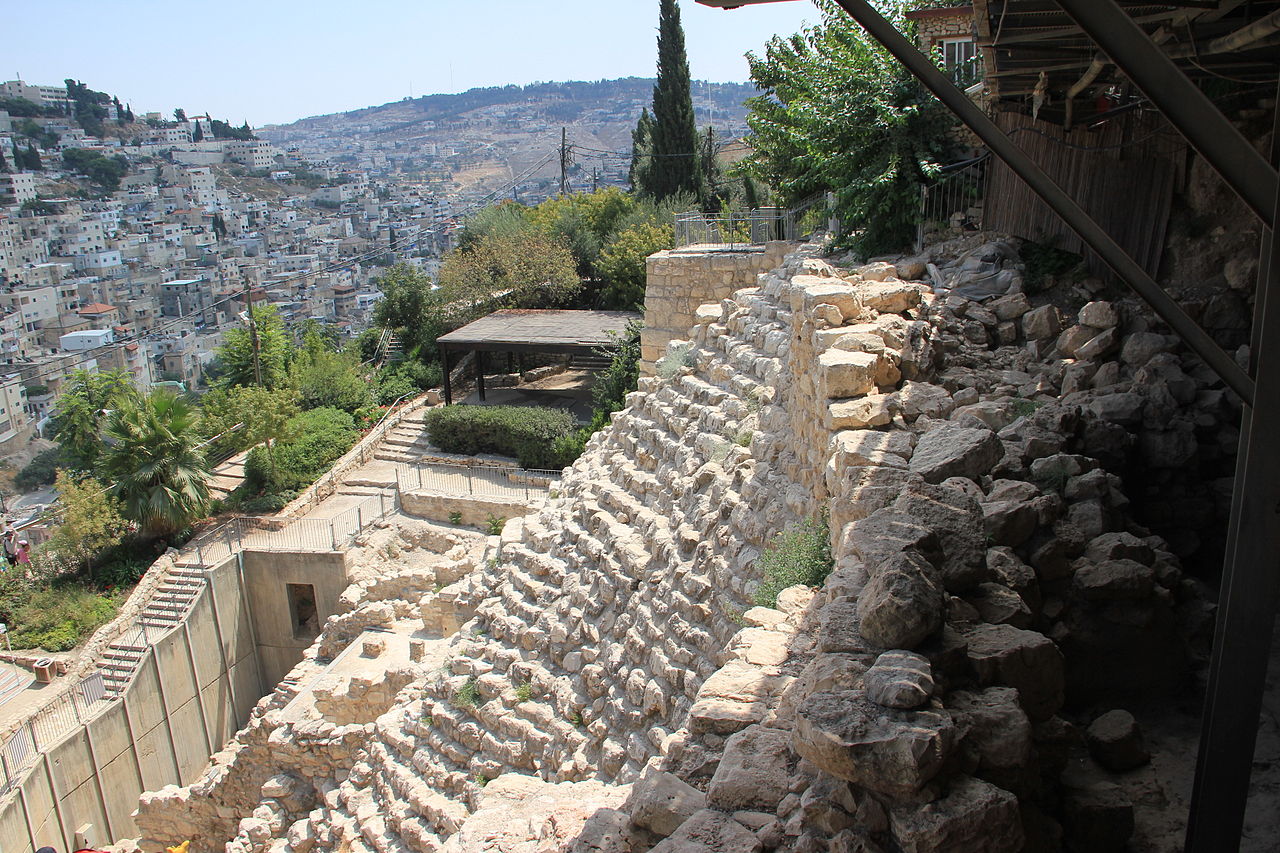
- Stepped Stone Structure and Large Stone Structure — substantial retaining walls and building foundations that demonstrate complex, multi‑period construction phases.
- Warren's Shaft and Pool of Siloam — water system elements used to secure access to drinking water in antiquity.
- Stratified pottery and building remains — layers span the Bronze Age, Iron Age, through later periods, offering material for dating and interpretation.
History, research and interpretation
The site has been the focus of exploration and excavation since the 19th century, carried out by a succession of archaeologists and teams. Interpretations of finds range from cautious to assertive about their relation to specific biblical events or personalities such as King David. Some archaeologists propose that certain large structures could be administrative or royal precincts from the Iron Age; others urge restraint and emphasize the complexity of correlating archaeological layers with historical texts. Scholarly debate continues over dating, function and the relationship between material remains and the biblical narrative.
Modern context and public use
Today the area functions both as an open archaeological park and as a living neighborhood known in Arabic as Wadi Hilweh. It attracts tourists, students and religious visitors, and is used for guided tours, educational programs and ongoing fieldwork. Management, conservation and access have been subjects of political sensitivity because the park lies amid a mixed urban environment and involves local communities and private foundations. Information for visitors and research references are commonly listed by institutions that document the site (site, Old City).
Significance and notable facts
The City of David is significant for its long occupation sequence and for illustrating urban development, water engineering and defensive planning in ancient Levantine cities. It serves as a key case study in how archaeology interacts with religious tradition, national narratives and contemporary urban life. Because claims linking particular structures directly to individual biblical figures remain debated, many researchers present findings with caution and emphasize the value of continued excavation and interdisciplinary study (Hebrew name, palace). For further reading and institutional perspectives, see museum catalogs, excavation reports and public guides (coordinates, historical figure, Hezekiah).
Related articles
Author
AlegsaOnline.com City of David: archaeological site and historic quarter of Jerusalem Leandro Alegsa
URL: https://en.alegsaonline.com/art/20548