
Californium (Cf): properties, isotopes, uses and history
Californium is a synthetic radioactive actinide (element 98) produced in reactors and accelerators. Notable for its neutron-emitting isotopes, it has specialized uses in industry, research and medicine.
Overview
Californium is a synthetic, radioactive chemical element with the symbol Cf and atomic number 98. It belongs to the actinide series and is a transuranium metal created artificially rather than occurring in appreciable amounts in nature. Early work that led to its discovery used particle bombardment techniques at a California laboratory; the element’s name recalls that origin. Basic descriptions and reference summaries of its properties appear in many chemical databases and textbooks reference.
Image gallery
4 Images


Isotopes and production
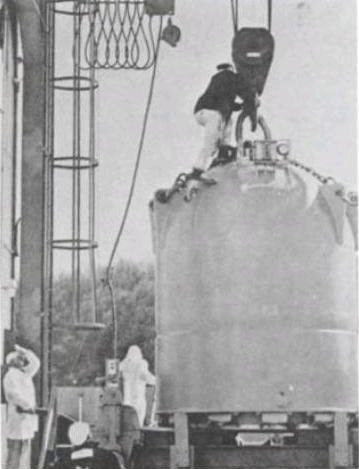
Californium is produced in specialized nuclear reactors and in particle accelerators by successive neutron captures and by heavy-ion bombardment. The element has around twenty known isotopes; most are short-lived. The longest-lived known isotope, californium-251, has a half-life on the order of centuries, while californium-252 has a half-life of approximately 2.6 years and is the most practically used isotope because it emits neutrons spontaneously.
Production routes and technical details are covered in reactor and accelerator literature; major producers operate under strict regulatory controls production reactor sources. Some isotopes are made by bombarding curium targets with alpha particles or by adding neutrons to lighter actinides in high-flux reactors discovery methods target irradiation.
Chemical behavior and compounds
Chemically, californium behaves like a typical late actinide. The trivalent state (Cf(III)) predominates in solution and in most well-characterized compounds, binding as a +3 ion with oxygen- and nitrogen-donor ligands. It forms salts and coordination complexes similar in many respects to the lanthanides and neighboring actinides; aqueous chemistry and solid-state compounds are described in actinide chemistry references chemistry notes compounds. Handling and study require specialized radiochemical facilities because of strong radioactivity.
Uses and applications
Although produced in tiny amounts and expensive, certain californium isotopes—most notably Cf-252—are valued as intense neutron sources. Applications include:
- neutron activation analysis for identifying trace elements and materials analytical use,
- neutron radiography and imaging for non-destructive testing,
- start-up sources for nuclear reactors and reactor diagnostics reactor use,
- well logging in the oil and gas industry to probe geological formations,
- limited medical uses such as certain types of radiotherapy under tightly controlled conditions medical use.
Safety, availability and notable facts
Californium is highly radioactive and can emit neutrons and gamma radiation; therefore it is produced, stored, transported and applied under strict regulatory control. Quantities in use are small and expensive, and only a few institutions worldwide manufacture and supply it. Because of its rarity and radioactivity, californium is primarily an instrument of specialized research, industrial measurement and targeted technical applications rather than a commodity material.
Related articles
Author
AlegsaOnline.com Californium (Cf): properties, isotopes, uses and history Leandro Alegsa
URL: https://en.alegsaonline.com/art/16153