
California giant salamander (Dicamptodon ensatus)
A large, robust salamander native to parts of the western United States, notable for its size, mottled coloration, aquatic larvae and role in stream ecosystems of California and nearby regions.
Overview
The California giant salamander (Dicamptodon ensatus) is a large terrestrial and aquatic amphibian in the family Dicamptodontidae. It is known for its substantial size, stout body and marbled coloration. As a member of the genus Dicamptodon, it is closely related to other giant salamanders of the Pacific coast and interior western United States.
Image gallery
5 Images


Appearance and identification
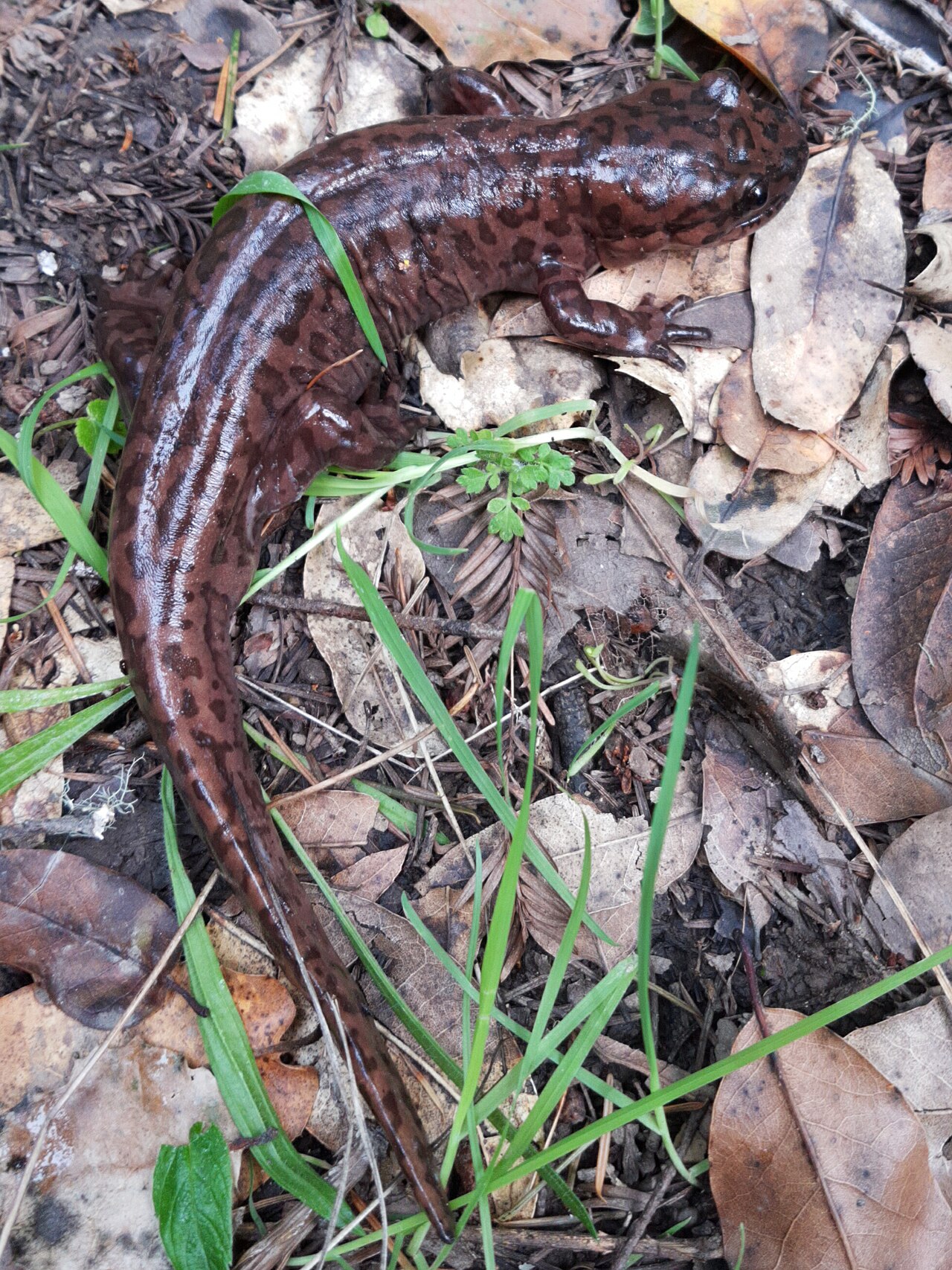
Adults are among the largest salamanders found in North America, with a heavy, flattened head and a broad tail adapted for swimming. Their skin is typically brown or dark with lighter blotches or marbling that can give a mottled appearance. The species shows external gills during the aquatic larval stage; adults develop lungs and move more often on land, though many remain associated with streams.
- Size: notably large compared with many other salamanders in the region.
- Color: mottled brown or dark background with lighter patches or marbling.
- Head and tail: broad head and laterally compressed tail suited to swimming.
Distribution, habitat and life cycle
The California giant salamander lives in cool, well-oxygenated streams, seeps and adjacent moist forests. It is native to parts of California and nearby areas of the western United States, often favoring shaded, rocky stream channels and riparian woodlands. Reproduction includes an aquatic larval stage with gills; larvae feed in streams before undergoing metamorphosis to more terrestrial adults. In some local populations, individuals may retain juvenile features longer under certain environmental conditions.
Ecology and importance
Dicamptodon ensatus plays a role as both predator and prey within stream and forest food webs. Larvae and adults consume a variety of invertebrates and occasionally small vertebrates, helping control aquatic and terrestrial invertebrate populations. They are also indicators of stream and watershed health because they require clean water and intact riparian habitat to complete their life cycle.
Conservation and threats
Threats to the California giant salamander include habitat alteration such as logging, stream channelization, road runoff, water pollution and changes in stream flow. Local populations can be sensitive to sedimentation and reduced streamside canopy. While not uniformly rare, conservation actions focus on protecting riparian corridors, maintaining water quality and limiting actions that fragment habitat.
Related species and references
The species is part of a small group of Pacific giant salamanders. Close relatives include the Idaho giant salamander and other regional species; these taxa can be compared by range, adult size and patterns of larval development. For further reading and species accounts consult authoritative sources and field guides:
Related articles
Author
AlegsaOnline.com California giant salamander (Dicamptodon ensatus) Leandro Alegsa
URL: https://en.alegsaonline.com/art/16120