
Camel (Camelus): species, adaptations, history, and human uses
A compact overview of camels: their biology, distinguishing species, evolutionary origin, adaptations for arid life, domestication, cultural importance and conservation concerns.
Overview
Camels are large, even-toed ungulates of the genus Camelus, best known for their role as pack animals in arid regions. They belong to the broader family Camelidae and are classed as a mammal. Their common name covers animals adapted to deserts and semi-deserts across Africa and Asia as well as close relatives in the Americas.
Image gallery
10 Images





Physical characteristics and adaptations
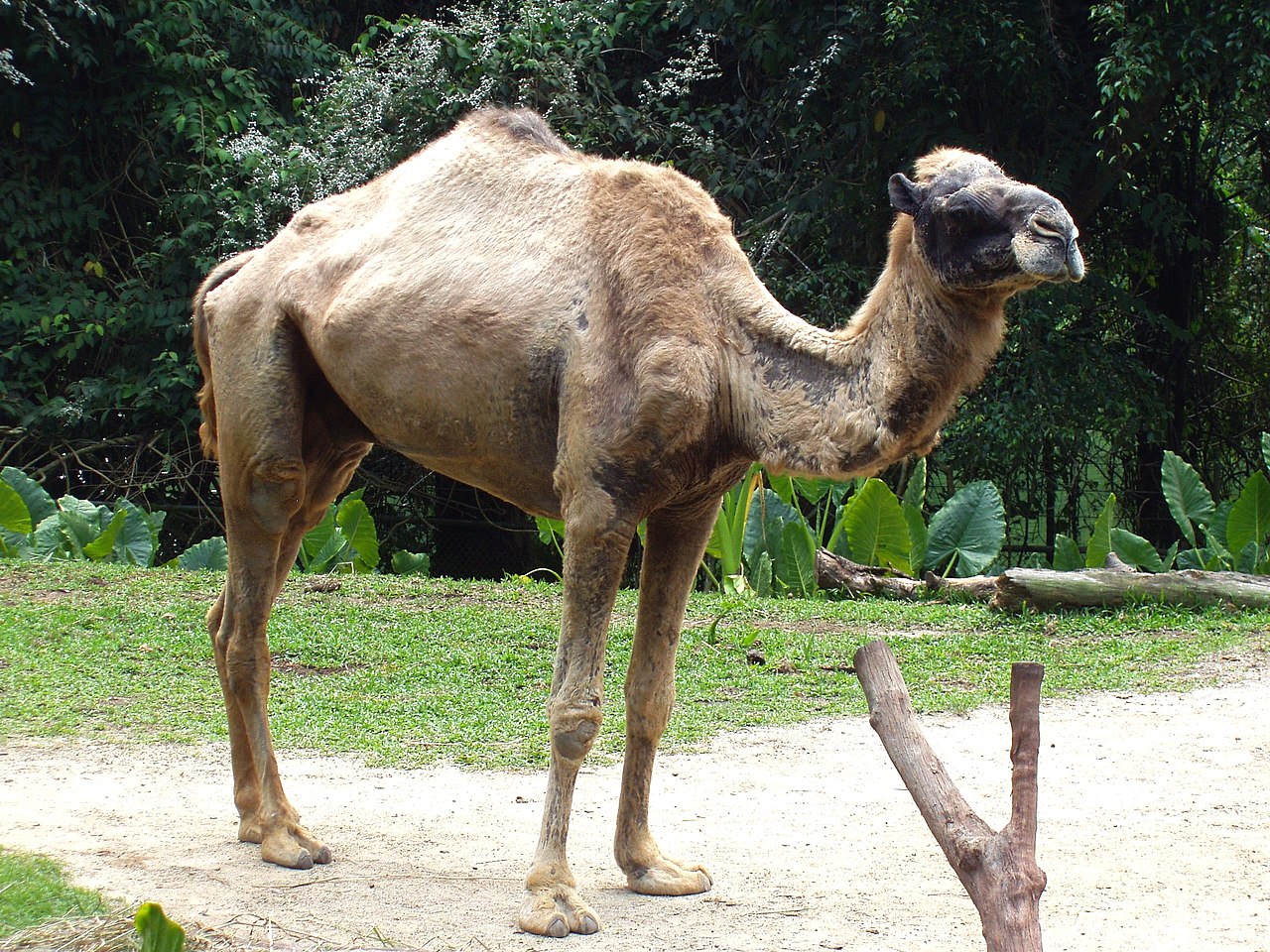
Camels show a suite of features suited to hot, dry environments: one or two humps that store fat rather than water, long legs that keep the body away from hot ground, wide cushioned feet for walking on sand, and a thick coat that insulates against heat by day and cold by night. Their noses can close and eyelashes and bushy eyebrows protect the eyes from blowing sand. Physiologically, camels tolerate wide fluctuations in body temperature, concentrate urine and produce dry dung to conserve water.
Species and taxonomy
The genus Camelus contains three living species recognized by most taxonomies. These are usually listed together as the dromedary (one-humped), the domestic Bactrian (two-humped) and the wild Bactrian. Sources refer to the group of related South American forms—the llama, alpaca, guanaco and vicuña—as the New World camelids; these are sometimes discussed with camels because they share the family Camelus-level relationships in broader treatments.
- Three living Camelus species: dromedary and two forms of Bactrian.
- New World camelids: llama, alpaca, guanaco, vicuña.
Evolution and early history
Camels did not originate in the Old World. The earliest relatives, such as the small rabbit-sized genus Protylopus, appeared in North America during the Eocene about 40–50 million years ago. Fossil discoveries from that period and region help trace their migration and diversification across continents. Classic fossil sites in what is now South Dakota and elsewhere document these early forms, and the deep geological record is summarized in paleontological references to the Eocene and later epochs.
Domestication, uses and cultural importance
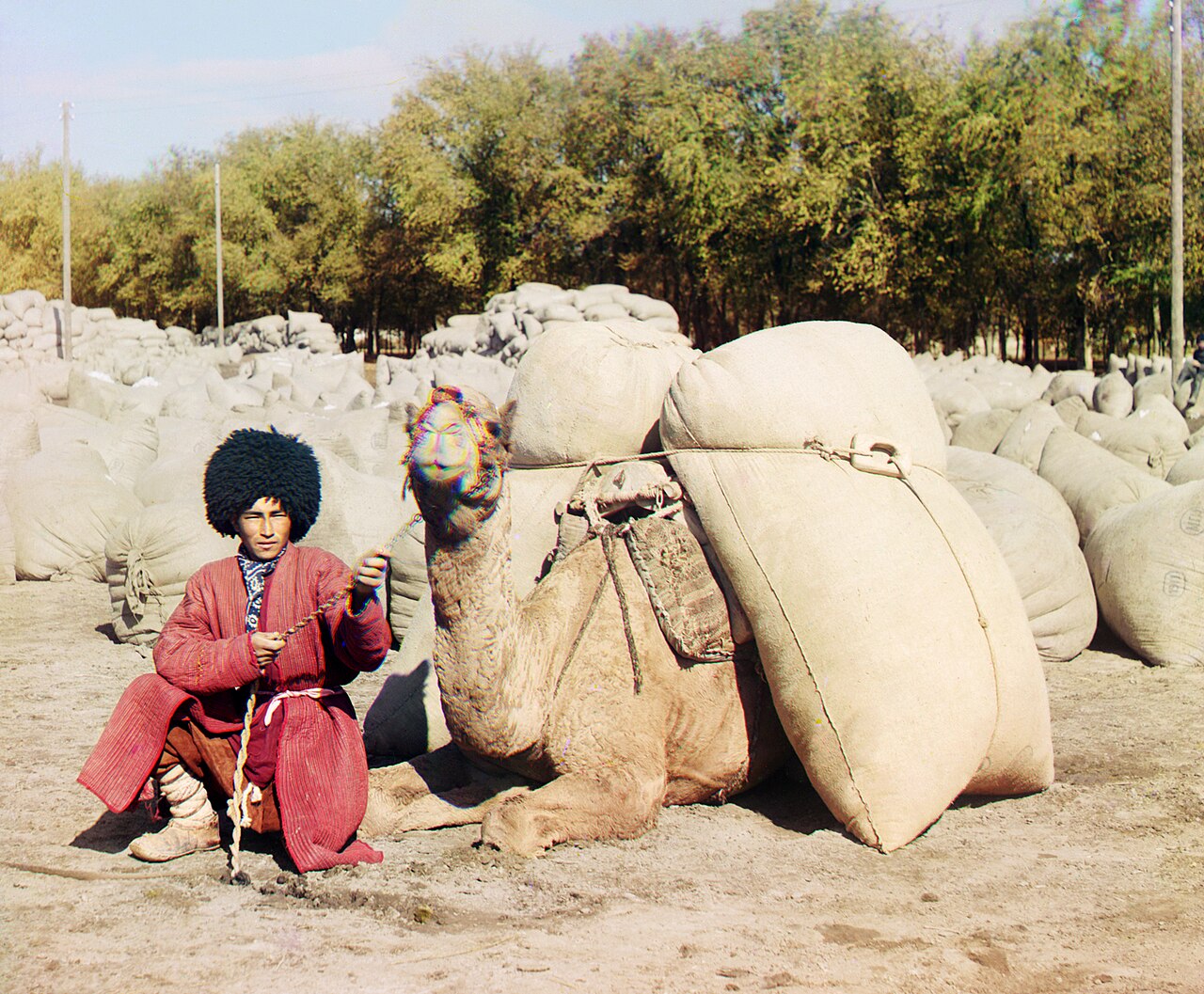
People have managed camels for thousands of years for transport, milk, meat, wool, and as draught animals. Dromedaries became central to trade across Saharan and Arabian routes, while Bactrian camels were vital along Central Asian caravan routes. Camels remain economically and culturally important in pastoral societies and are increasingly recognized for specialty dairy and tourism markets.
Conservation and notable facts
Wild camel populations have declined in parts of their range; the wild Bactrian is among those of conservation concern due to habitat loss, hunting and hybridization with domestic stock. At the same time, domestic camel numbers remain substantial across many regions. Camels are often highlighted for their ecological adaptations and their unique place in human history, bridging biological interest and longstanding human reliance.
Questions and answers
Q: What are camels?
A: Camels are a mammal of the Camelidae family.
Q: How many species of camels are there?
A: There are three living species of camels.
Q: What are the two types of camels that are best-known?
A: The two types of camels that are best-known are the dromedary (one hump) and bactrian (two humps) camels.
Q: What other animals are included in the camelid family?
A: The other animals that are included in the camelid family are the "New World" camelids: the llama, the alpaca, the guanaco, and the vicuña.
Q: Where and when did the earliest known camel live?
A: The earliest known camel, called Protylopus, lived in North America 40 to 50 million years ago, during the Eocene.
Q: What was the size of the earliest known camel?
A: The earliest known camel, called Protylopus, was about the size of a rabbit.
Q: Where did the earliest known camel live?
A: The earliest known camel lived in the open woodlands of what is now South Dakota.
Related articles
Author
AlegsaOnline.com Camel (Camelus): species, adaptations, history, and human uses Leandro Alegsa
URL: https://en.alegsaonline.com/art/16293
Sources
- ducksters.com : "Ducksters: Education Site"
- ncbi.nlm.nih.gov : "Important ectoparasites of Alpaca (Vicugna pacos)"
- doi.org : 10.1186/1751-0147-52-S1-S17
- worldcat.org : 1751-0147
- nytimes.com : Canada’s North, home to bears, and once, camels
- beringia.com : "Ice Age Yukon and Alaskan Camels"