
Buruli ulcer: cause, clinical features, treatment and public health
Buruli ulcer is a skin and soft-tissue infection caused by Mycobacterium ulcerans, notable for painless necrotic ulcers and a toxin-driven course; early diagnosis and combined antibiotic and wound care reduce disability.
Overview
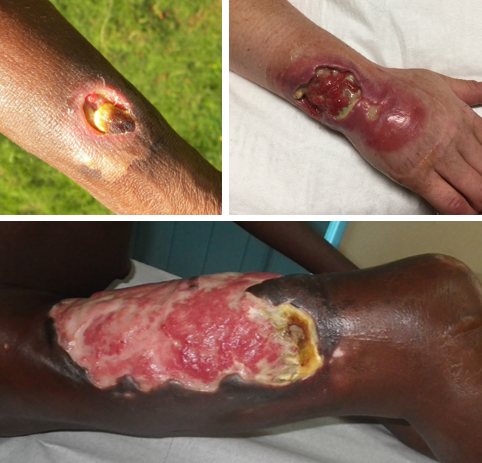
Buruli ulcer is a chronic infectious disease of the skin and underlying tissue caused by the environmental bacterium Mycobacterium ulcerans. It most often begins as a painless nodule, plaque or area of swelling and may progress to large, undermined skin ulcers. The disease is most frequently reported from tropical and subtropical regions, including parts of Africa, Southeast Asia and Australia, but sporadic cases occur elsewhere. Early recognition and treatment are important to limit tissue destruction, scarring and long-term disability.
Image gallery
8 Images



Cause and transmission
The infection is caused by an environmental mycobacterium closely related to the organisms responsible for leprosy and tuberculosis. M. ulcerans produces a lipid toxin called mycolactone that both destroys tissue and suppresses local immune responses, which helps explain why early lesions are often painless. The bacterium is associated with slow-moving or stagnant water and aquatic environments such as swamps, rivers and lakes. How humans acquire infection is not fully established: the organism is considered environmental, and hypotheses include contamination of skin through minor trauma, transmission involving aquatic animals or insects, and bites from potential vector organisms such as mosquitoes, but definitive routes remain uncertain.
Clinical features and diagnosis
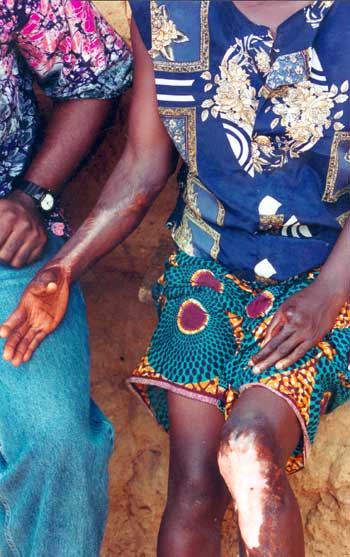
Typical early presentations include a small, firm, painless lump, a flat plaque or localized swelling that can slowly enlarge. Without treatment these lesions can break down, producing characteristic large ulcers with undermined edges and significant soft-tissue loss. Associated complications include secondary bacterial infection, contractures when joints are involved, and limb deformity.
- Common signs: painless nodule, plaque, oedematous lesion, progressive ulceration.
- Complications: scarring, impaired mobility, secondary bacterial infection.
- Key diagnostic tools: polymerase chain reaction (PCR) tests for M. ulcerans DNA, histopathology, and culture (which is slow and technically demanding).
Treatment and prevention
Management combines specific antimicrobial therapy, wound care, and where needed surgical procedures and rehabilitation. Antibiotic regimens using combinations of effective agents given for several weeks have transformed outcomes and can halt progression of disease and reduce the need for extensive surgery. When large ulcers or destroyed tissue are present, careful surgical debridement, skin grafting and physiotherapy may be required. Because the organism is sensitive to heat, experimental local heat-based treatments have been explored in some settings, but antibiotic-based therapy remains the standard of care.
- Medical: combination antibiotics for an extended course (commonly weeks to months) under clinical supervision.
- Surgical: excision, debridement and grafting for extensive lesions; wound management is essential.
- Supportive: physiotherapy, prevention of secondary infection and social support to reduce disability.
History, public health and notable facts
Buruli ulcer was first recognized as a distinct clinical entity in the middle of the 20th century and has since been the subject of focused control efforts in endemic areas. It remains a neglected tropical disease in many regions, with outbreaks causing substantial burden in rural communities with limited access to healthcare. Public health strategies emphasize early detection, access to effective combination antibiotic therapy, wound care services and community education about avoiding exposure to risk environments and seeking care for suspicious skin lesions.
Because the route of transmission is not firmly established, preventive recommendations focus on prompt care for skin injuries, improved water and sanitation where feasible, and strengthening local programs for diagnosis and treatment. Research continues into reservoirs, vectors, and improved point-of-care diagnostics to better control and prevent this disabling disease.
Related articles
Author
AlegsaOnline.com Buruli ulcer: cause, clinical features, treatment and public health Leandro Alegsa
URL: https://en.alegsaonline.com/art/15552
Sources
- worldcat.org : 1439-0973
- dx.doi.org : 10.1007/s15010-008-8073-4
- ncbi.nlm.nih.gov : PMID 19139811
- dx.doi.org : 10.1371/journal.pntd.0000380