
Bryde's whale: overview, identification, taxonomy, and conservation
Bryde's whales are warm-water baleen whales in a small, closely related species complex; they are recognized by three ridges on the head and face taxonomic, ecological, and conservation challenges.
Overview
Bryde's whale is the common name applied to a group of medium-sized baleen whales found mainly in tropical and warm-temperate seas. Individuals in the group generally measure roughly 12–16 metres in length and can weigh many tonnes, with females typically larger than males. These whales are filter feeders that take schooling fish, squid, and small crustaceans, and are known for relatively subtle surface behaviour compared with larger rorquals.
Image gallery
10 Images
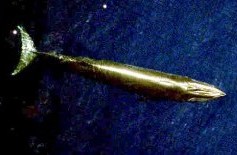


Taxonomy and naming
The animals referred to as Bryde's whales were long treated as a single species, but modern research has revealed a small complex of very similar species and populations. Historically the scientific name Balaenoptera brydei was used broadly; more recent work recognizes closely related forms such as B. edeni and the more distinct B. omurai. This taxonomic uncertainty means the group is often described as a "Bryde's whale complex" rather than one fixed species. The common name commemorates Johan Bryde, an early 20th-century figure associated with whaling in South Africa; see also Johan Bryde / South Africa and a general taxonomic overview.
Identification and distinctive features
One of the most reliable field marks is the pattern of longitudinal ridges on the whale's rostrum: Bryde's whales typically have three distinct ridges running from between the eyes toward the blowholes, a trait uncommon among other rorquals. Most related species have a single central ridge. Colour is usually dark grey to black, sometimes with lighter regions beneath. Because size and overall profile overlap with species such as the sei whale, identification at sea can be difficult without a close view of the head ridges or genetic sampling; see three ridges and the broader rorqual family for context.
Distribution, habitat and behaviour
These whales occur primarily in warm and subtropical waters worldwide, although different populations show different habitat preferences. Some populations are coastal and inhabit relatively shallow shelf waters, while others are more oceanic. Their feeding is usually by lunge-feeding or engulfing dense schools of fish or aggregations of plankton. Social structure is often loose: individuals may appear alone or in small groups, and they do not form the large, long-term pods seen in some other cetaceans.
Life history and ecology
Like other baleen whales, Bryde's whales give birth to a single calf after a gestation period lasting on the order of a year, and calves are nursed for many months before weaning. Mature individuals reproduce at multi-year intervals. Lifespans extend for multiple decades, but precise ages vary among populations. Their role as predators of schooling fish and plankton links them to the health of coastal and pelagic ecosystems, and changes in prey availability can strongly affect local numbers.
Human interactions and conservation
Bryde's whales have faced historical hunting in some regions and continue to be exposed to modern threats such as ship strikes, entanglement in fishing gear, underwater noise, contamination, and the impacts of climate-driven shifts in prey distribution. Conservation assessment is complicated by the unresolved taxonomy and by limited population data for many areas; some populations may be more at risk than others. Efforts to protect these whales include monitoring, bycatch mitigation, shipping-route management, and habitat protection in regions where they concentrate, particularly in warm or coastal waters (warm-water ranges).
Notable distinctions
- Three longitudinal ridges on the rostrum set Bryde's whales apart from most other rorquals.
- Complex taxonomy means conservation listings and research often treat populations separately.
- Warm-water distribution distinguishes them ecologically from many larger, cold-water baleen whales.
For summaries of current research, taxonomy and conservation guidelines, consult specialist reviews and databases maintained by marine science organizations and whale conservation groups; additional introductory resources can be found at taxonomy resources, identification guides, and general references on the rorqual family.
Questions and answers
Q: What is a Bryde's whale?
A: A Bryde's whale is a baleen whale that can grow up to 14m long and weigh up to 18.5 tonnes.
Q: How many species of Bryde's whales are there?
A: Until the 1950s, it was believed there was only one species of Bryde's whale, but now it is known that there are several almost identical species.
Q: What are the other species of whales in the Bryde's whale group?
A: The other species in the Bryde's whale group are Balaenoptera edeni and Balaenoptera omurai.
Q: How does the Bryde's whale differ from other rorquals?
A: The Bryde's whale is unique in having three long ridges on its head that go from between the eyes towards the blowhole, whereas all other rorquals have just one.
Q: What color is the skin of the Bryde's whale?
A: The Bryde's whale's skin varies from black to dark grey.
Q: What is the origin of the Bryde's whale's name?
A: The Bryde's whale was named after Johan Bryde, who built South Africa's first factory to process whales.
Q: Where are Bryde's whales found?
A: Bryde's whales are found in tropical and sub-tropical waters.
Related articles
Author
AlegsaOnline.com Bryde's whale: overview, identification, taxonomy, and conservation Leandro Alegsa
URL: https://en.alegsaonline.com/art/14953
Sources
- arkive.org : "Description - Balaenoptera edeni"
- iucnredlist.org : "Balaenoptera edeni (Bryde's whale, Bryde's whale complex, Common Bryde's whale, Eden's whale, Pygmy Bryde's whale, Tropical whale)"