
Budgerigar (budgie): overview, appearance, behaviour and care
Compact encyclopedia entry on the budgerigar (budgie): classification, appearance, behaviour, habitat, diet, reproduction, captive care, varieties, health and conservation.
Overview
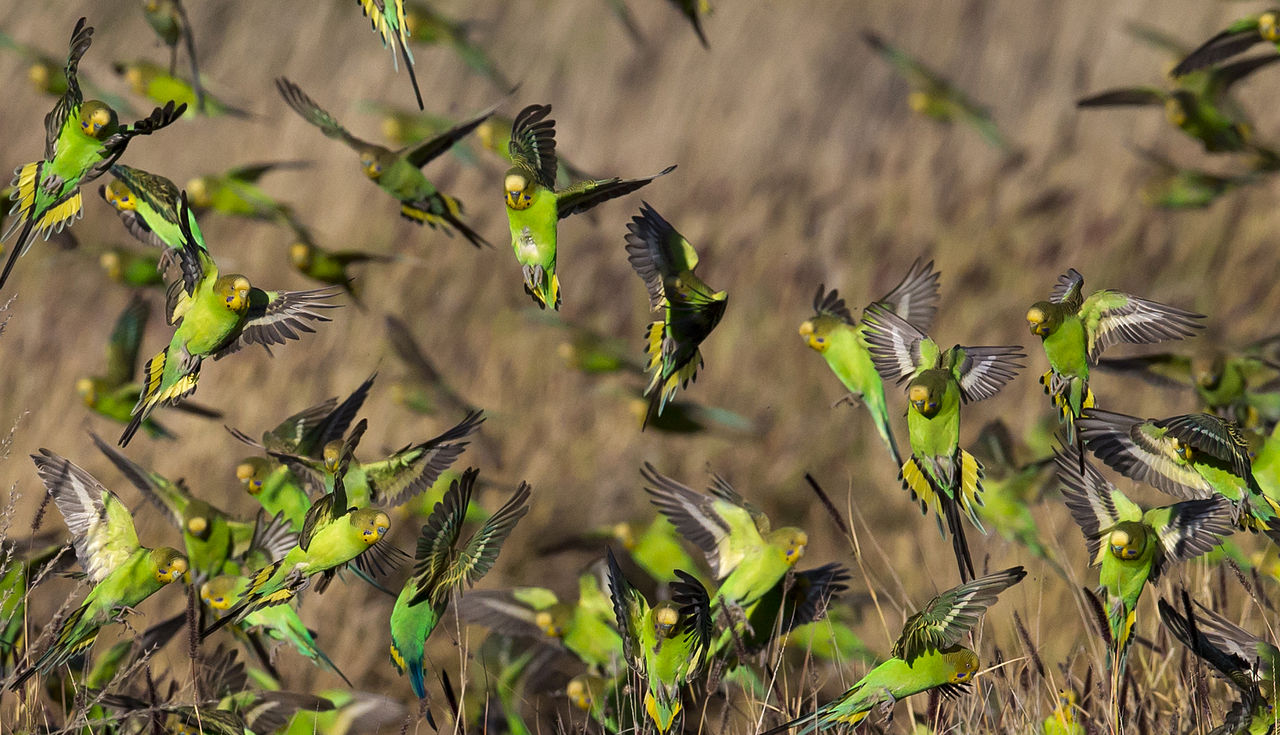
The budgerigar, commonly called the budgie, is a small, long-tailed parrot often referred to as a parakeet. It belongs to the family Psittaculidae, a group of Old World parrots and parakeets. In American English the species is commonly called a parakeet. Native to the drier interior and open country of Australia, the budgerigar occurs naturally across much of the continent where suitable food and water are available; wild populations are most abundant in arid and semi-arid regions Australia. It is also one of the most widely kept companion birds in the world and a familiar pet.
Image gallery
10 Images



Appearance and biology
Wild-type budgerigars are predominantly green and yellow with black barring on the head and wings and a blue-green rump. Selective breeding in captivity has produced many color mutations including blue, white, yellow and pied forms. Budgerigars are small, agile parrots with a stout body, long tapered tail and a hooked beak. Adults measure roughly the size of a large finch or small dove; males and females can often be distinguished by cere coloration in many varieties.
Behaviour and social life
Budgerigars are highly social, forming flocks in the wild. They communicate with varied chirps and calls, maintain social bonds and show cooperative flock behaviours such as communal roosting and group foraging. Tame birds are active and curious, readily learning simple vocalizations and tasks. Their capacity for vocal learning and social interaction makes them popular for training and study.
Habitat, diet and reproduction
In the wild budgerigars are nomadic, tracking seasonal rainfall and seed availability. Their diet is seed-dominated, supplemented by grasses and occasional leaves or fruit. They nest in tree hollows or similar cavities; breeding commonly follows periods of increased food after rain, when clutches of a few eggs are laid and incubated in the nest hollow.
In captivity: care and health
As pets, budgerigars require a balanced diet (quality seed mix or pellets plus fresh vegetables and occasional fruit), mental stimulation, social interaction and safe housing with perches and toys. Regular veterinary checks, attention to hygiene and avoidance of airborne toxins help maintain health. Common health concerns include feather and respiratory problems; prompt care and proper husbandry improve outcomes.
Varieties, breeding and conservation
Aviculture has produced a wide range of color, size and feather mutations; selective breeding focuses on type, color and temperament. The species remains widespread and abundant in its native range and is not generally considered threatened, though local populations can fluctuate with environmental conditions. Budgerigars remain culturally and economically significant as companion birds and as subjects of behavioural research.
- Key traits: small size, long tail, social flocking, vocal learning.
- Care highlights: varied diet, social contact, enrichment, safe housing.
Related articles
Author
AlegsaOnline.com Budgerigar (budgie): overview, appearance, behaviour and care Leandro Alegsa
URL: https://en.alegsaonline.com/art/15095
Sources
- birdhealth.com.au : "Dr. Marshall's Philosophy on Breeding Exhibition Budgerigars"
- commons.wikimedia.org : Budgerigar