
Rorqual (baleen whales of the family Balaenopteridae)
Rorquals are a group of large, streamlined baleen whales known for their throat pleats and lunge-feeding. They include the blue whale and humpback and occur in oceans worldwide.
Overview
Rorquals are a major group of baleen whales (family Balaenopteridae) characterized by a streamlined body, a dorsal fin, and a series of expandable throat grooves that permit dramatic mouth expansion during feeding. They are among the largest animals on Earth: the blue whale, a rorqual, is the biggest animal known to have lived. Rorquals are distributed across the world's oceans and occupy a variety of habitats from coastal bays to open pelagic waters.
Image gallery
10 Images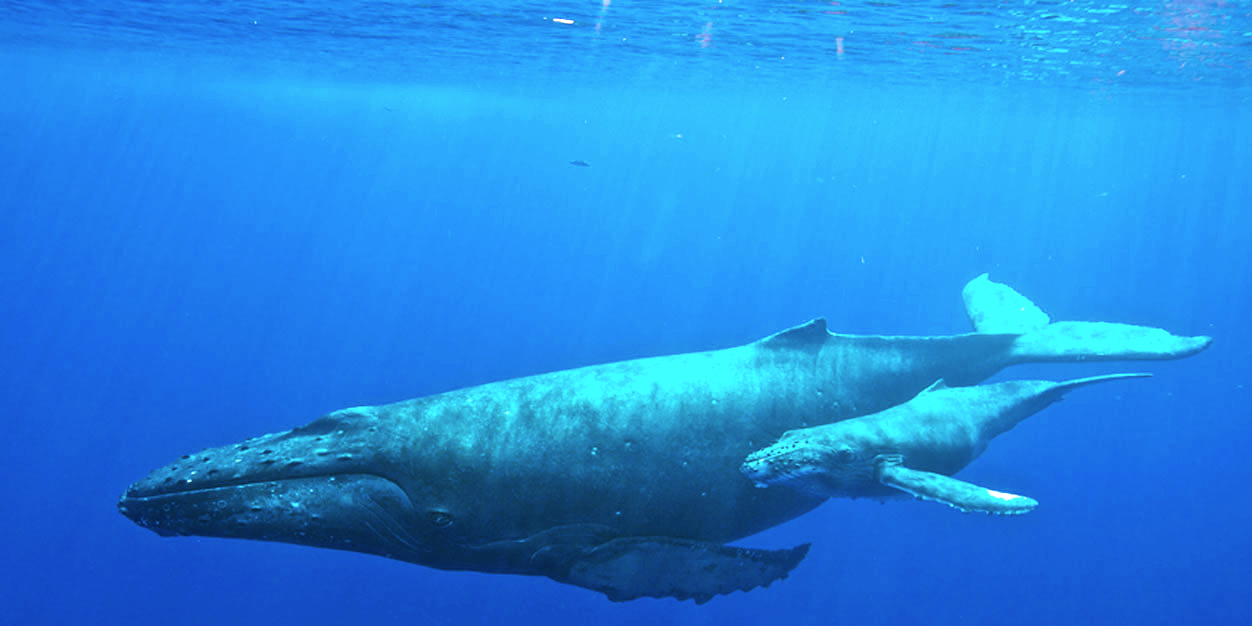


Key characteristics
Rorquals share several distinctive anatomical and behavioral traits that set them apart from other baleen whales. Most notable are the longitudinal ventral pleats or grooves that run from the tip of the lower jaw back to the navel; these allow the mouth and throat to balloon out while engulfing large volumes of water and prey. They possess baleen plates instead of teeth, a streamlined, tapered body for efficient swimming, and a single blowhole. Feeding is usually by lunge-feeding or gulping small schooling fish and planktonic crustaceans such as krill.
- Throat grooves: enable rapid expansion of the oral cavity during feeding.
- Baleen: filter feeding structures made of keratin that trap prey.
- Swimming and behavior: many rorquals are capable of fast, powerful lunges and long migrations between feeding and breeding grounds.
Species and distribution
Rorquals are traditionally divided into two genera, Balaenoptera and Megaptera, and comprise roughly nine species depending on taxonomic treatment. Well-known members include the blue whale, fin whale, sei whale, the various minke whales, Bryde's-type whales, and the humpback whale (Megaptera novaeangliae). Sizes vary widely across species: even the smallest rorquals weigh many tonnes, while the blue whale can reach lengths around 25–30 meters and mass measured in tens to over one hundred tonnes. Different species show different range patterns — some are broadly cosmopolitan, others are more coastal or restricted to particular ocean basins.
Feeding, reproduction, and life history
Rorquals feed primarily on dense concentrations of small prey. Lunge-feeding involves accelerating toward a prey patch, opening the mouth to engulf a huge volume of water and prey, then filtering out the water through the baleen. Humpback whales display specialized tactics such as bubble-net feeding, a cooperative technique that corrals fish. Reproduction typically involves seasonal migrations: breeding and calving occur in warmer, lower-latitude waters, while feeding takes place in higher-latitude, nutrient-rich regions. Gestation lasts about a year for many species, and females give birth to a single calf every one to several years.
History, human impact, and conservation
Rorquals were heavily targeted by commercial whaling from the 19th century through much of the 20th century, which drastically reduced populations of several species. International whaling restrictions and moratoria introduced in the late 20th century have allowed some populations to recover, but recovery is uneven and threats remain. Contemporary pressures include ship strikes, entanglement in fishing gear, noise and disturbance, habitat change from climate-driven shifts in prey, and pollution. Several rorqual species or populations are listed as threatened or endangered by conservation organizations, and they remain the focus of global conservation efforts.
Ecological and cultural importance
Rorquals play a significant ecological role by consuming large quantities of small prey and recycling nutrients through fecal plumes that stimulate plankton productivity — a phenomenon sometimes called the "whale pump." Their carcasses also supply deep-sea ecosystems with concentrated nutrients. Culturally and economically, rorquals feature in coastal communities through tourism (whale watching), scientific study, and as symbols in art and literature. Ongoing research seeks to better understand their population dynamics, migration routes, feeding ecology, and responses to a changing ocean.
Author
AlegsaOnline.com Rorqual (baleen whales of the family Balaenopteridae) Leandro Alegsa
URL: https://en.alegsaonline.com/art/84104