
Wienerschnitzel — American hot dog fast‑food chain
American fast‑food chain founded in 1961 as Der Wienerschnitzel, known for hot dogs, A‑frame restaurants and the mascot The Delicious One; concentrated in California and Texas with a regional U.S. footprint.
Wienerschnitzel is an American fast‑food chain founded in 1961 under the name "Der Wienerschnitzel." The brand is best known for a focused menu built around hot dogs, chili dogs and related quick‑service items. Over decades the company has emphasized a small, consistent menu and drive‑thru service designed for speed and high turnover in suburban and highway locations.

Image gallery
4 Images
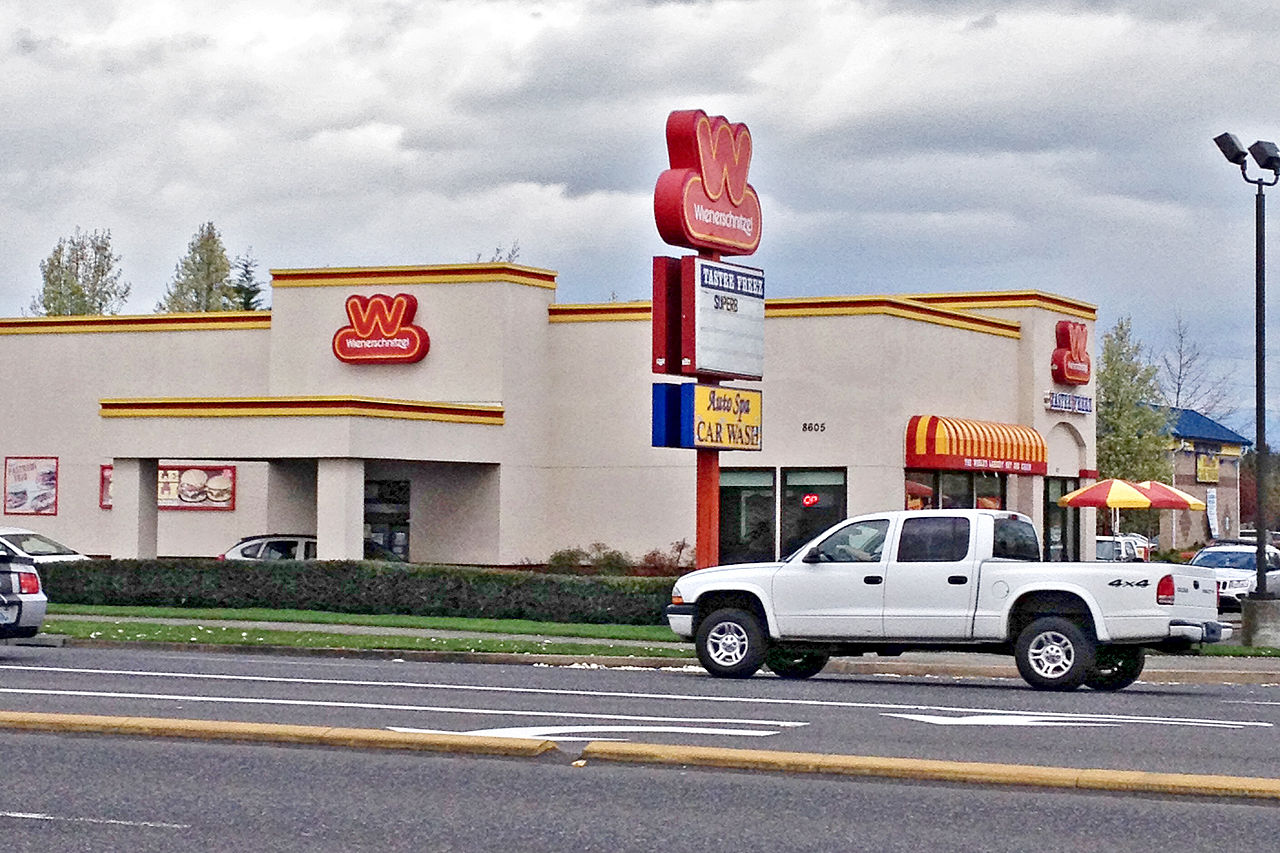


Distribution and presence
Wienerschnitzel outlets are concentrated in the western and southern United States, with the largest numbers historically in California and Texas. Additional units are or have been located in Arizona, Colorado, Illinois, Louisiana, New Mexico, Nevada, Utah and Washington. The company has also operated at least a few locations outside the fifty states, including in territories or foreign markets such as Guam and Panama. The chain’s footprint has varied over time as units open, close, or convert to other operators.
Origins and development
Established in the early 1960s, Wienerschnitzel grew primarily through franchising and standardized quick‑service practices typical of American roadside restaurants. The original trade name and early marketing used a Germanic motif while offering American‑style hot dogs rather than traditional Viennese schnitzel. Franchise development, menu standardization and emphasis on compact restaurant footprints helped the brand adapt to car‑centric suburban and highway markets.
Architecture and design
Many legacy Wienerschnitzel locations are recognizable by a steep A‑frame roofline. This style was common among mid‑20th‑century roadside eateries and can be seen in buildings originally used by other chains such as IHOP and echoes the gabled roadside forms of operators like Whataburger. These distinctive structures often remain visible clues to a site’s former use even after a building has been rebranded or repurposed.
Menu and operations
The menu focuses on hot dogs in several preparations: classic frankfurters, chili dogs, corn dogs and simple sandwiches. Offerings typically include a small selection of sides, such as fries and onion rings, along with soft drinks. The operational model favors quick preparation, limited on‑site cooking complexity and a format conducive to drive‑thru and walk‑up service. This focused approach contrasts with full‑service restaurants and helps keep staffing and equipment requirements modest.
Branding, mascot and advertising
Wienerschnitzel’s marketing has often been lighthearted and tongue‑in‑cheek. A central element of more recent campaigns has been an advertising mascot: an anthropomorphized chili dog known as The Delicious One. The mascot is portrayed as an animated character who comically avoids becoming a meal, a device used to emphasize the product and give the brand a playful personality. Campaign elements and promotions frequently employ humorous wording and visuals highlighting the chain’s specialism in hot dogs.
Events, sponsorships and cultural ties
The company has supported novelty and community events tied to its product. A notable example is the company’s association with dachshund racing events commonly promoted as Wiener Nationals; Wienerschnitzel has sponsored or supported the tongue‑in‑cheek national dachshund racing series known in some circles as the Wiener Nationals. Such sponsorships reinforce the brand’s playful identity and its public association with hot‑dog themed promotions.
Business model and franchising
Franchising has been a key avenue for growth, allowing individual owners to operate restaurants under standardized systems, branding and supply arrangements. The business model favors compact sites with drive‑thru capability, low startup complexity relative to full‑service concepts and a menu that supports rapid customer throughput. As with many regional chains, local market demand, competition and real estate availability influence expansion and contraction patterns over time.
Nutrition, reception and legacy
As a quick‑service specialist in hot dogs, Wienerschnitzel’s offerings tend to be high in calories, sodium and fats compared with some other quick‑service items; menu labeling and ingredient information are commonly available to help consumers make informed choices. The chain is often noted in surveys of American roadside and regional fast‑food history for its concentrated product focus, distinctive signage and A‑frame architecture. While not as nationally ubiquitous as some chains, its concentrated presence and memorable branding have secured a recognizable place in regional fast‑food culture.
Summary
Wienerschnitzel remains an example of a highly specialized quick‑service chain that built its identity around a single product category. Through standardized franchising, characteristic architecture, playful advertising and regional concentration—particularly in California and Texas—the brand continues to be associated with American hot‑dog culture and novel community promotions.
Author
AlegsaOnline.com Wienerschnitzel — American hot dog fast‑food chain Leandro Alegsa
URL: https://en.alegsaonline.com/art/147812