
Broccoflower: green cauliflower and romanesco cultivars
Broccoflower refers to green-headed cultivars of Brassica oleracea, including smooth green cauliflower types and the fractal Romanesco; valued for a mild flavor and versatile culinary uses.
Overview
Broccoflower is a common name applied to certain green-headed cultivars of the species Brassica oleracea. It is not a distinct species but a group of vegetables whose edible portion is the compact young flower head, or inflorescence, harvested before the flowers open. The term is used in markets and cookbooks to distinguish these green varieties from typical white cauliflower or dark-green broccoli.
Image gallery
3 Images

Forms and characteristics
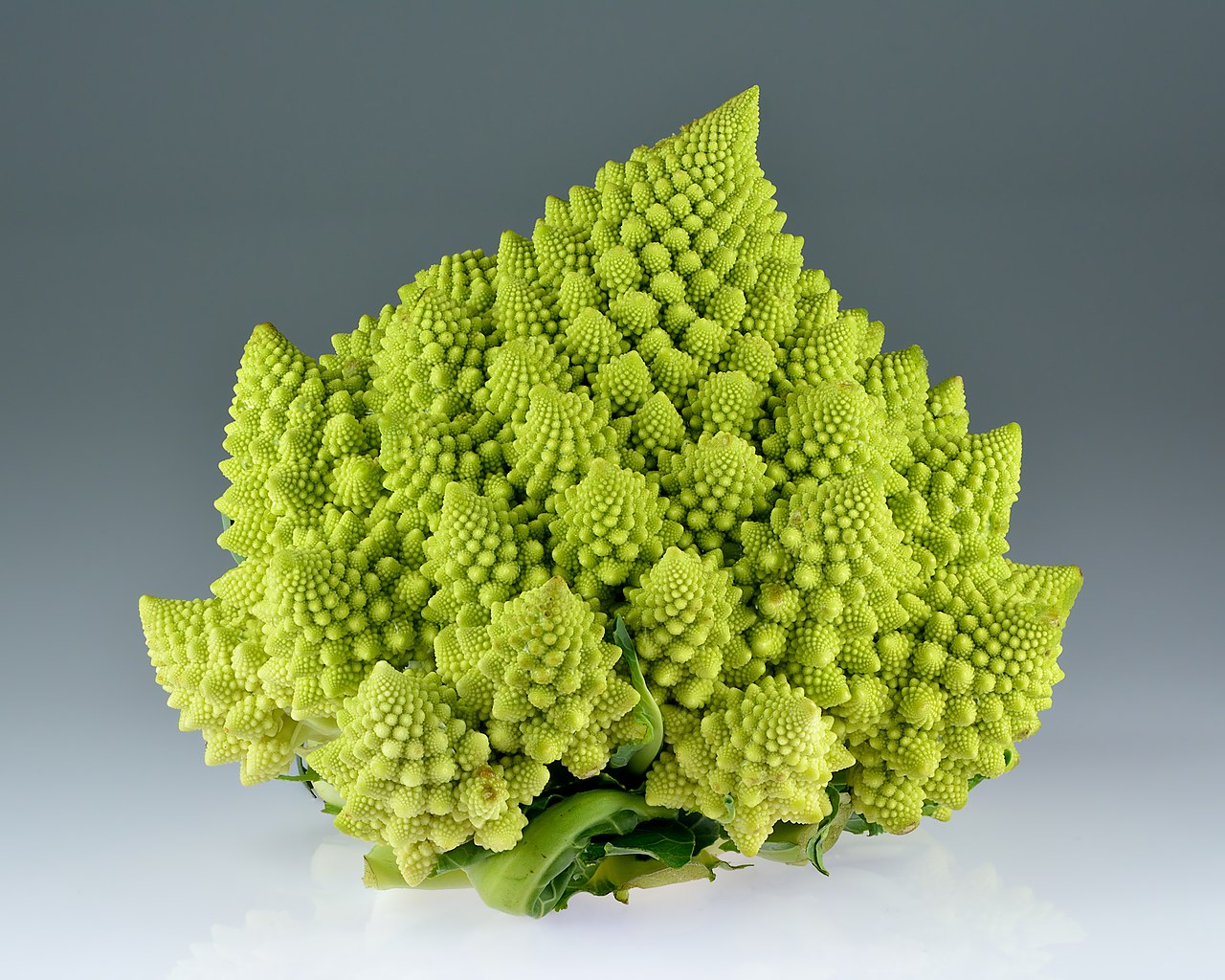
Two visually and botanically recognizable forms are usually called broccoflower. One resembles traditional cauliflower in shape and texture but has a pale to bright green color, while the other—commonly known as Romanesco—has a conical, spiky appearance with repeating spiral patterns that attract attention for their geometric beauty. Both types share the same species as common broccoli and cauliflower, but differ in head structure, floret arrangement, and subtle taste.
History and development
These green cultivars are the result of selective breeding within Brassica oleracea, a species long cultivated in Europe and the Mediterranean. The spiky Romanesco form has Italian roots and has been grown there for generations, while smooth green cauliflower and hybrid broccoflowers emerged through mid-20th century plant-breeding efforts to combine desirable traits—color, texture and flavor—of broccoli and cauliflower. Modern horticulture and commercial naming helped popularize the umbrella name broccoflower.
Uses and culinary notes
Broccoflower is used much like cauliflower or broccoli. It can be eaten raw in salads or crudités, steamed, roasted, sautéed, or added to soups and stir-fries. Many cooks praise its mild, slightly nutty and sweet flavor and its firm texture, which holds up well to cooking. Nutritionally, it contributes fiber and vitamin C like other cruciferous vegetables. Prepare by cutting into florets and rinsing; a brief steam or roast brings out sweetness without losing structure.
Practical information and distinctions
- Taxonomy: all broccoflowers are cultivars within Brassica oleracea, related to cabbage, broccoli and cauliflower.
- Appearance: smooth-headed green variants versus fractal, spiked Romanesco heads.
- Storage: keep cool and dry in the refrigerator; use while firm and before florets discolor.
- Cooking: substitutes for broccoli or cauliflower where color or novel texture is desired.
Notable facts
Romanesco’s spiral pattern is often cited in discussions of natural fractals and logarithmic spirals; this geometric regularity makes it interesting beyond the kitchen. Commercially, the name broccoflower is a marketing-friendly label that emphasizes the vegetable’s green color and hybrid-like qualities; different growers and regions may prefer alternate names for the same cultivars. For further reading on varieties, cultivation and recipes, see resources linked below.
Related resources: variety descriptions, botanical references, inflorescence anatomy, culinary techniques, comparisons with broccoli.
Related articles
Author
AlegsaOnline.com Broccoflower: green cauliflower and romanesco cultivars Leandro Alegsa
URL: https://en.alegsaonline.com/art/14617