
Cauliflower: description, cultivation, uses and history
Cauliflower (a cultivar of Brassica oleracea) is a nutrient-rich vegetable used worldwide. This article covers its botany, varieties, culinary uses, origin, and notable facts.
Overview
Cauliflower is a single cultivar group within the species Brassica oleracea and belongs to the cabbage family. The portion commonly eaten is an immature floral structure—often called the "curd" or head—surrounded by green leaves. It is grown and consumed across many climates and cuisines for its mild flavor and versatile texture.
Image gallery
10 Images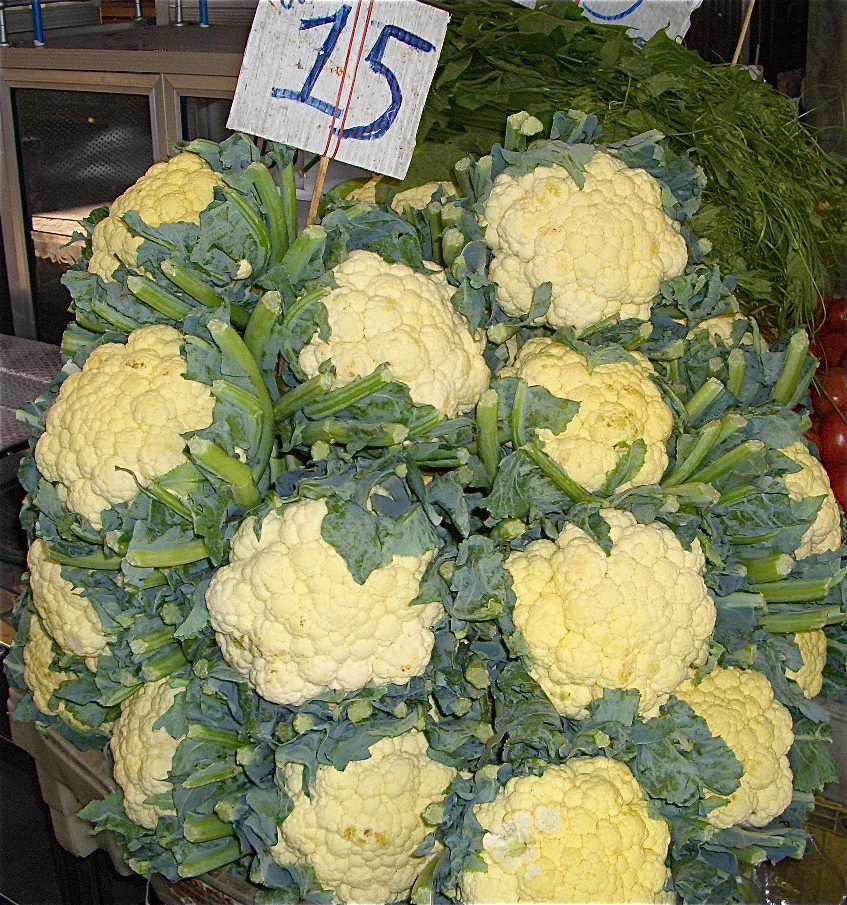


Botany and classification
Botanically, cauliflower is one of several vegetables formed from the wild cabbage complex. For formal classification and botanical context see species information and the broader family entry at Brassicaceae. Horticulturally it is treated as a variety of cabbage; a general reference to that relationship can be found at the cabbage group.
Physical characteristics and varieties
The edible head is a compact mass of undeveloped flower buds and can be white, green ("broccoflower"), purple or orange, depending on variety and pigments. Leaves protect the developing head and agricultural practices influence head color and texture. Cauliflower contains sulfurous compounds and glucosinolates that affect aroma, taste, and possibly some health properties.
History and development
Cauliflower was developed from wild cabbage forms by selective cultivation in the Mediterranean region and later refined in Europe. Its modern forms were shaped by centuries of horticulture into early-, mid- and late-season types adapted to different climates. The common English name derives from historical European languages referring to cabbage-like flowers.
Uses, preparation, and examples
Cauliflower can be eaten raw, steamed, boiled, roasted, pickled or fried. Popular preparations include steaming as a side dish, pureeing into soups and sauces, roasting to concentrate flavor, and processing into low-carbohydrate substitutes such as "cauliflower rice" or mashed purées. Preservation and pickling methods are described in general culinary guides at preservation and recipes. In some national cuisines cauliflower features in signature dishes; for example, it is commonly used in Polish cooking where it appears in cream-based soups or pan-fried with breadcrumb coatings (Polish culinary uses).
Nutrition and notable facts
- Cauliflower is valued for vitamins, fiber and low calorie density, making it common in health-oriented diets.
- It is a close relative of broccoli, kale and Brussels sprouts; these all derive from the same species but have different cultivated traits.
- Its sulfur compounds can produce a strong aroma when overcooked; gentle cooking preserves flavor and texture.
Because of its adaptability and neutral taste, cauliflower plays a growing role in global cuisine and plant-based cooking. For further botanical or culinary detail consult the linked classification and culinary resources above.
Related articles
Author
AlegsaOnline.com Cauliflower: description, cultivation, uses and history Leandro Alegsa
URL: https://en.alegsaonline.com/art/17693