
Solomon R. Guggenheim Museum
Modern and contemporary art museum in Manhattan, famed for its Frank Lloyd Wright rotunda, spiral galleries and holdings in Impressionist, Modern and contemporary art.
Overview
The Solomon R. Guggenheim Museum, commonly called the Guggenheim, is a major art museum on Manhattan’s Upper East Side. It is widely known both for its collection of Impressionist, Post‑Impressionist, early Modern and contemporary works and for its distinctive building. The institution hosts rotating special exhibitions alongside its permanent holdings and offers tours and public programs for visitors of varied interests. For general information see the museum pages at Guggenheim overview and resources about its location at Upper East Side.
Image gallery
10 Images



Collections and exhibitions
The museum’s holdings emphasize 19th‑ and 20th‑century developments in painting, sculpture and installation. Strengths include Impressionist and Post‑Impressionist painting, early abstract and non‑objective work, and representative contemporary art. The Guggenheim organizes several temporary exhibitions each year that survey single artists, movements or thematic currents; these are complemented by rotating displays drawn from the permanent collection. Visitors can consult the calendar and exhibition guides via the institution’s publications and online resources such as collection highlights and traveling shows listed at exhibition listings.
Building and design
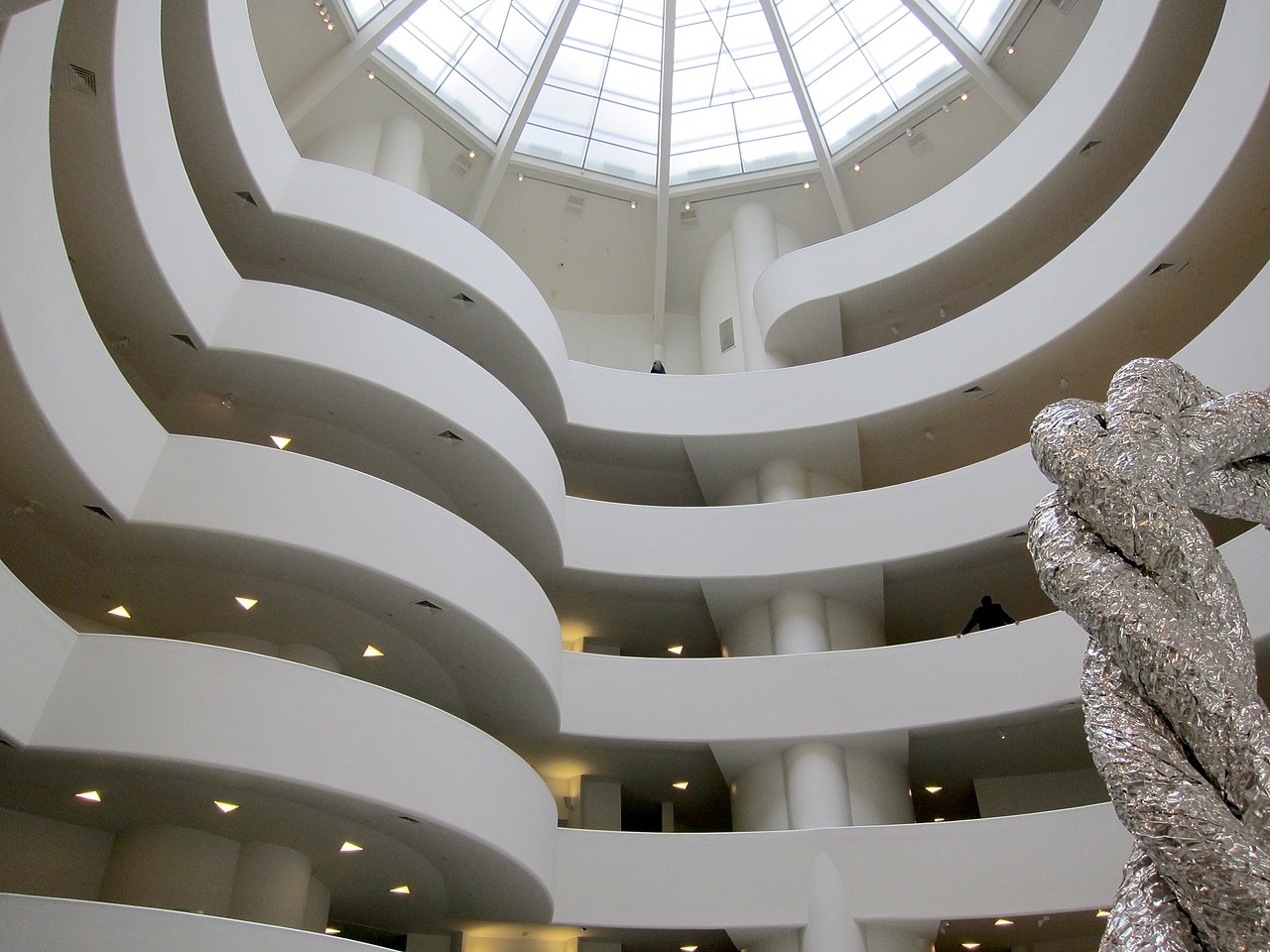
The museum’s landmark building was designed by the architect Frank Lloyd Wright. Wright envisioned a cylindrical structure whose galleries spiral upward around a central rotunda, creating an unusual circulation pattern compared with traditional museums. The form is wider at the top than at the base, producing a continuous ramp gallery that allows visitors to experience works while moving through a single flowing space. For architectural context and analysis see resources at architectural studies and Wright’s project notes available through archives and commentary at design essays.
History and development
The institution began in 1939 as the Museum of Non‑Objective Painting, established by the Solomon R. Guggenheim Foundation under the influence of Hilla von Rebay, its first director. After Solomon R. Guggenheim’s death the collection and foundation broadened their scope and the museum was renamed in his honor. Planning for a dedicated building consumed many years; Wright prepared numerous sketches and worked on the concept for over a decade. Construction and completion extended into the late 1950s, and the new building opened to the public in 1959. For detailed timelines and archival material consult the foundation’s historical overviews at institutional history and trustee records at foundation archives.
Reception and debates
Upon its unveiling the building provoked debate. Supporters praised its originality and the experiential quality of the spiraling galleries; critics questioned practical issues such as the suitability of curved walls for hanging paintings and the relationship between architecture and art display. Early commentators offered colorful critiques of its exterior form, and artists and curators engaged in extended discussion about how the design affected exhibition practice. Ongoing scholarship has examined those debates and their implications for museum design at sources like critic responses and retrospective analyses at academic reviews.
Visits, education and legacy
Today the Guggenheim functions as both a museum and an architectural landmark. Its program includes public tours, educational initiatives, lectures and family activities that aim to introduce audiences to modern and contemporary art. The building itself remains a touchstone in 20th‑century architecture: it is frequently cited in surveys of museum design and in discussions of how architecture shapes the viewing experience. For visitor information, membership and learning programs consult the museum’s visitor resources and educational offers available through the links above.
- Key features: spiral ramp galleries; central rotunda; modern and contemporary holdings.
- Origins: founded 1939 as Museum of Non‑Objective Painting; later renamed for Solomon R. Guggenheim.
- Architect: Frank Lloyd Wright; building opened 1959 after years of planning.
Author
AlegsaOnline.com Solomon R. Guggenheim Museum Leandro Alegsa
URL: https://en.alegsaonline.com/art/145876