
British Rail Class 55 (Deltic)
High‑powered diesel‑electric locomotives built 1961–62 by English Electric for East Coast expresses. Nicknamed 'Deltic' for their Napier engines; withdrawn in 1981 with several preserved and still active in heritage service.
Overview
The British Rail Class 55, commonly known as the "Deltic", is a class of high‑powered diesel locomotives built by English Electric in 1961–1962 for top‑link express passenger work. Intended to haul the premier expresses on the East Coast Main Line between London King's Cross and Edinburgh, they quickly became synonymous with high‑speed diesel traction in Britain. The name "Deltic" derives from the experimental prototype DP1 Deltic and from the distinctive Napier Deltic power units used in each locomotive.
Image gallery
10 Images


Design and characteristics
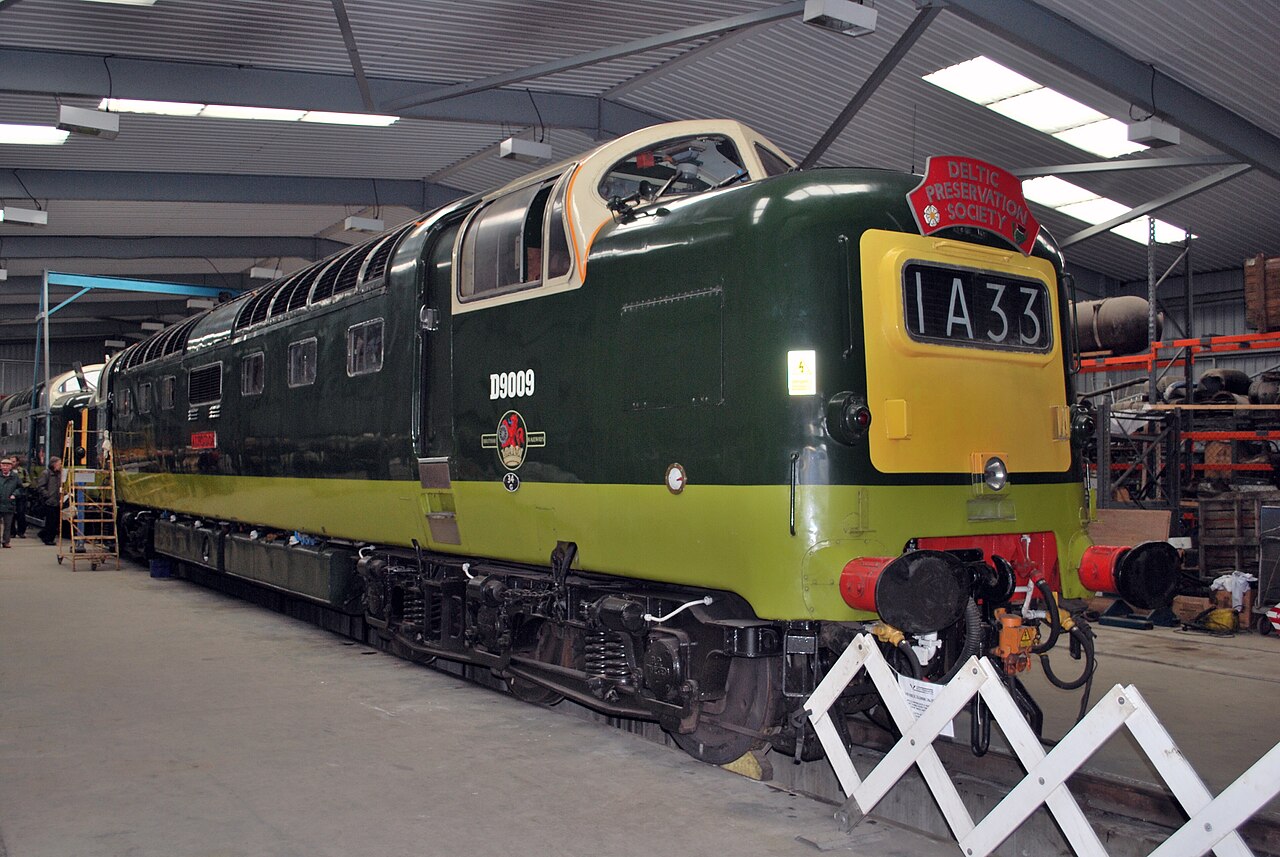
Class 55 locomotives are diesel‑electric units with a Co‑Co wheel arrangement and long, streamlined bonnets. Each locomotive carries two compact triangular‑arranged Napier Deltic engines driving electrical generators, giving an unusually high power output for a single locomotive of their era. The opposed‑piston Deltic design produced a distinctive high‑pitched exhaust note and a rapid throttle response suited to sustained high speeds on main lines. The units were designed for reliability and long runs, with attention to crew comfort and maintenance access, although the advanced engines required specialized servicing.
Service history
A total of 22 Class 55 locomotives entered service and for much of the 1960s and 1970s they were the regular traction on principal East Coast expresses, replacing steam on many services and contributing to faster journey times. They commonly operated in pairs on the heaviest trains and were able to maintain high average speeds over long distances. Liveries varied over time, including early British Railways colours and later InterCity schemes, and individual locomotives often carried names and identities that proved popular with the travelling public and railway staff.
Withdrawal and preservation
By the late 1970s and early 1980s the Class 55s were increasingly superseded by newer rolling stock such as the HST (InterCity 125) sets and by more modern locomotives. High maintenance demands for the twin Napier engines and changing operational practices contributed to the class being withdrawn at the end of 1981. Several locomotives were rescued by preservation groups and museums; six are known to survive and a number have been restored to operational condition for use on heritage lines and special main‑line railtours. Preservation efforts have been supported by volunteers and enthusiasts who maintain the complex engines and original equipment.
Legacy and cultural impact
The Deltics are widely regarded as an iconic chapter in British railway history. Their combination of distinctive aesthetics, audible character and high performance made them favourites among crews and railfans. In preservation they continue to appear at gala events and rail tours, demonstrating historic main‑line practice and attracting public interest. The prototype DP1 remains an important reference, and the Napier Deltic engine is often cited in discussions of innovative opposed‑piston designs.
Quick facts
- Builder: English Electric
- Built: 1961–1962
- Number built: 22
- Main route: East Coast Main Line (King's Cross – Edinburgh)
- Prototype: DP1 Deltic
- Powerplant: Twin Napier Deltic engines
- Nickname: "Deltic" (Class 55)
- Role: High‑speed express passenger traction
- Further reading and resources: See dedicated archives and preservation group sites for detailed histories and technical data (diesel traction resources).
Tags
Related articles
Author
AlegsaOnline.com British Rail Class 55 (Deltic) Leandro Alegsa
URL: https://en.alegsaonline.com/art/14486