
British Rail Class 20 (English Electric Type 1)
A compact diesel-electric locomotive class built by English Electric from 1957–1968. Known as Class 20 or 'Chopper', widely used on freight and secondary passenger duties and often operated in paired formations.
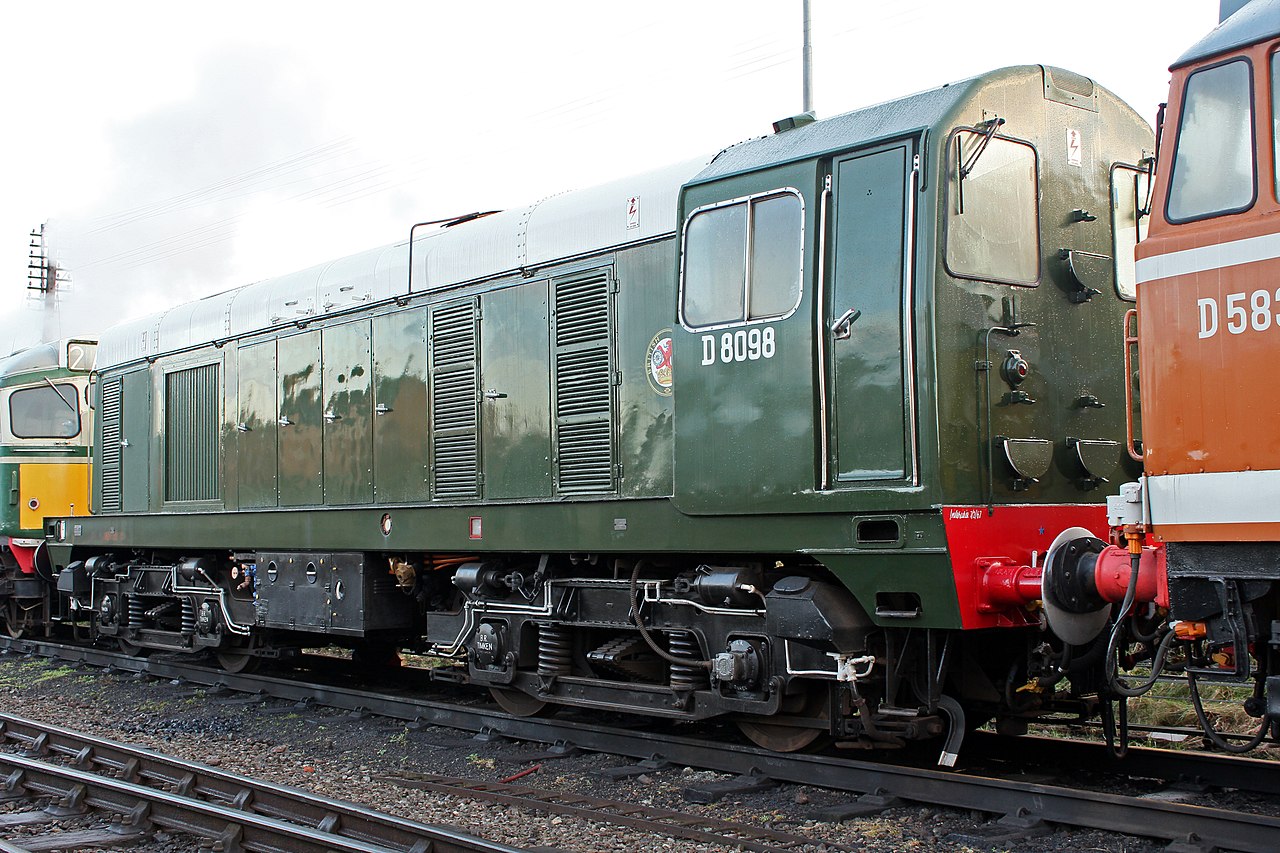
The British Rail Class 20 is a family of diesel-electric locomotives introduced in the late 1950s and commonly referred to by enthusiasts as the "Chopper". Originally designated an English Electric Type 1, the Class 20 was developed as a low- to medium-power road locomotive suitable for freight and secondary passenger work. It was produced by English Electric in a series of 228 examples built between 1957 and 1968, and was numbered D8000–D8199 and D8300–D8327 on British Rail.
Image gallery
10 Images


Design and characteristics
The Class 20 has a single cab at one end with a long bonnet opposite, a compact Bo-Bo wheel arrangement and a diesel engine driving an electrical generator to power traction motors. Its simple layout and robust construction made it reliable in everyday service. Many operators paired two locomotives nose-to-nose to provide bidirectional control and better crew visibility, creating the distinctive sight of coupled Class 20 pairs working as one unit.
Operational history
Introduced as part of British Railways' modernization era, the Class 20 addressed a shortfall in dependable Type 1 locomotives found in the early diesel era. They were widely used on freight trains, especially on routes requiring good low-speed tractive effort, and also appeared on occasional passenger turns where track access or short block workings suited their power and speed. Over decades of service they worked across the British network and later found roles in departmental and engineering trains.
Notable features and uses
- Nicknamed "Chopper" because of the distinctive exhaust/engine beat under load.
- Commonly run in permanently coupled pairs for operational flexibility and improved visibility.
- Used on freight, engineering trains and some secondary passenger services; several examples were later preserved.
Legacy and preservation
Although many Class 20s were withdrawn from mainline service as newer traction arrived, a significant number survived into preservation and continued industrial use. Their relatively simple mechanicals and the ease of operating paired formations have helped sustain interest among heritage railways and rail enthusiasts. The Class 20 remains notable as a practical, long-serving design from the early diesel era and a visible link to British railway modernization.
For further technical summaries and historic rosters see general references on diesel locomotive classes and manufacturer histories, or consult specialist sources for detailed diagrams and preserved examples. More contextual reading is available on pages focusing on diesel traction and mid-20th century British railway development: diesel-electric traction overview and additional manufacturer histories at linked resources.
Tags
Related articles
Author
AlegsaOnline.com British Rail Class 20 (English Electric Type 1) Leandro Alegsa
URL: https://en.alegsaonline.com/art/14365