
British Rail 18100: prototype gas turbine-electric locomotive
Comprehensive overview of British Rail 18100, the 1951 Metropolitan‑Vickers gas turbine‑electric prototype used on Western Region express services and its role in postwar traction experiments.
Overview
British Rail 18100 was a one-off prototype main-line locomotive built in 1951 to test the application of gas turbine power for express passenger trains. Constructed by Metropolitan‑Vickers in Manchester, the locomotive represented a postwar effort to find alternatives to steam traction as British railways modernised. Although conceived before the end of World War II, its completion was delayed by the conflict and the upheaval of the immediate postwar years. During its working life it was primarily deployed on the Western Region, hauling expresses from London Paddington.
Image gallery
2 Images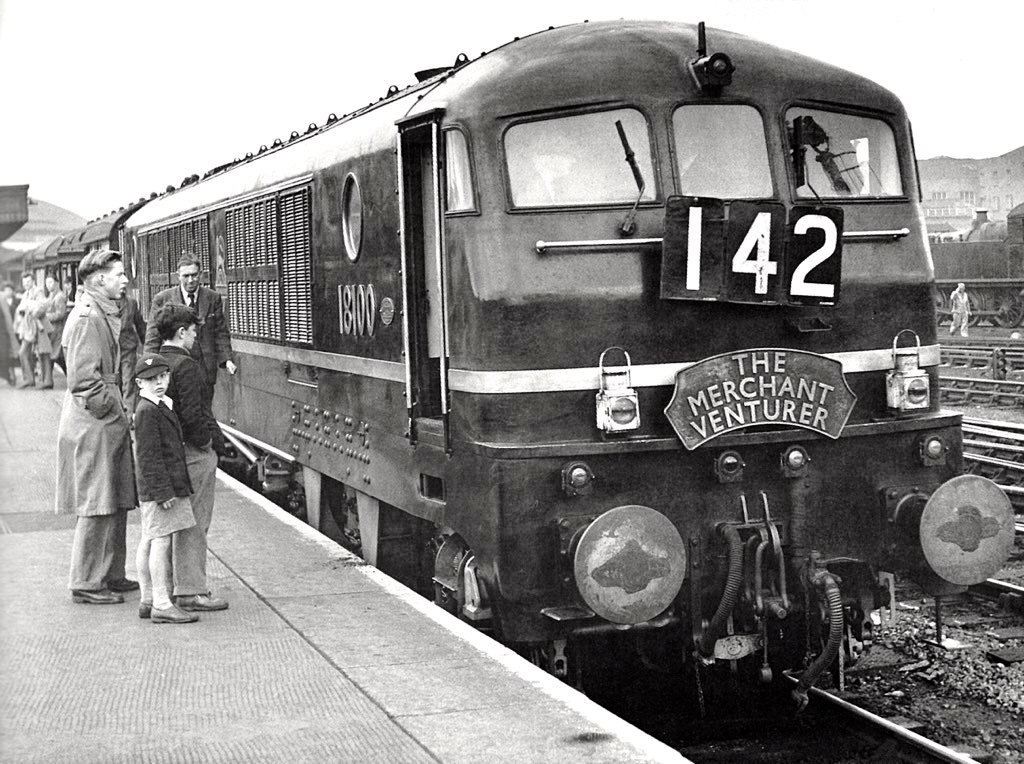

Design and technical characteristics
18100 used a gas turbine driving an electrical generator to supply traction motors — a configuration commonly called gas turbine‑electric. This arrangement combined the high power-to-weight ratio of gas turbines with the control and flexibility of electric transmission. Designers hoped this would produce a fast, reliable locomotive suitable for long-distance passenger work.
- Powerplant: gas turbine coupled to a main generator.
- Transmission: electric drive to multiple axle-mounted traction motors.
- Role: main-line express passenger services.
For more on the manufacturer, see Metropolitan‑Vickers. The project had its origins in an order placed by the Great Western Railway before nationalisation, but wartime priorities delayed construction until the early 1950s. The wider context of that delay is linked to the disruptions of World War II.
Service history
Once commissioned, 18100 operated on the Western Region and was used on high‑speed services from London Paddington. As a prototype it was valuable for trialling controls, maintenance regimes and operational practices for turbine traction. Its actual revenue service was limited because it remained effectively an experimental machine rather than the start of a large production class.
Legacy and significance
18100 is significant as part of the postwar search for steam alternatives. Gas turbine locomotives offered advantages — notably compact power delivery and potential for high speeds — but also faced drawbacks such as fuel consumption and sensitivity to operational duty cycles. Lessons from 18100 and other experimental machines informed subsequent diesel and electric developments, even though gas turbine traction did not become widespread on British main lines. The locomotive therefore occupies an important place in the history of mid‑20th century railway innovation.
Further reading
Accounts of 18100 are typically found in works on British experimental traction and the Western Region's transition from steam. Technical summaries and service records provide context for its design and the issues encountered during trials. Contemporary photographs and engineering reports can illustrate how the concept was implemented and tested.
Tags
Related articles
Author
AlegsaOnline.com British Rail 18100: prototype gas turbine-electric locomotive Leandro Alegsa
URL: https://en.alegsaonline.com/art/14295