
Boston Tea Party (December 16, 1773)
A late-18th-century colonial protest in Boston against the Tea Act and parliamentary taxation; colonists boarded ships and dumped tea, provoking punitive laws and helping to unite opposition that led toward revolution.
Overview
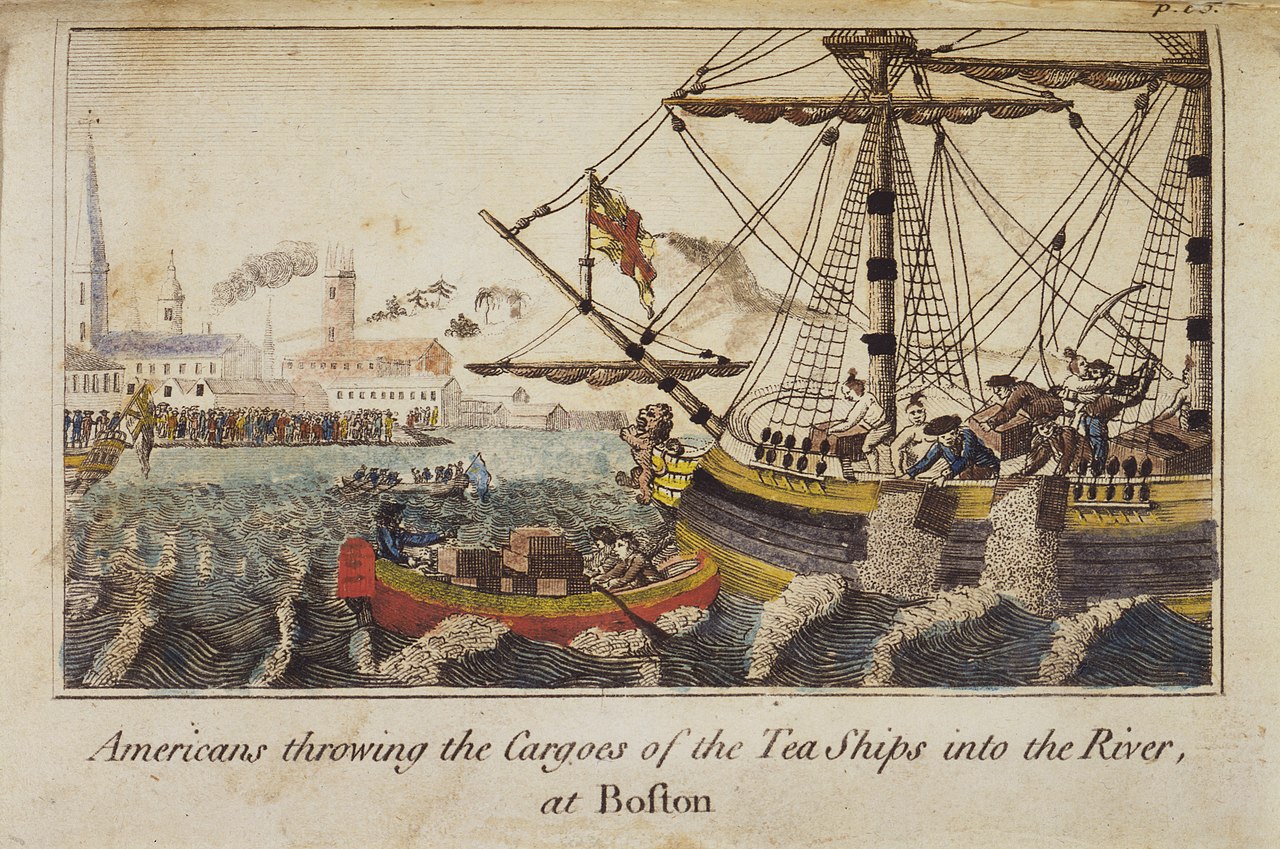
The Boston Tea Party was a political demonstration carried out by residents of Boston on the night of December 16, 1773. Conducted as a dramatic act of civil disobedience, it involved boarding merchant vessels and disposing of cargoes of tea into the water to protest British trade policy and taxation. Participants and later commentators framed the action as a deliberate protest by American colonists and a public rejection of parliamentary authority over colonial trade.
Image gallery
10 Images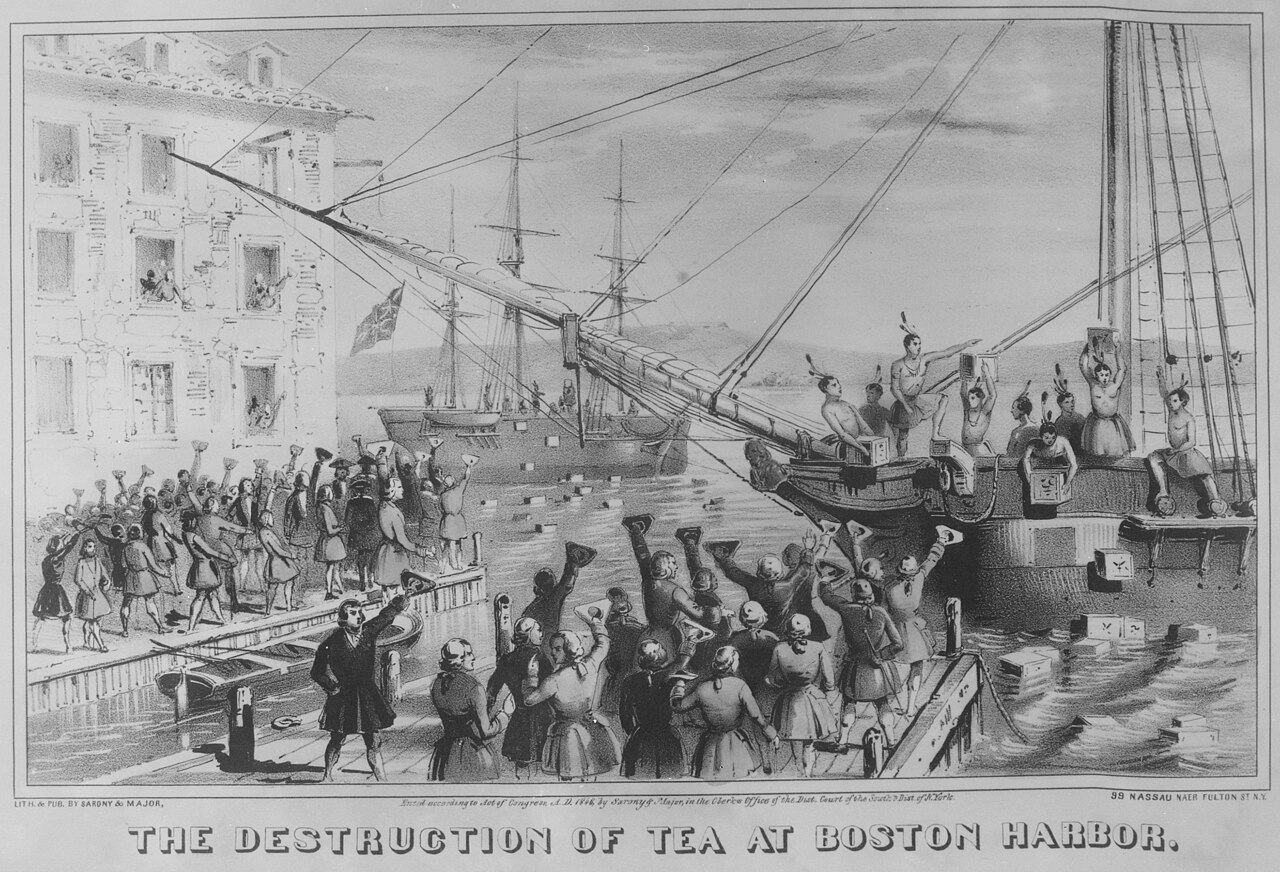





Background and causes
The immediate legislative cause was the Tea Act of 1773, passed by the British Parliament to favor the financially troubled East India Company by allowing it to sell tea directly to the colonies. Many colonists saw the law as both a tax issue and an example of unfair commercial privilege imposed without colonial consent. Opponents invoked the principle of no taxation without representation, arguing that Parliament lacked legitimate authority to tax colonists who had no direct representatives in that body. Economic pressures on local merchants and the popularity of smuggled tea compounded resistance.
- Political grievance: objection to remote parliamentary control and limits on colonial self-government.
- Economic motive: perceived threat to local merchants and the livelihoods tied to trade and smuggling.
- Organized resistance: activist networks sought coordinated public actions to block the sale of taxed tea.
The night of December 16, 1773
A group of organized opponents boarded three ships anchored in the Boston harbor—the Dartmouth, the Eleanor, and the Beaver—and opened chests of tea for disposal. Many participants disguised themselves; contemporary descriptions and later images note the use of paint, feathers and other accoutrements to resemble Indigenous dress, an element that has become part of the episode's iconic imagery and is sometimes discussed as a form of theatrical protest (disguises). Accounts vary on the exact number of tea chests destroyed, and historians treat such figures with caution.
Participants and leadership
The action was associated with local patriot organizations that had opposed earlier measures and organized boycotts. Contemporary leaders and organizers included members of groups commonly called the Sons of Liberty, and prominent colonial figures such as Samuel Adams were linked to the movement that prepared and supported protest activities. Participants described themselves as patriots defending colonial rights; identities and exact participant lists remain subjects of historical inquiry.
British response and the Intolerable Acts
The British government responded strongly. In 1774 Parliament enacted several punitive measures aimed at Massachusetts, measures colonists labeled the Intolerable Acts. These included restrictions intended to restore order, adjustments to colonial governance, and the temporary closing of parts of Boston's commerce to punish the city and deter further resistance. Rather than isolating Massachusetts, the measures helped draw sympathy and coordination among other colonies.
Significance and legacy
The Boston Tea Party is widely regarded as a key episode in the escalation of tensions that led to the American Revolutionary War. It transformed local protest into a broader intercolonial controversy, contributed to the convening of the First Continental Congress, and entered public memory as a symbol of resistance to perceived tyranny. Debates persist about particulars—who acted, how they organized, and the long-term intentions of participants—and some later personal claims of involvement are treated skeptically by historians.
Further context and resources
The event has been examined from political, economic, social and cultural perspectives. It illustrates how legal changes, commercial interests, and popular mobilization can interact to produce dramatic public acts. For introductions to primary documents, period newspapers, and museum collections that preserve objects and contemporary impressions of the event, consult specialized archives and histories that draw on colonial records, letters, and official correspondence. Suggested topics for further study include the Tea Act and parliamentary debates, the organization of colonial resistance, the role of Boston as a port city, and the sequence of reactions that followed the December 1773 action.
- Primary themes: colonial rights, trade regulation, and protest tactics.
- Local setting: the city of Boston and its maritime economy, including the ships involved.
- Historical interpretation: continuity between organized colonial opposition and later revolutionary developments.
For general overviews and thematic introductions, see resources that discuss the event as a protest by American colonists, the roles of Sons of Liberty and leaders like Samuel Adams, and the visual and narrative traditions—including accounts of disguises, the boarded ships, the city of Boston and its harbor—that kept the episode in public memory. The punitive Intolerable Acts and the broader movement toward the American Revolutionary War are key contexts for understanding why the Boston Tea Party mattered beyond the immediate loss of cargo.
Related articles
Author
AlegsaOnline.com Boston Tea Party (December 16, 1773) Leandro Alegsa
URL: https://en.alegsaonline.com/art/13227
Sources
- books.google.com : "Massachusetts Soldiers and Sailors in the American revolution Vol 9 p.124"
- boston1775.blogspot.com : "David Kinnison's Tea Party"