
Book of Tobit: summary, history, themes, and canonical status
Overview of the Book of Tobit: its narrative, origins, textual witnesses, place in Christian canons, themes such as angels and healing, and its reception in religious and cultural history.
The Book of Tobit (also called Tobias) is a short narrative that appears in several Christian Old Testament canons and in collections of the biblical apocrypha. It tells the story of Tobit, a pious Israelite who suffers blindness and misfortune, and of his son Tobias, who undertakes a journey accompanied by the angel Raphael to secure family welfare and a successful marriage for Tobias. The book integrates household concerns, moral instruction, popular motifs (such as a helpful angel and a protective fish), and prayers, and it has been influential in devotional practice and in discussions about guardian angels and charity.
Image gallery
10 Images


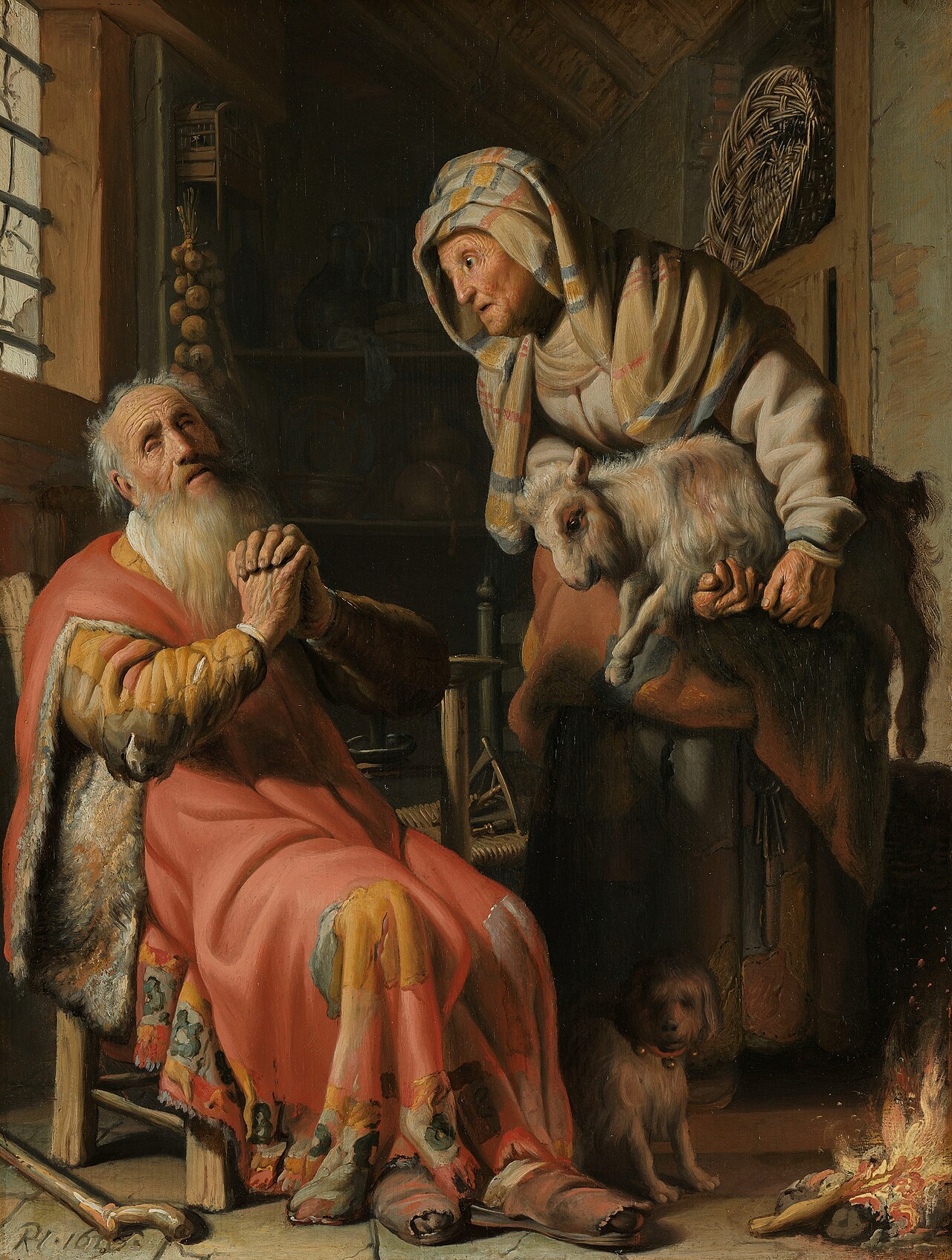


Content and main themes
The plot centers on two families and a sequence of misfortunes and recoveries. Tobit loses his sight and, feeling despair, prays for death while remaining faithful to religious duties. Meanwhile a young woman named Sarah suffers repeated bereavement when each prospective husband dies before the marriage is consummated. Tobias is sent to recover money owed to Tobit; on the way he is joined by a travel companion, the archangel who calls himself Azarias (later revealed as Raphael). The companion instructs Tobias how to drive away a demon that afflicts Sarah and how to use the organs of a fish to heal Tobit’s blindness. The narrative emphasizes prayers, almsgiving, filial devotion, divine providence, and sexual fidelity.
Structure, literary features, and motifs
Tobit is framed as a didactic tale with elements of travel narrative, romance, and miracle story. Its distinctive motifs include angelic guidance, a protective fish, exorcism of a demon often identified in tradition as Asmodeus, and the recovery of sight through medicinal means combined with prayer. The language blends legal and pious instruction with vivid episodic storytelling, and the book frequently links right conduct (charity, burial of the dead, prayer) with tangible divine aid.
Textual history and languages
Scholars generally place the composition of Tobit in the Hellenistic period, commonly dated to the late third to second century BCE in Palestine or nearby regions. The work survives in several ancient versions and translations. It is preserved in Greek in the Septuagint tradition and entered Latin biblical collections in later centuries. Fragments in Aramaic and Hebrew were discovered among the Dead Sea Scrolls, attesting to an early circulation in Semitic languages and to the book’s antiquity in Jewish milieus. Important textual witnesses and scholarly resources can be consulted for detailed manuscript evidence.
Canonical status and reception
The Book of Tobit occupies different positions in various religious traditions. It is included in the Catholic and Eastern Orthodox canons, and its canonical status in those communions was reinforced in council decisions such as the Council of Carthage and affirmed for the Roman Catholic Church at the Council of Trent. In Anglican collections the book is mentioned among the Apocrypha in Article VI of the Thirty-Nine Articles of the Church of England, where such works are retained for instruction though not used to establish doctrine. Many Protestant traditions regard Tobit as deuterocanonical or apocryphal and omit it from the Hebrew Bible.
Importance, uses, and notable facts
- Tobit has been used historically for liturgical readings, devotional reflection on angels, and ethical instruction about charity and piety.
- Its angelic figure, identified as Raphael in the narrative, has shaped Christian ideas of guardian angels and healing ministries.
- The book’s presence in the Greek Old Testament (Septuagint) and the finding of Aramaic and Hebrew fragments among the Dead Sea Scrolls at Qumran are often cited as evidence for its early circulation.
As a short, readable story that combines practical remedies, family loyalty, and theological reflection, Tobit remains a subject of interest for biblical scholars, historians of religion, and readers exploring the diverse literary landscape of ancient Jewish and Christian writings. For further study, editions and commentaries provide fuller textual comparisons and historical analysis across the manuscript witnesses and translation traditions.
Related articles
Author
AlegsaOnline.com Book of Tobit: summary, history, themes, and canonical status Leandro Alegsa
URL: https://en.alegsaonline.com/art/12994
Sources
- episcopalian.org : Article VI at episcopalian.org