
Council of Trent: mid‑16th century Catholic council for doctrine and reform
Sixteenth‑century ecumenical council (1545–1563) that clarified Catholic doctrine, reformed clerical practice, standardized liturgy and defined the Church’s response to Protestantism.
Overview
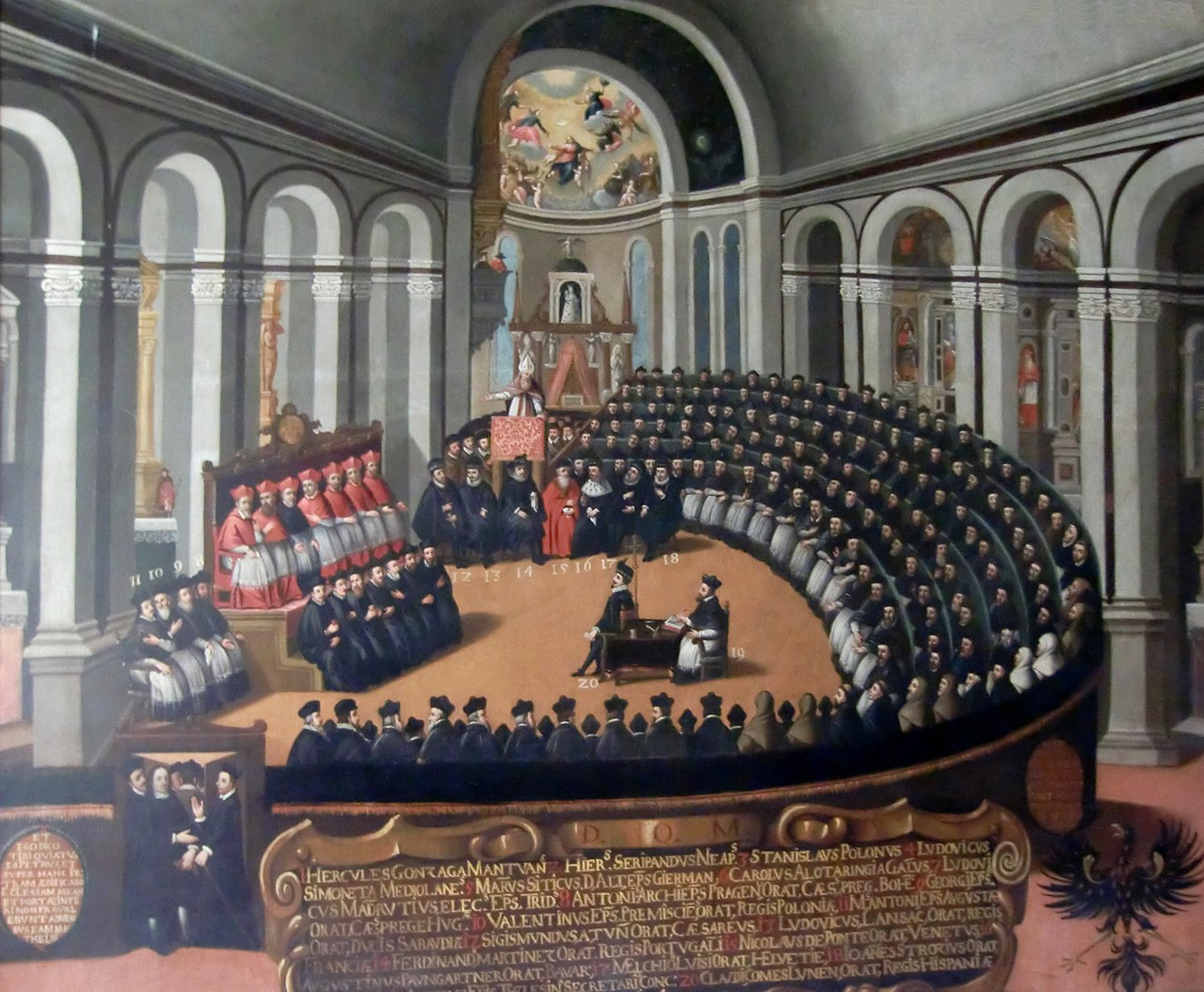
The Council of Trent was the Roman Catholic Church’s nineteenth ecumenical council, convoked in reaction to the Protestant Reformation and to internal calls for reform. Held in sessions between 1545 and 1563, principally in the northern Italian city of Trento and briefly in Bologna, it combined doctrinal clarification with measures to reform ecclesiastical structures and pastoral practice. The council sought to reassert Catholic teaching on key matters while remedying abuses that had weakened the Church’s moral and institutional authority.
Image gallery
10 Images




Background and convocation
Papal concern about the spread of Protestant teaching and about corruption and laxity among clergy led Pope Paul III to summon a general council. Support from secular authorities, especially the Holy Roman Emperor Charles V, was important but also a source of delay, since political rivalries, military conflicts and public health crises repeatedly interrupted plans. Sessions opened at Trento in 1545, were suspended and reopened several times, moved briefly to Bologna in 1547, and finally closed in 1563 under Pope Pius IV. Other pontiffs associated with the council’s troubled timetable include Julius III and Paul IV, and public attention to reform was sharpened by Protestant leaders such as Martin Luther and the wider Protestant Reformation.
Sessions and major decrees
The council met in distinct periods (1545–1547, 1551–1552, 1562–1563). It issued a large body of canons, decrees and doctrinal definitions. On Scripture and tradition, Trent reaffirmed that both the Bible and Church tradition were authoritative for Christian belief. It promulgated an authoritative canon of Scripture and clarified the nature and number of the sacraments. On justification, it rejected sola fide as articulated by many Protestant reformers and taught that grace received in faith works together with the believer to justify the sinner. The council also defined Eucharistic doctrine, affirmed transubstantiation, and set norms for liturgy and sacramental practice.
Clerical and institutional reform
Beyond doctrine, Trent enacted concrete reforms to improve pastoral care and discipline. It mandated bishops’ residence in their dioceses, set standards for moral conduct, and required the establishment of seminaries for priestly education. Measures addressed abuses such as absenteeism, pluralism and simony. The reforms aimed to raise clerical competence and moral example so that the faithful could be better catechized and served.
Implementation, enforcement, and reception
Implementing Trent’s decrees fell to local bishops, synods and religious orders; in many regions the council’s measures were enforced vigorously, while in others political or social conditions slowed their effect. Trent became the touchstone for Catholic reform in the Counter‑Reformation, a multifaceted movement that combined doctrinal defence, spiritual renewal and renewed missionary activity. The council’s decisions shaped the Roman Rite (often referred to as the Tridentine liturgy) and influenced seminaries, catechisms and disciplinary codes for centuries.
Legacy and historical assessment
The Council of Trent left a durable institutional and theological legacy. It clarified core Catholic teachings, closed the canon of Scripture for Catholics, and provided detailed canons to guide pastoral and sacramental life. Historians note both its conservatism—reaffirming traditional doctrine—and its reforming energy, which addressed genuine problems within the Church. Trent’s texts were authoritative for later Catholic theology and remained central to debates between Catholics and Protestants. The council is often studied as a turning point that prepared the Church to meet the challenges of the early modern period.
Further reading and resources
- General introductions to ecumenical councils and the history of the ecumenical council tradition.
- Overviews of the Protestant Reformation and the political context in which Trent met.
- Studies of the city of Trento as host and on the role of Emperor Charles V in calling the assembly.
- Biographical treatments of popes associated with the council: Paul III, Julius III, Paul IV, and Pius IV.
- Theological summaries of Trent’s canons on the sacraments and Scripture, including references to the sacraments and to Eucharistic doctrine.
- Analyses of the Counter‑Reformation movement and its institutions (Counter‑Reformation) and the influence of leaders such as Martin Luther on the council’s agenda.
Questions and answers
Q: What was the Council of Trent?
A: The Council of Trent was the 19th Ecumenical council of the Roman Catholic Church. It was a meeting of important members of the Catholic Church in reaction to the Protestant Reformation, and it reinforced Catholic doctrine regarding salvation, sacraments, and Biblical canon.
Q: When did the Council take place?
A: The Council took place between 13 December 1545 and 4 December 1563.
Q: Who wanted to hold the council?
A: Charles V, Holy Roman Emperor wanted to hold the council, and Pope Paul III summoned it in 1537.
Q: Why did plans for a council fail in 1538?
A: Plans for a council failed in 1538 due to resistance from popes and revolt against the emperor.
Q: Why did it take so long for another Ecumenical Council to be held after Trent?
A: It took over 300 years until another Ecumenical Council was held after Trent because Pope Paul III saw that Protestant Reformation had grown significantly with many princes supporting its ideas.
Related articles
Author
AlegsaOnline.com Council of Trent: mid‑16th century Catholic council for doctrine and reform Leandro Alegsa
URL: https://en.alegsaonline.com/art/23457