
Agamidae — the dragon lizards (family of acrodont iguanian lizards)
Agamidae is a widespread family of acrodont lizards known as dragon lizards. This article summarizes their distribution, physical traits, behavior, taxonomy, and interactions with people.
Overview
Agamidae is a family of iguanian lizards often called dragon lizards. Members of the family occur across much of the Old World: see distributions in Africa, Asia and Australia, with a few species reaching southern Europe. Modern accounts list roughly 350 species placed in about 50 genera, though numbers change as taxonomic research progresses.
Image gallery
6 Images



Physical characteristics
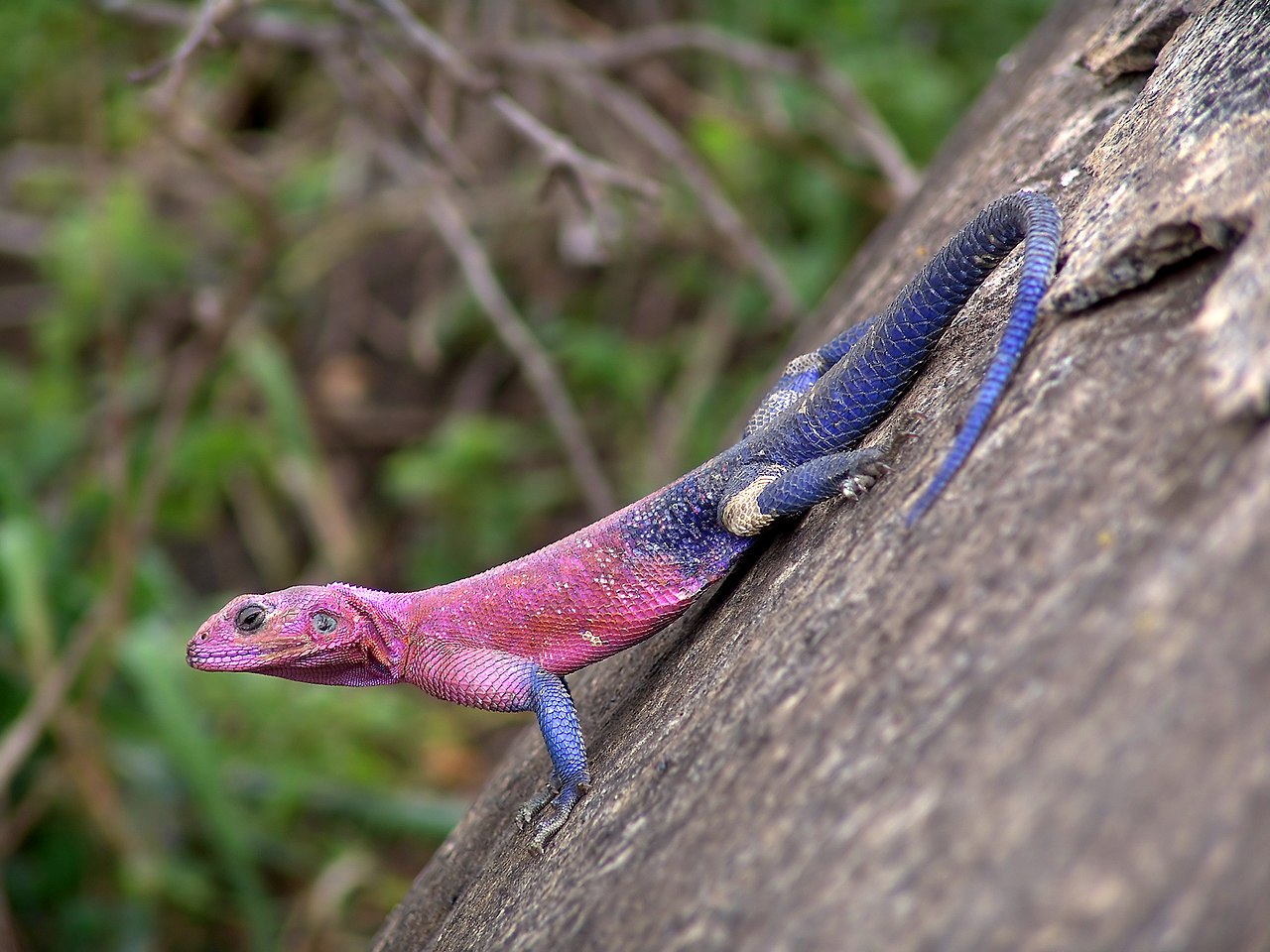
Agamids typically have well-developed limbs, a long tail, and bodies covered with scales. Their teeth are acrodont—attached to the crest of the jawbone rather than in sockets—a feature shared with chameleons and important in classification. Size and build vary considerably between ground-dwelling, rock-dwelling and arboreal forms; many species show bright colors or crests used in visual signaling. General descriptions often note their scaly skin (scales) and substantial tails (tail) relative to body length.
Behaviour and ecology
Agamids occupy a wide range of habitats from deserts to forests. Diets range from primarily insectivorous to omnivorous and herbivorous in some groups. Many species rely on visual displays—head-bobbing, body inflation, color changes and dewlap extension—for territorial and mating interactions. A few genera exhibit specialized adaptations such as gliding membranes supported by elongated ribs.
Taxonomy and evolution
The family is part of the iguanian radiation and is distinguished by acrodont dentition. Taxonomists divide agamids into several subgroups and genera that reflect ecological specialization. Ongoing molecular studies continue to refine relationships within the family and between agamids and other acrodont lizards.
Notable groups and examples
- Draco-like gliders with wing-like membranes developed from ribs.
- Bearded dragons and other Australian genera popular in the pet trade.
- Robust, spiny desert species adapted to hot, arid environments.
Human interactions and importance
Some agamids are common in the pet trade and in cultural contexts; others are important insect predators in their ecosystems. Habitat loss and collection can threaten local populations. For introductions and further reading see linked resources on classification and regional faunas (family overview).
For taxonomic lists and species accounts consult specialized references or regional field guides linked via institutional resources (species, genera).
Related articles
Author
AlegsaOnline.com Agamidae — the dragon lizards (family of acrodont iguanian lizards) Leandro Alegsa
URL: https://en.alegsaonline.com/art/1331