
Louvre Pyramid
The glass-and-metal entrance to the Musée du Louvre in Paris, designed by I. M. Pei and opened in 1989; a modern geometric intervention that organizes visitor circulation and contrasts with the historic palace.
The Louvre Pyramid is a prominent glass-and-metal structure set in the main courtyard of the Musée du Louvre in Paris. Conceived as the museum's primary public entrance, it provides a clear, geometric focal point that contrasts with the 17th- and 18th-century façades of the former royal palace. The project was designed by architect I. M. Pei and sits at the heart of a larger renovation of the museum complex; for background on the institution see the Louvre.
Image gallery
4 Images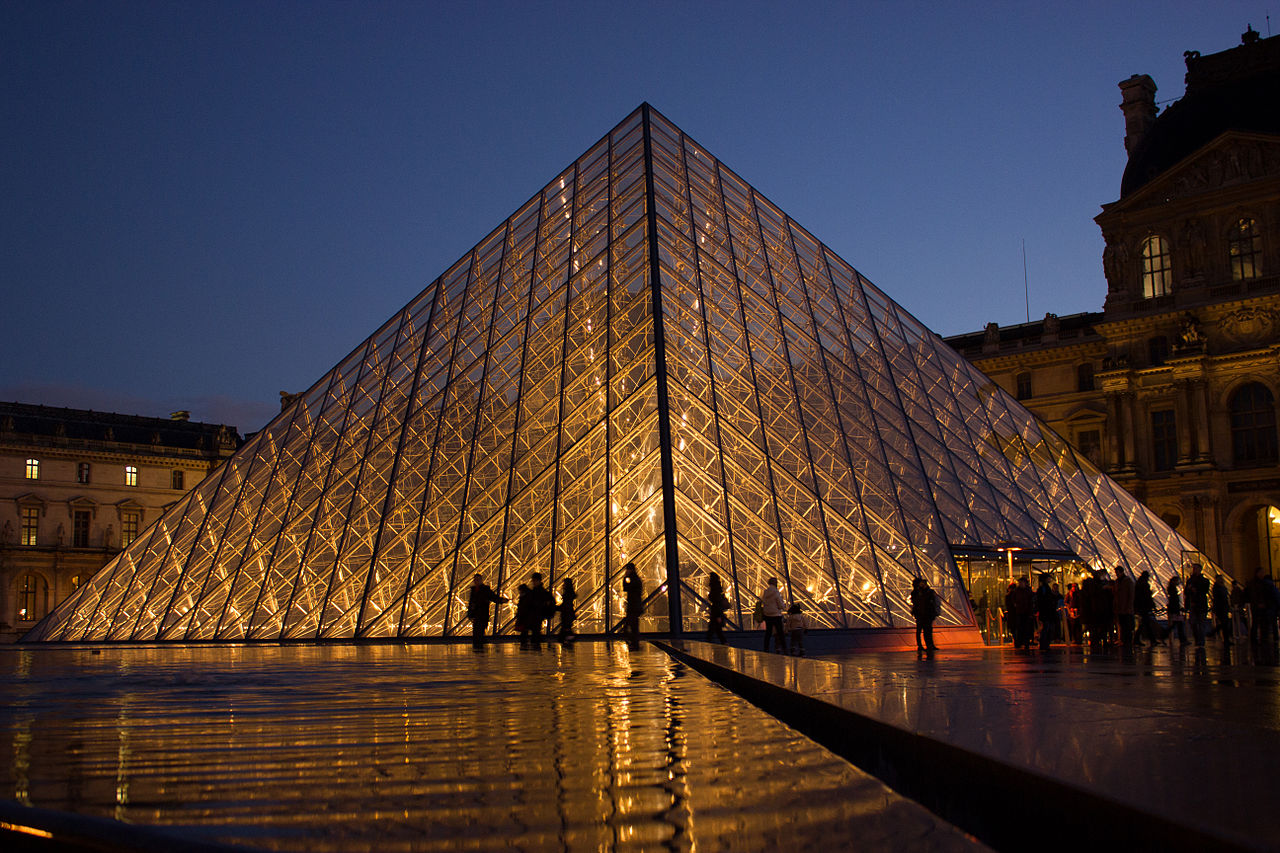


Design and materials
The pyramid is constructed from a framework of metal and many panes of clear glass, producing a transparent form that admits daylight into the spaces below. Its geometry is sharply modern yet intentionally simple, allowing reflections and changing light to affect how the palace courtyard is perceived. Technical and material descriptions are available in architectural studies and site documentation (glass details, structure and framework).
Function and interior
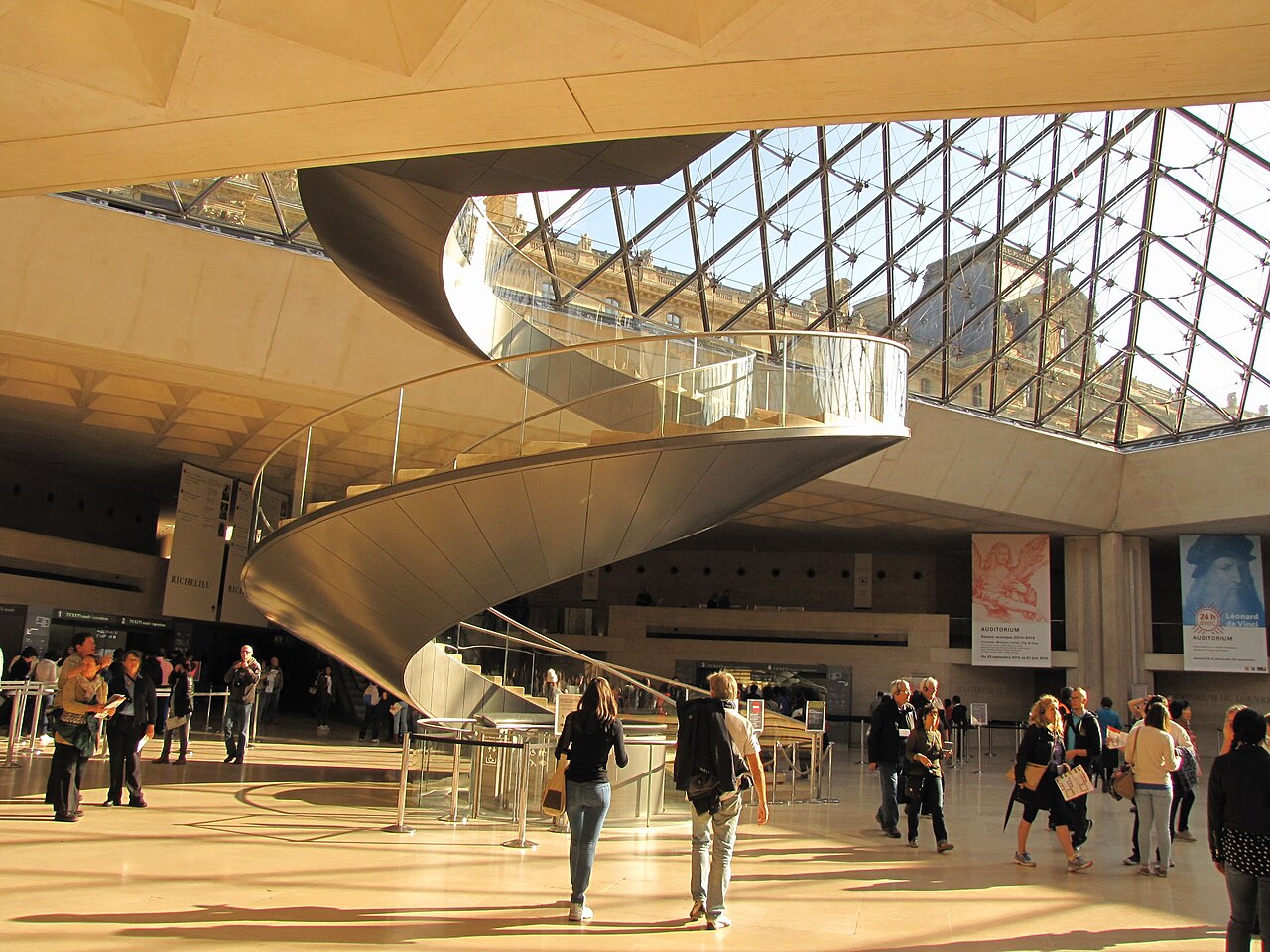
Functionally, the pyramid funnels visitors down to the underground Hall Napoléon, which serves as a reception, ticketing and circulation hub that helps distribute visitors to the museum's galleries. An adjacent, inverted glass feature channels daylight into lower levels and links multiple access points, improving movement and orientation within a complex historic site. Practical visitor information and maps are provided by the museum (visitor information).
History and reception
The project was initiated as part of president François Mitterrand's cultural programme and was inaugurated in 1989. Its modern insertion provoked debate on the appropriateness of contemporary architecture within a revered historic ensemble. Over time, critics and the public have come to accept — and often celebrate — the pyramid as a useful and iconic element of the museum experience; official ceremonies and diplomatic guests marked its opening (notable attendees).
Notable facts
- The glass pyramid functions both as a symbolic landmark and as a practical gateway to one of the world’s largest museums.
- Its designer, I. M. Pei, was known for blending modern geometry with respect for historical context.
- Nearby elements, including an inverted pyramid, extend the scheme to bring light and orientation to subterranean spaces.
- The structure remains a frequent subject of architectural study and a major photographic subject for visitors.
Related articles
Author
AlegsaOnline.com Louvre Pyramid Leandro Alegsa
URL: https://en.alegsaonline.com/art/125420