
I. M. Pei
Ieoh Ming Pei (1917–2019) was a Chinese-American architect whose geometric, light-focused modernism produced landmark buildings worldwide, including the Louvre Pyramid and the Bank of China Tower.
Ieoh Ming Pei (April 26, 1917 – May 16, 2019) was a Chinese-American architect celebrated for large-scale public projects and museum designs. Over a career spanning more than half a century he became known for a disciplined modernism that used clear geometry, light, and refined materials to shape memorable urban, cultural, and civic spaces.
Born in China, Pei received an early introduction to architecture from his father. He pursued formal training in the United States and established his own practice in the mid-20th century, later evolving into the partnership known as Pei Cobb Freed & Partners. His work combined rigorous planning with sensitivity to context and history, earning international commissions.
Image gallery
10 Images


Style and design approach
Pei favored elemental forms—triangles, squares, and pyramids—and often used glass and stone to manipulate light and perception. He balanced modernist clarity with careful gestures toward local conditions and traditions, producing buildings that are at once contemporary and site-aware. His approach emphasized the visitor's experience of space, circulation, and daylight.
Notable works
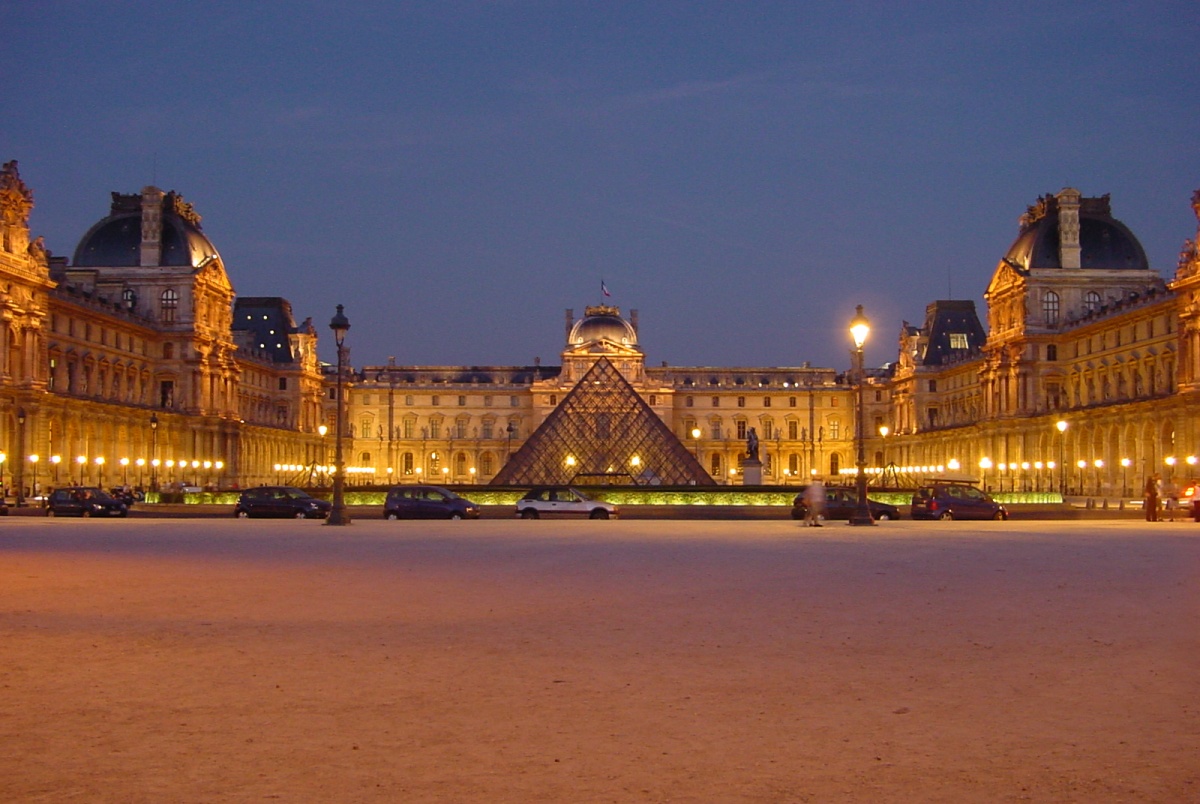
- Louvre Pyramid, Paris — a glass-and-metal pyramid that serves as the main entrance to the Louvre Museum and became an internationally recognized symbol of the institution.
- Bank of China Tower, Hong Kong — a striking skyscraper notable for its crystalline geometry and status as a major skyline landmark.
- East Building of the National Gallery of Art, Washington, D.C. — a museum expansion that illustrates Pei's skill at organizing complex circulation and gallery spaces.
- Museum of Islamic Art, Doha — a modern museum drawing on geometric motifs and a spare material palette to reference regional precedents.
- Rock and Roll Hall of Fame, Cleveland — a cultural complex combining dramatic forms with civic presence on the lakeshore.
Many of Pei's projects prompted debate: some early critics challenged bold interventions in historic settings, while others praised their clarity and transformative effect. Over time several controversial works—most famously the Louvre Pyramid—achieved broad public acceptance and became emblematic of the institutions they serve.
Pei received major professional honors, including the Pritzker Architecture Prize, and his influence is visible in contemporary museum and commercial architecture. He died in 2019 at the age of 102, leaving a global legacy of carefully composed buildings that continue to shape cultural life and urban identity.
Author
AlegsaOnline.com I. M. Pei Leandro Alegsa
URL: https://en.alegsaonline.com/art/139980