
German Church (Tyska kyrkan / Saint Gertrude's Church), Stockholm
Historic German Church in Gamla stan, Stockholm, known as Tyska kyrkan or Saint Gertrude's Church; a medieval Hanseatic parish building now part of the Church of Sweden with notable architecture and cultural role.
Overview
The German Church is a historic parish church in Stockholm's old town, commonly called Deutsche Kirche in German and Tyska kyrkan or Sankta Gertruds kyrka in Swedish. It stands in Gamla stan, the medieval heart of Stockholm, Sweden, and serves the German Saint Gertrude Parish within the Church of Sweden. The building is both a place of worship and a landmark that reflects the long presence of German merchants and craftsmen in the city.
Image gallery
10 Images



Architecture and features
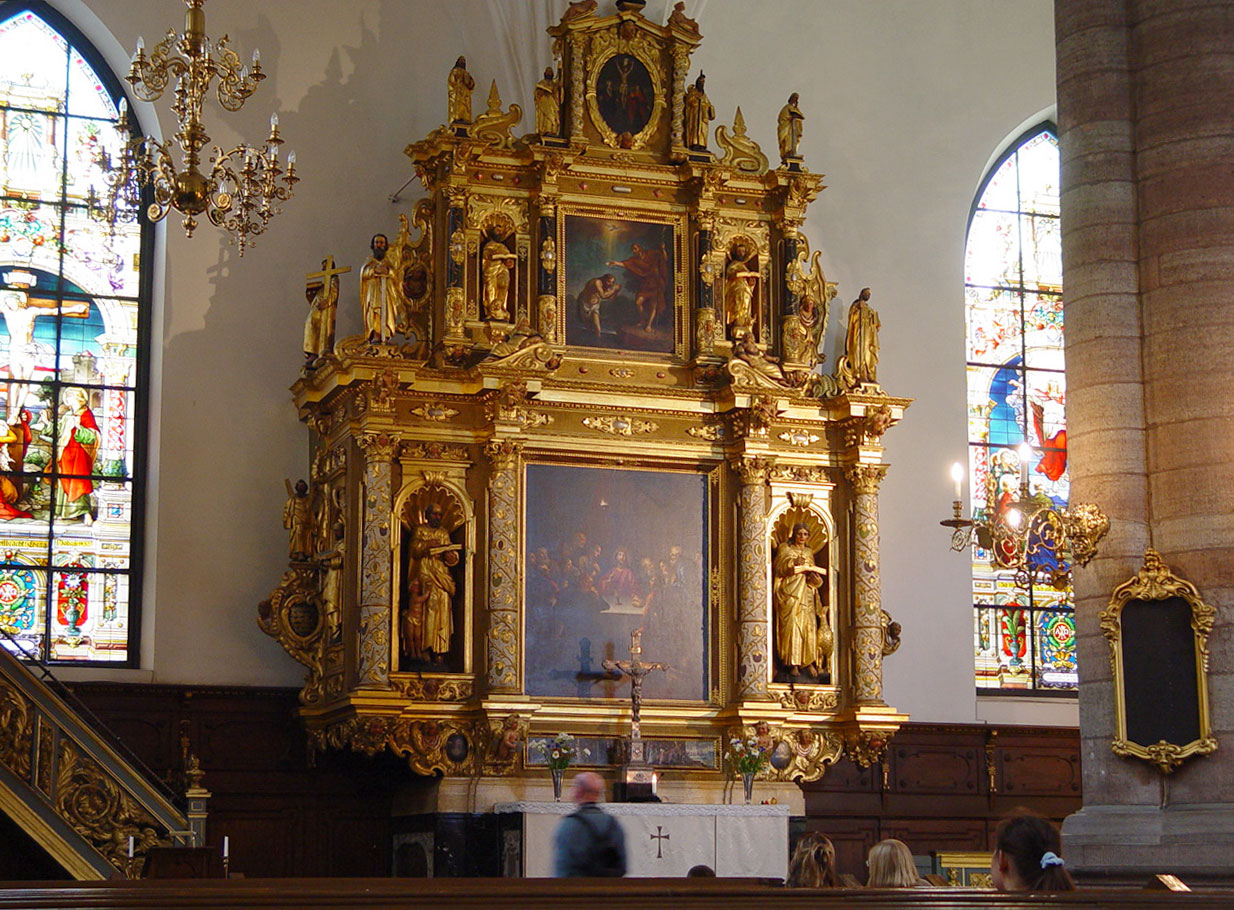
The church combines medieval origins with later stylistic layers from subsequent centuries. Its structure displays characteristics of northern European brick church building, with a clearly articulated nave and tower silhouette visible above the dense roofscape of the old town. Inside, visitors encounter richly carved memorials, a prominent altar area and a large organ — features typical of a town church that served a prosperous trading community.
History and development
The German Church grew out of a congregation connected to the Hanseatic network and the German-speaking residents who settled in Stockholm in the Middle Ages. Over time the building was altered and refurbished to meet liturgical needs and changing tastes; these phases have left a layered interior and exterior that document centuries of use. The church has retained its identity as a center for the German-speaking community even as it became part of the national Church of Sweden.
Uses and community role
Beyond regular worship, the church has functioned as a communal focal point for rites of passage, memorials and cultural gatherings. It is used for services in German at times, for concerts that take advantage of its acoustics, and for ceremonies such as weddings and funerals tied to the German parish. The building also attracts visitors interested in Stockholm's mercantile history and urban fabric.
Notable facts and distinctions
- The dedication to Saint Gertrude links the church to a medieval tradition of patronage associated with travelers and merchants.
- Its location in Gamla stan places it among narrow streets and historic squares that formed the commercial core of early Stockholm.
- Monuments, epitaphs and donor plaques inside record the presence and influence of German families and guilds over several centuries.
As both an active parish church and a heritage site, the German Church offers insight into the multicultural past of Stockholm and remains a living part of the city's religious and cultural landscape.
Questions and answers
Q: What is the German Church in Stockholm?
A: The German Church is a church located in Gamla stan, the old town in central Stockholm, Sweden.
Q: What is the German Church also known as?
A: The German Church is sometimes called Saint Gertrude's Church in Swedish.
Q: To which parish does the German Church in Stockholm belong?
A: The German Church belongs to the German Saint Gertrude Parish of the Church of Sweden.
Q: What is the main religion in Sweden?
A: The main religion in Sweden is Lutheran Christianity.
Q: Which language is used to refer to the German Church in Stockholm?
A: German and Swedish are used to refer to the German Church in Stockholm.
Q: Is the German Church a historic landmark in Stockholm?
A: Yes, the German Church is located in the old town and is therefore considered a historic landmark.
Q: Is the German Church open to the public?
A: Yes, the German Church is open to the public and visitors are welcome.
Related articles
Author
AlegsaOnline.com German Church (Tyska kyrkan / Saint Gertrude's Church), Stockholm Leandro Alegsa
URL: https://en.alegsaonline.com/art/119732
Sources
- svenskakyrkan.se : "Geschichte der Kirche"