
Abydos King List
Ancient Egyptian royal list carved in the Temple of Seti I at Abydos. A selective sequence of pharaohs used to affirm dynastic legitimacy and to help modern reconstruction of royal succession.
Overview
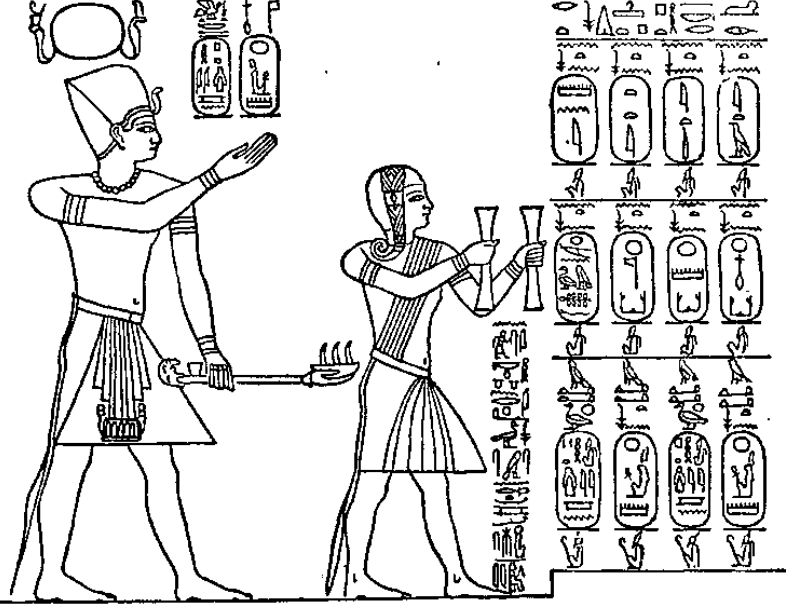
The Abydos King List is an inscription of royal names carved in the mortuary complex of Seti I. It records a succession of predecessors in oval name compartments and was produced in a temple setting to link the reigning dynasty to earlier kings. The monument is located at Abydos, one of the principal cult sites for the god Osiris, and the decoration of the complex is attributed to Seti I and, in its completion, to his son.
Image gallery
10 Images





Layout and content
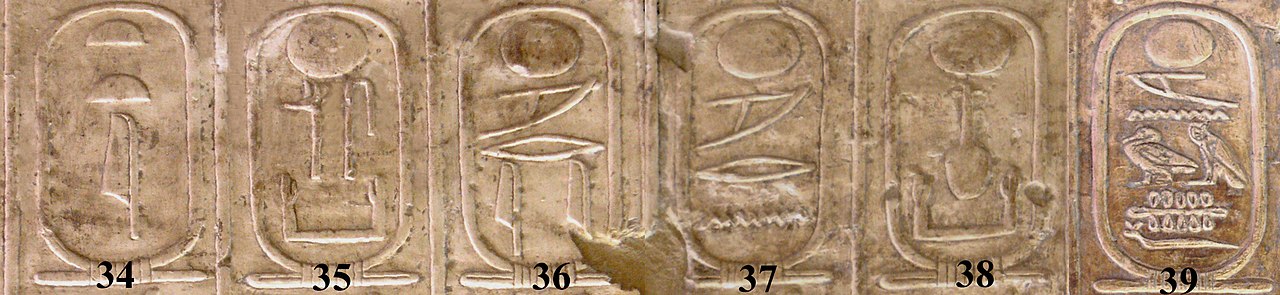
The list is presented as a sequence of cartouches arranged in horizontal registers. The individual name compartments, commonly called cartouches, enclose royal names and are grouped so that the viewer reads a lineage of rulers. Scholars commonly cite a total of dozens of royal names preserved on the monument; some publications give a conventional count of seventy-six names while noting variations in how rows and repetitions are interpreted. The last portion of the inscription also emphasizes the names of Seti I and his immediate successor.
Historical purpose and ideology
In ancient Egypt, king lists often served ideological purposes as much as documentary ones. By assembling an ordered sequence of predecessors, the Abydos inscription reinforced Seti I’s claim to legitimate rule and underscored continuity with the past. The selection and omission of particular rulers reflect the religious and political priorities of the time: the list presents a sanctioned historical memory rather than a neutral catalogue.
Notable omissions
Several well-known rulers are missing from the Abydos sequence. The list omits pharaohs associated with religious innovation or contested legitimacy, including the Amarna pharaoh Akhenaten and a number of his immediate successors. The female ruler Hatshepsut and several short-lived or politically problematic kings are likewise absent. These omissions demonstrate deliberate curatorial choices by the monument’s creators.
Use in chronology and comparison with other sources
Egyptologists use the Abydos King List alongside other documentary sources — such as the Turin King List, monumental inscriptions, and later historical summaries — to reconstruct sequences of rulers and relative chronologies. The list is especially useful for preserving the names of rulers who are otherwise poorly attested, including some figures from the later Old Kingdom and transitional periods. Comparisons with archaeological evidence and administrative records help place the Abydos list within a broader chronological framework.
Condition, copies and study
The inscription survives in situ but has been the subject of many squeezes, drawings and photographic reproductions made by travellers and scholars since the nineteenth century. These copies, together with excavation reports and museum catalogues, provide the principal means for detailed study where weathering or damage affects the original reliefs. Modern publications routinely comment on the accuracy of earlier transcriptions and on restoration of damaged sections.
Significance and interpretation
The Abydos King List is valued both as a historical source and as an example of how later rulers curated the past. It offers insight into royal titulary, dynastic ideology, and the politics of memory in New Kingdom Egypt. Researchers approach it critically: while it preserves important names not recorded elsewhere, it must be read in context and compared with other evidence to build a balanced picture of ancient Egyptian succession and chronology.
Further resources
- Visit the monument at the Temple of Seti I to see the inscription in its architectural setting.
- For studies of early periods, compare the Abydos list with records of the Old Kingdom and with administrative papyri.
- Analyses of omissions often focus on rulers such as Akhenaten and on the political reasons behind excluding others.
- Biographical and titulary studies may discuss the appearance or absence of rulers like Hatshepsut in royal memory.
- Technical transcriptions and photographic archives remain essential for precise readings; many are cited in museum catalogues and specialist literature (Abydos reports).
Because the Abydos King List blends historical record with dynastic representation, its greatest value lies in the combination of names it preserves and the light it sheds on how a New Kingdom pharaoh wished to present his past. Careful comparison with other king lists and archaeological data allows modern scholars to use the inscription responsibly when reconstructing the sequence and identity of Egypt’s rulers.
Questions and answers
Q: What is the Abydos King List?
A: The Abydos King List, also known as the Abydos Table, is a list of 76 kings of Ancient Egypt written on a wall of the Temple of Seti I at Abydos, Egypt.
Q: How many rows does the list have?
A: The list has three rows with 38 cartouches (borders around the name of a king) in each row.
Q: What order are the Old Kingdom kings listed in?
A: The Old Kingdom kings are listed in the order in which they ruled.
Q: What dynasties does it include?
A: It includes names from both the Seventh and Eighth Dynasties.
Q: Are there any pharaohs not included on this list?
A: Yes, some earlier pharaohs who were not seen to be lawful rulers — such as Akhenaten, Hatshepsut, Smenkhkare, Tutankhamen, and Ay — have been left out of this list.
Related articles
Author
AlegsaOnline.com Abydos King List Leandro Alegsa
URL: https://en.alegsaonline.com/art/113267