
Blitzkrieg: Theory and Practice of Rapid Mechanized Warfare
Blitzkrieg, German for 'lightning war', is a 20th-century military approach that emphasizes speed, combined arms and surprise to disrupt and encircle an opponent. It rose to prominence in the 1930s and early WWII.
Overview
Blitzkrieg is a German word literally meaning "lightning war". It describes a doctrine of rapid, coordinated attack that seeks to penetrate enemy lines, disrupt command and logistics, and force collapse before defenders can react. The term itself derives from German language and popular usage, although commanders and staffs did not always use the phrase in official documents.
Image gallery
10 Images




Key characteristics
The approach depends on speed, shock and the integration of different combat arms to create cascading failures in the opponent's defenses. Typical elements include:
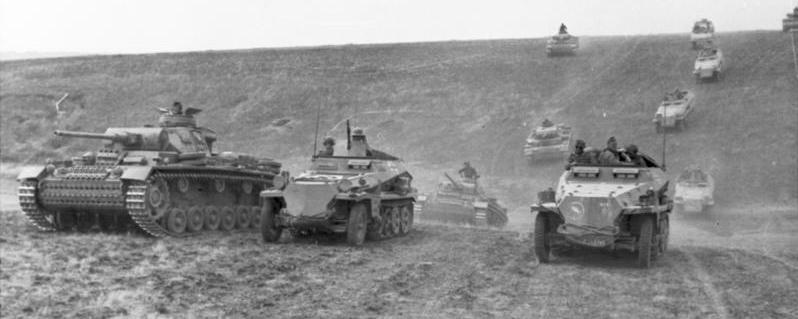
- Highly mobile armored forces, notably tanks, used to punch through weak points;
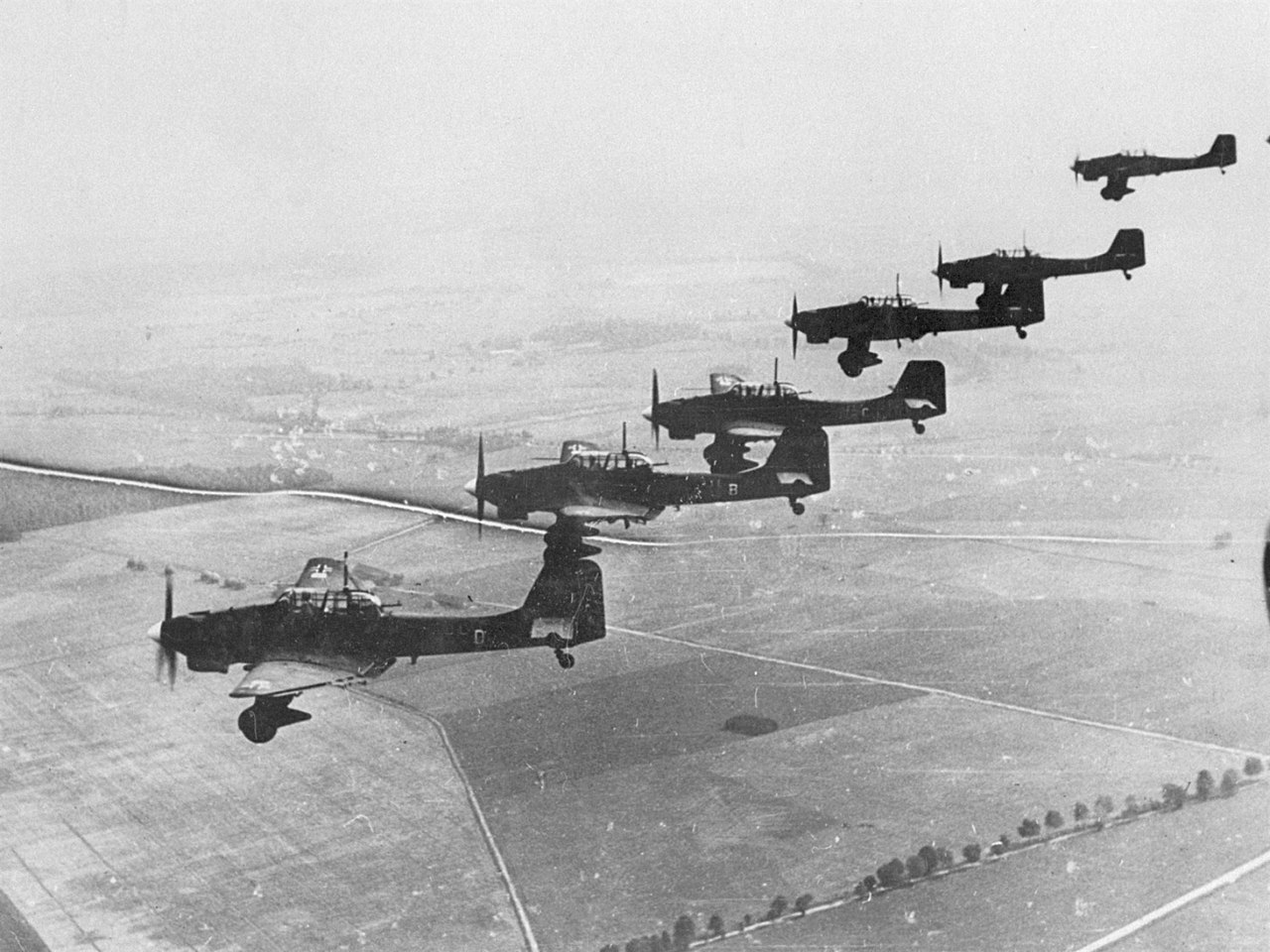
- Close air support and air superiority provided by aircraft to disrupt reserves and supply lines;
- Motorized and mechanized infantry that follow rapidly to consolidate gains;
- Extensive use of radios and communications to coordinate fast-moving units;
- Operational emphasis on encirclement and the capture of command centers rather than attrition by slow, sequential battles.
Origins and development
Concepts behind blitzkrieg evolved between the world wars from lessons of World War I, advances in motor vehicles, and new airpower concepts. German planners and officers in the 1930s adapted these ideas into doctrine and training within the armed forces of the Third Reich, notably the Wehrmacht. Influences included theoretical work on maneuver warfare and practical experiments with mechanized formations. By the outbreak of World War II, these practices were mature enough to be applied in large-scale operations.
Major campaigns and effects
Early in the war, blitzkrieg-style operations produced spectacular results. Rapid combined-arms offensives were decisive in the 1939 invasion of Poland and the 1940 campaign against France, collapsing established defenses and leading to large numbers of prisoners and abandoned matériel. Similar methods were used in the 1941 invasion of the Soviet Union, Operation Barbarossa, where initial advances covered great distances though ultimately became constrained by logistics, terrain and weather.
Countermeasures, limits and legacy
Opposing forces developed effective responses over time. Deeper defensive belts, flexible reserves, anti-tank tactics and improved air defense reduced the shock effect of rapid penetrations. The principle of defence in depth — trading space for time and creating layered obstacles — often blunted early breakthroughs. Logistics, weather, and the inability to sustain long supply lines proved persistent limits. Despite these limits, blitzkrieg influenced postwar doctrines around combined arms, mechanization and the use of air-ground coordination.
The Blitz and terminology
The German word "Blitz" also appears in other wartime contexts. Most famously, the term "The Blitz" refers to the sustained aerial bombing campaign against British cities, especially London, in 1940–41. That campaign damaged large areas of housing and infrastructure and caused many civilian casualties — contemporary estimates often cite over a million homes destroyed and tens of thousands of deaths — while aiming to undermine industrial capacity and civilian morale (sometimes loosely described as affecting public happiness). The bombing campaign was related to, but distinct from, the military doctrine of rapid maneuver on land.
Over time, the word "blitzkrieg" has entered general usage to describe any fast, concentrated effort in military, political or commercial contexts, though historians treat the term with nuance and emphasize the doctrine's operational details and historical limits.
Related articles
Author
AlegsaOnline.com Blitzkrieg: Theory and Practice of Rapid Mechanized Warfare Leandro Alegsa
URL: https://en.alegsaonline.com/art/12197
Sources
- ushmm.org : "Blitzkrieg (Lightning War)"