
Boeing B-29 Superfortress
Four-engine American heavy bomber of World War II era, the B-29 introduced advanced systems, long-range strategic capability and carried out the final bombing campaigns against Japan.
The Boeing B-29 Superfortress was a long-range, four-engine heavy bomber developed for the United States during the Second World War. Built by Boeing as the Model 345, it combined a large bomb load and extended range with a number of then-modern features. The aircraft type is commonly described simply as an aircraft that helped transform strategic bombing and postwar aviation design.
Image gallery
10 Images


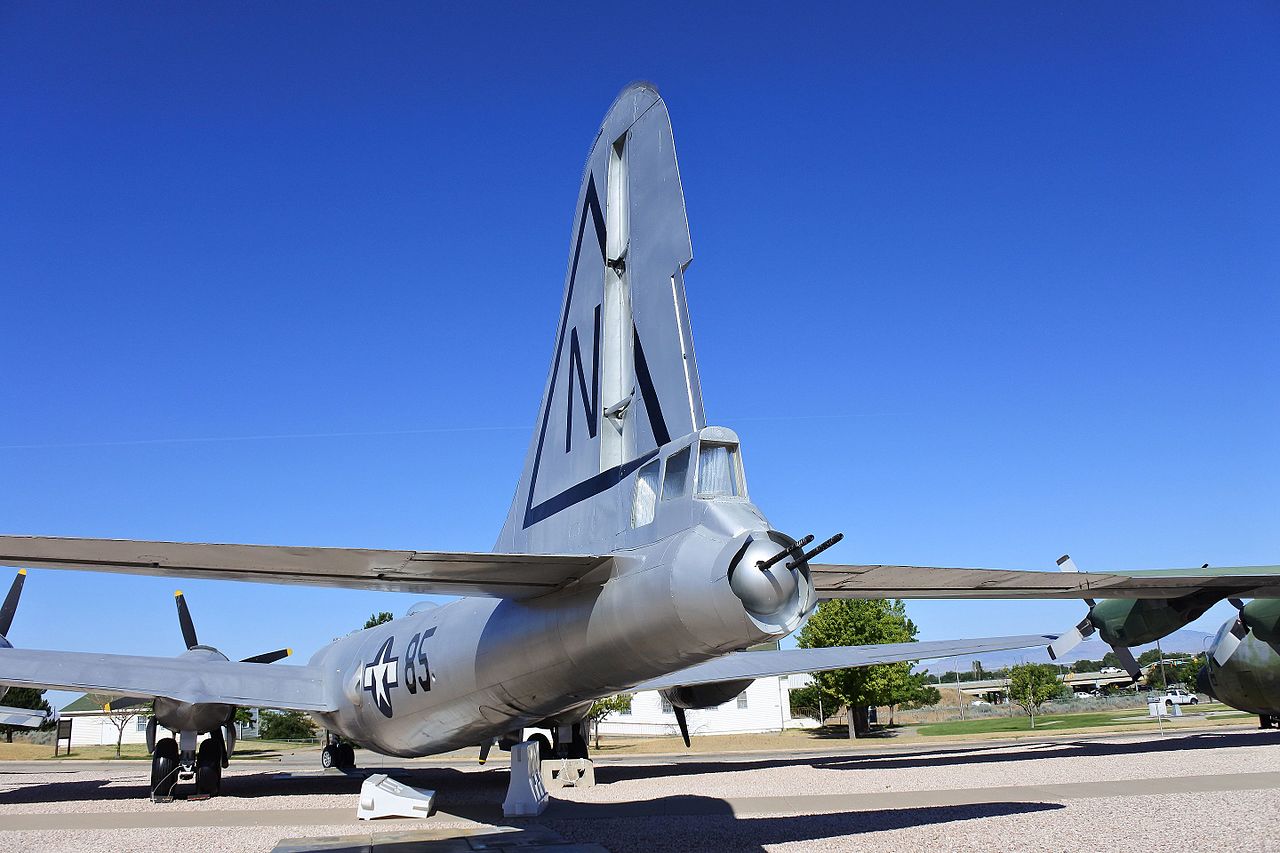


Design and main characteristics
The B-29 incorporated several advanced elements for its era. It was designed to operate at higher altitude and longer distances than earlier bombers, carrying a substantial payload over the vast distances of the Pacific. Notable characteristics include pressurized crew compartments for high-altitude operations, remote-controlled defensive gun turrets, and a tricycle landing gear arrangement.
- Powerplant: a set of powerful radial engines driving large propellers to give long-range cruise capability and heavy-lift performance—often described simply as having four engines.
- Defensive and offensive systems: remote gun mounts linked to optical sights and a central fire-control system to coordinate defensive fire.
- Crew accommodations: multi-person crew with dedicated stations for pilot, co-pilot, bombardier, navigator and gunners inside pressurized sections.
Development and wartime service
Work on the design began before the United States entered the global conflict and accelerated once the need for a long-range strategic bomber became clear. Early prototypes flew in 1942 and the type entered service in subsequent years as production scaled up. By the time it was fully operational the B-29 had become one of the most sophisticated bombers in service during World War II, tailored for extended missions across oceanic distances.
In the Pacific theater the B-29 was the principal U.S. heavy bomber during the final year of fighting, basing from newly captured islands and forward bases to reach targets on the Japanese home islands. Its combination of range, payload and altitude capability made it central to the air campaign against Japan, including both high-altitude precision attempts and later low-altitude incendiary raids that inflicted widespread urban damage.
Atomic missions and notable operations
Beyond conventional bombing, B-29 aircraft were adapted for special missions. Most notably, specially configured B-29s transported the first deployed atomic bombs dropped in combat, missions that resulted in the bombings of Hiroshima and Nagasaki. These operations were among the most consequential uses of the type and marked a turning point in both the war and military aviation history.
Variants, postwar use and legacy
Manufacture produced a number of variants and adapted versions: specialized reconnaissance platforms, aerial refueling prototypes and incremental improvements. After 1945 the B-29 remained in service into the early Cold War period, seeing limited combat in Korea and serving as a platform for experimental roles. Approximately 3,900 Superfortresses were produced, and the type influenced subsequent strategic bomber design by demonstrating the value of pressurization, remote weapons systems and long-range operations.
Today the B-29 is remembered for its technical innovations and its major role in late World War II operations. Several airframes are preserved in museums or maintained in airworthy condition for historic flight displays, where they serve as reminders of the aircraft's engineering and historical significance.
Related articles
Author
AlegsaOnline.com Boeing B-29 Superfortress Leandro Alegsa
URL: https://en.alegsaonline.com/art/12651
Sources
- commons.wikimedia.org : B-29 Superfortress
- nationalmuseum.af.mil : USAF Museum Fact Sheet- XB-29