
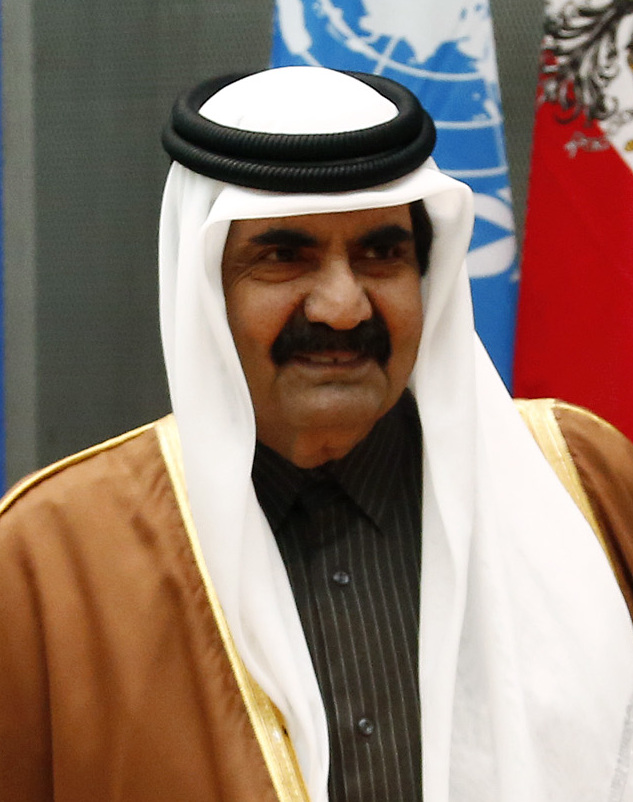
Hamad bin Khalifa Al Thani
Former Emir of Qatar (1995–2013) who presided over rapid economic modernization, the launch of Al Jazeera, and a controversial foreign policy; he abdicated in 2013 in favor of his son.
Overview
Sheikh Hamad bin Khalifa Al Thani (born 1 January 1952) served as the ruler of the State of Qatar from 1995 until his voluntary transfer of power in 2013. His name in Arabic is often cited in regional biographies. Prior to becoming head of state he was the designated heir apparent for many years and held senior government posts, including responsibilities for defence and elements of national planning.
Image gallery
10 Images


Domestic policy and economic development
During his tenure Hamad emphasized modernization and economic diversification. He chaired planning bodies that guided national development, notably institutions responsible for economic and social strategy. The government under his leadership prioritized the expansion of hydrocarbon production and downstream industries: revenues from oil and, especially, natural gas helped finance major infrastructure projects, social services and foreign investment. Ministries and councils involved in setting economic policy and social programs were strengthened to manage rapid growth and urban development.
Media, institutions and international profile
One of the most visible initiatives of his era was state backing for a regional news broadcaster that sought to increase Qatar’s influence in the Arab world. The launch and early financing of the pan‑Arab news network are often linked to the ruler’s decisions to support new media platforms. State loans and startup funding helped establish the organization and sustain it through its formative years. Hamad also supported education, cultural projects and diplomatic outreach that raised the country’s international profile.
Key initiatives and roles
- Supreme planning and economic councils that coordinated long‑term development.
- Strengthening of defence and security administration, a role he exercised earlier in his career (Ministerial and leadership posts).
- State backing and early financing for a new Arab international news network, including a reported initial loan.
- Investment of hydrocarbon revenues into health, education and urban infrastructure (social policy).
Controversies and foreign relations
Hamad’s foreign policy was active and sometimes polarizing: Qatar pursued an independent diplomatic line, offered mediation in regional disputes, and invested widely in cultural and sporting ties abroad. At the same time, critics and several governments have alleged that elements within the state or private actors provided funds to armed or political movements; reports and accusations about financial links to groups such as Hamas and armed factions in the Sahel and Syria have been part of ongoing international debate. Allegations of monetary support and transfers have been reported by analysts and opponents, but these claims are contested and have been the subject of diplomatic scrutiny (alleged funding, non‑state armed groups).
Abdication and legacy
In June 2013 Hamad announced he would hand power to his son, beginning a new chapter in Qatar’s leadership while preserving many of the institutions and international relationships established during his rule. His period in office is widely credited with transforming Qatar from a small Gulf emirate into a globally connected state with large energy exports, substantial sovereign investments and a high international profile. Observers note a mixed legacy: sustained economic modernization and expanded soft power on the one hand, and persistent questions about regional policy and political openness on the other.
Related articles
Author
AlegsaOnline.com Hamad bin Khalifa Al Thani Leandro Alegsa
URL: https://en.alegsaonline.com/art/120239
Sources
- spiegel.de : "SPIEGEL Interview with the Emir of Qatar – 'We Are Coming to Invest'"
- nytimes.com : "Al Jazeera provides an inside look at Gaza conflict"
- diwan.gov.qa : "Sheikh Hamad's Biography"
- csmonitor.com : "Backstory: The royal couple that put Qatar on the map"
- ft.com : ft.com/intl/cms/s/0/0d0bb8de-1cf5-11e2-a17f-00144feabdc0.html
- france24.com : france24.com
- nytimes.com : nytimes.com/2012/12/11/opinion/al-qaeda-in-syria.html?_r=0.html