
Hamilton Hume: Early Australian-born Explorer and Overland Pioneer
Profile of Hamilton Hume (1797–1873), an Australian-born explorer who pioneered inland routes in southeast Australia, co-led the 1824 Hume and Hovell expedition, and left a lasting regional legacy.
Hamilton Hume (19 June 1797 – 19 April 1873) was one of the earliest native-born European explorers of colonial Australia. Born on the outskirts of Parramatta, near present-day Sydney, Hume became noted for his bushcraft, inland reconnaissance and for opening practicable routes from the Sydney region toward what later became southeastern Victoria. His life bridged frontier exploration and the early pastoral expansion of New South Wales.
Image gallery
6 Images


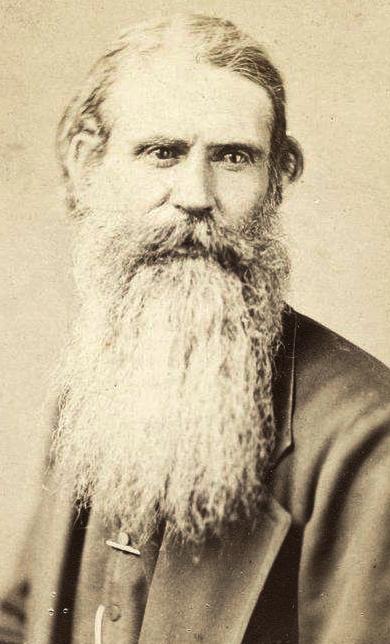
Early life and practical training
Hume was born into a settler family: his father, Andrew Hamilton Hume, arrived in the colony in 1790 and worked with convict arrivals before establishing himself as a farmer. From adolescence Hamilton Hume spent much of his time exploring country around Sydney and learning survival and navigation in the Australian bush. These formative years included journeys with established surveyors and explorers that taught him map reading, tracking and leadership.
His formative trips are recorded alongside colonial figures and surveys; for example he accompanied the deputy surveyor-general James Meehan and later took part in coastal surveys with officers such as John Oxley. Through these associations Hume gained knowledge of both the settled fringe and the less-known plains and ranges that lay beyond.
Major expeditions and accomplishments
Hume’s best-known achievement was the 1824 overland journey he led with William Hovell from the Murrumbidgee region to Port Phillip Bay. The trip demonstrated that an overland route from the settled parts of New South Wales into the productive plains of what would become Victoria was possible. That expedition is commonly referred to as Hume and Hovell and is viewed as a turning point for inland settlement and stock movement.
- Early reconnaissance: local exploration as a youth that extended to Berrima and the Goulburn Plains.
- Coastal and inland surveys: participation in searches for rivers along the New South Wales coast and inland reconnaissance parties.
- 1824 overland crossing: successful route-finding from the Murrumbidgee to Port Phillip Bay, encouraging pastoral occupation.
Later life and legacy
After active exploring years Hume turned to pastoral pursuits and local public duties in southern New South Wales. He continued to advise younger travellers and settlers and maintained an interest in routes and communications between colonies. Over time his name was commemorated in a number of geographic and civic forms: roads, localities and memorials that recall his role in opening parts of the interior to European settlement.
There has also been historical debate about details of some journeys and allocations of credit between expedition leaders, but Hume's practical knowledge of the country and his ability to lead bush parties are widely accepted. Modern references to his life and work can be found in local histories and dedicated biographies; researchers typically consult colonial records and biographical entries for fuller documentary detail. For contextual references see contemporary summaries of his birthplace Parramatta, notes on convict-era arrivals like his father Andrew Hamilton Hume, and accounts of his early training learning bushcraft.
Why Hume matters
Hume’s contributions are important for understanding the expansion of pastoral settlement and the exploration history of southeastern Australia. He helped establish routes that later became major communication corridors; in popular memory and in infrastructure his name survives, for example in the major transportation link that bears his name Hume Highway and in regional place names that commemorate exploration and settlement. For overviews and further reading consult general biographical notes on early Sydney settlers, expedition summaries of coastal surveys and collections of colonial journals by contemporary explorers.
Key expedition references and local histories remain the primary sources for detailed timelines and maps; interested readers can follow curated archival guides and museum summaries for more on bush skills or consult specialised biographies and research notes that treat Hume’s life and his place in Australian exploration history and public records.
Questions and answers
Q: Who was Hamilton Hume?
A: Hamilton Hume was the first Australian born explorer.
Q: Where was Hamilton Hume born?
A: Hamilton Hume was born near Parramatta, a town close to (and now a part of) Sydney.
Q: What did Hamilton Hume's father do?
A: Hamilton Hume's father, Andrew Hamilton Hume, came to Australia in 1790 in charge of convicts (prisoners) and later became a farmer.
Q: When did Hamilton Hume begin exploring the Sydney area?
A: Hamilton Hume began exploring the Sydney area at the age of 17.
Q: What did Hamilton Hume learn on his exploring journeys?
A: On his exploring journeys, Hamilton Hume learned how to live safely in the bush (the area far from the cities).
Q: Who did Hamilton Hume go on a journey with in March 1817?
A: In March 1817, Hamilton Hume went on a journey with James Meehan, the deputy surveyor-general.
Q: What did Hamilton Hume and John Oxley do together?
A: Hamilton Hume went with John Oxley and Meehan to Jervis Bay, and in 1822 was with a group which sailed in a boat down the east coast of New South Wales looking for rivers.
Related articles
Author
AlegsaOnline.com Hamilton Hume: Early Australian-born Explorer and Overland Pioneer Leandro Alegsa
URL: https://en.alegsaonline.com/art/120244
Sources
- gutenberg.net.au : gutenberg.net.au
- adb.anu.edu.au : Australian Dictionary of Biography