
Gregory Jarvis: Hughes engineer and Challenger payload specialist
Profile of Gregory B. Jarvis (1944–1986), an American engineer and payload specialist on Space Shuttle Challenger STS-51-L, his career, planned research, the accident, and his legacy.
Gregory Bruce Jarvis (August 24, 1944 – January 28, 1986) was an American engineer selected to fly as a payload specialist on Space Shuttle Challenger mission STS-51-L. Jarvis was an employee of Hughes Aircraft who was assigned to operate and oversee company-sponsored microgravity experiments. He died with the six other crew members when Challenger broke apart shortly after liftoff. For basic institutional context see NASA and the corporate research role exemplified by Hughes Aircraft.
Image gallery
6 Images



Early life, education and military service
Jarvis was born in Detroit and raised in the United States. He earned a Bachelor of Science degree from SUNY Buffalo and a Master of Science from Northeastern University, training in electrical and aerospace-relevant engineering fields. After college he served as a Captain in the United States Air Force, leaving active duty in the early 1970s before joining industry.
Professional career and role as payload specialist
At Hughes, Jarvis worked on satellite systems and payloads and was selected to fly as a company-designated payload specialist — a non-NASA crew position created to place experiment operators or project experts aboard shuttle flights. His role would have combined technical oversight with data collection. Contemporary descriptions of such assignments are available through flight manifest records and program summaries.
Planned experiments and responsibilities
Jarvis's assigned work focused on the behavior of fluids in microgravity and associated engineering tests intended to inform spacecraft and satellite fluid systems. Typical experiments of this type study capillarity, wetting, mass transport and container interactions. His planned activities are described in contemporary mission briefs for STS-51-L and associated payload documentation.
Challenger accident and investigation
On January 28, 1986, Challenger broke apart 73 seconds after launch due to a structural failure that originated at a solid rocket booster joint; the failure allowed hot gases to impinge on the vehicle, leading to loss of vehicle integrity. The event prompted a lengthy accident inquiry and multiple safety reforms. For the technical analysis and official findings see resources on the launch failure investigation and engineering reviews that discuss O-ring performance and shuttle hardware design concerns (O-ring failure summaries).
Aftermath, commemoration and significance
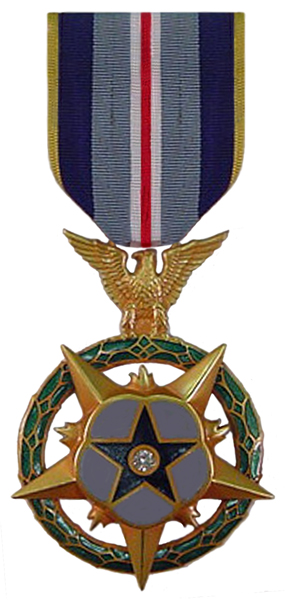
The loss of Jarvis and his crewmates had a profound effect on the U.S. space program, resulting in program suspension, procedural overhauls, and renewed emphasis on flight safety. Jarvis has been remembered in public memorials and organizational tributes; many technical and educational institutions maintain biographies or remembrances (biographical records). Government and civilian honors and memorials recognized the crew's service (congressional tribute), and the disaster reshaped how commercial partners participate in crewed missions (commercial payloads).
Notable facts and distinctions
- Jarvis was not a career NASA astronaut but was selected by his employer to fly as an experiment specialist; the payload specialist category bridged industry, academia and the agency (payload specialist roles).
- The Challenger accident remains a central case study in engineering ethics, risk communication and organizational safety management (safety lessons).
- Accounts of Jarvis's life and work are preserved in NASA archives and in memorial collections that document the STS era (memorials and archives).
Gregory Jarvis is remembered as an engineer and payload specialist whose planned research represented the collaboration between industry and government carried out aboard the Space Shuttle. His career and the circumstances of STS-51-L continue to inform aerospace engineering practice and safety culture.
Related articles
Author
AlegsaOnline.com Gregory Jarvis: Hughes engineer and Challenger payload specialist Leandro Alegsa
URL: https://en.alegsaonline.com/art/120038
Sources
- nasa.gov : "Biographical Data"