
Gregor Mendel — Pioneer of Classical Genetics
Gregor Mendel (1822–1884), an Augustinian monk and botanist, established the basic laws of heredity through pea plant experiments that founded classical genetics.
Overview
Gregor Johann Mendel was an Augustinian friar and an accomplished botanist whose systematic experiments with garden peas laid the groundwork for modern genetics. Born in 1822 in what was then the Austrian Empire, he carried out controlled hybridization experiments in the monastery's garden and greenhouse to observe how traits passed between generations.
Image gallery
5 Images


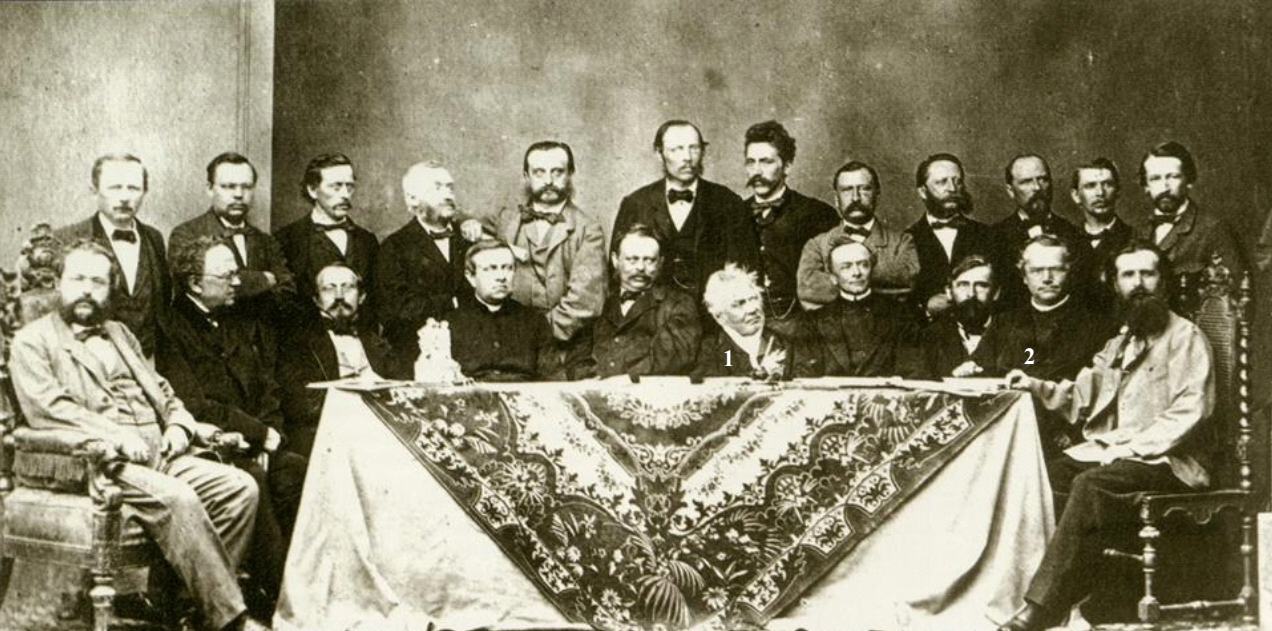

Experiments and findings
Mendel used several varieties of pea plants in carefully planned crosses, recording numerical counts of offspring across multiple generations. He observed clear patterns: some traits appeared in the first generation while others reappeared later, which led him to propose concepts now summarized as dominance and segregation. He expressed these regularities in what became known as Mendelian inheritance.
Key ideas Mendel introduced include the concepts of dominant and recessive traits and the notion that hereditary units (later called genes) segregate during reproduction. Mendel's approach was notable for its quantitative rigor: he counted offspring and used ratios to infer underlying patterns rather than relying on anecdotal observation. Much of his work was performed in a monastery greenhouse where he could control crosses and environmental factors.
Traits, methods and limitations
- Typical pea traits Mendel tracked: seed shape, seed color, flower color, pod shape, pod color, and plant height.
- He used true-breeding lines and reciprocal crosses to test inheritance rules.
- Limitations: Mendel's laws describe many but not all inheritance patterns—linked genes, polygenic traits and environmental effects cause deviations.
Reception and legacy
Mendel published his results in 1866 but his work received little attention until around 1900, when his conclusions were independently recognized by Carl Correns and Hugo de Vries, with Erich von Tschermak later cited as another rediscoverer whose role is debated. Mendel is now celebrated as the founder of classical genetics; subsequent research connected his abstract units of inheritance to chromosomes and DNA, expanding and refining the framework he began.
Today Mendel's methods—controlled crosses, replicate counts and quantitative analysis—remain central to genetics and plant breeding, and his work is taught as a foundational chapter in biology.
Questions and answers
Q: Who was Gregor Johann Mendel?
A: Gregor Johann Mendel was an Austrian monk and botanist who founded genetics.
Q: What did Mendel do?
A: Mendel cross-bred pea plants and discovered dominant and recessive characters (genes) through his experiments.
Q: What is Mendelian inheritance?
A: Mendelian inheritance refers to the principles of inheritance of characteristics, or genes, that Gregor Mendel discovered in his experiments with pea plants.
Q: Was Mendel's work appreciated right away?
A: No, Mendel's work was not appreciated at first.
Q: Who rediscovered Mendel's work?
A: Mendel's work was 'rediscovered' in 1900 by Carl Correns and Hugo de Vries.
Q: Was there a third rediscoverer?
A: Erich von Tschermak was initially considered a third rediscoverer, but his status is now less convincing.
Q: What is the significance of Mendel's work?
A: Mendel's work laid the foundation for modern genetics and helped scientists understand patterns of inheritance in organisms.
Related articles
Author
AlegsaOnline.com Gregor Mendel — Pioneer of Classical Genetics Leandro Alegsa
URL: https://en.alegsaonline.com/art/120042
Sources
- britannica.com : "Gregor Mendel"