
Space Shuttle Challenger (OV-099): history, accident, and legacy
Overview of Space Shuttle Challenger (OV-099), the 1986 accident, investigation findings, crew, technical causes and the program changes and memorials that followed.
Overview
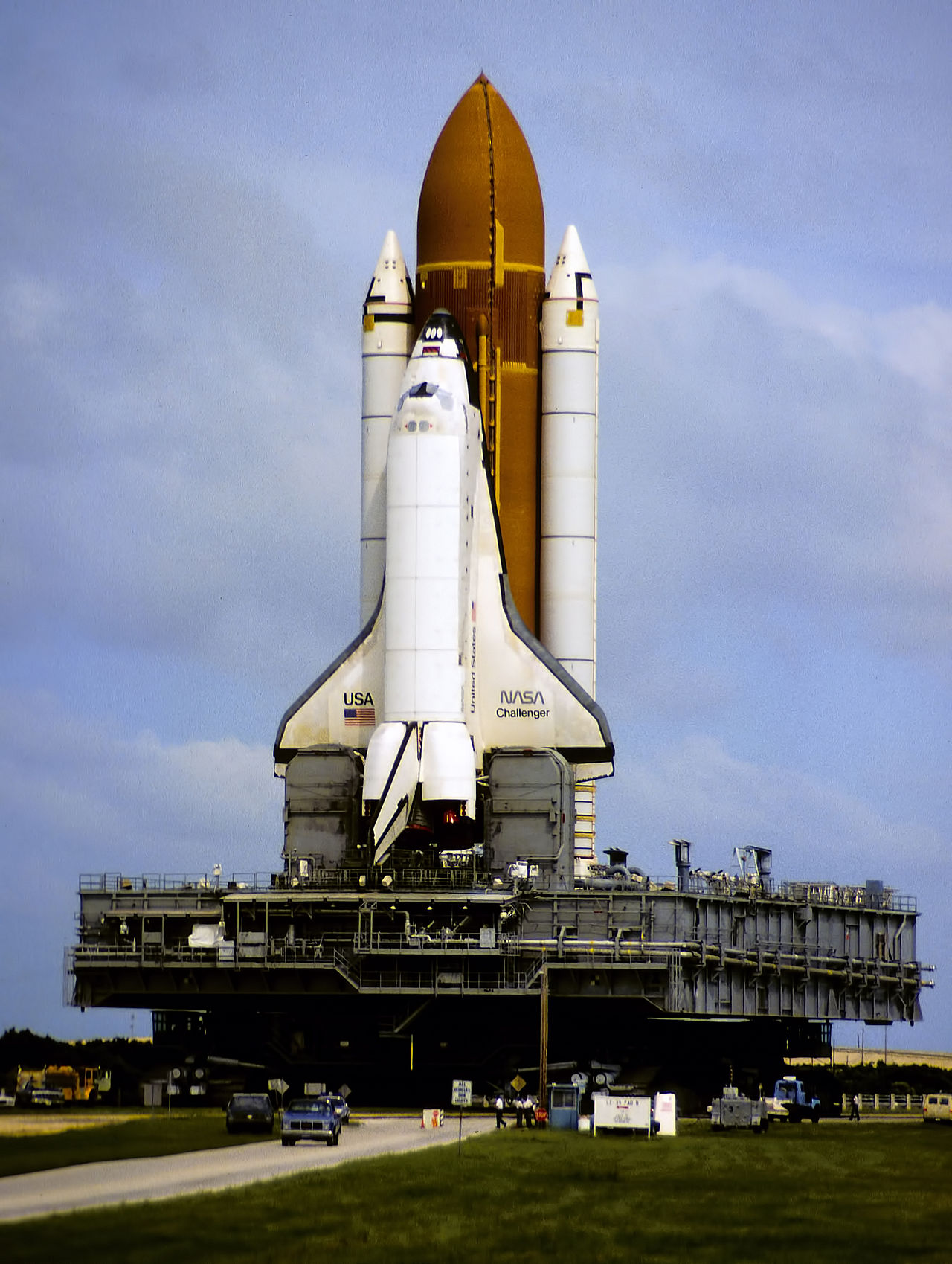
Space Shuttle Challenger (OV-099) was one of NASA's reusable orbital spacecraft, operated by NASA. Originally assembled from vehicle components and modified for flight, Challenger entered service in the early 1980s and carried crews and payloads on a series of missions designed for research, satellite deployment and operational tasks in outer space. The orbiter became widely known beyond the space community because of its role in public outreach and the participation of civilian payload specialists.
Image gallery
10 Images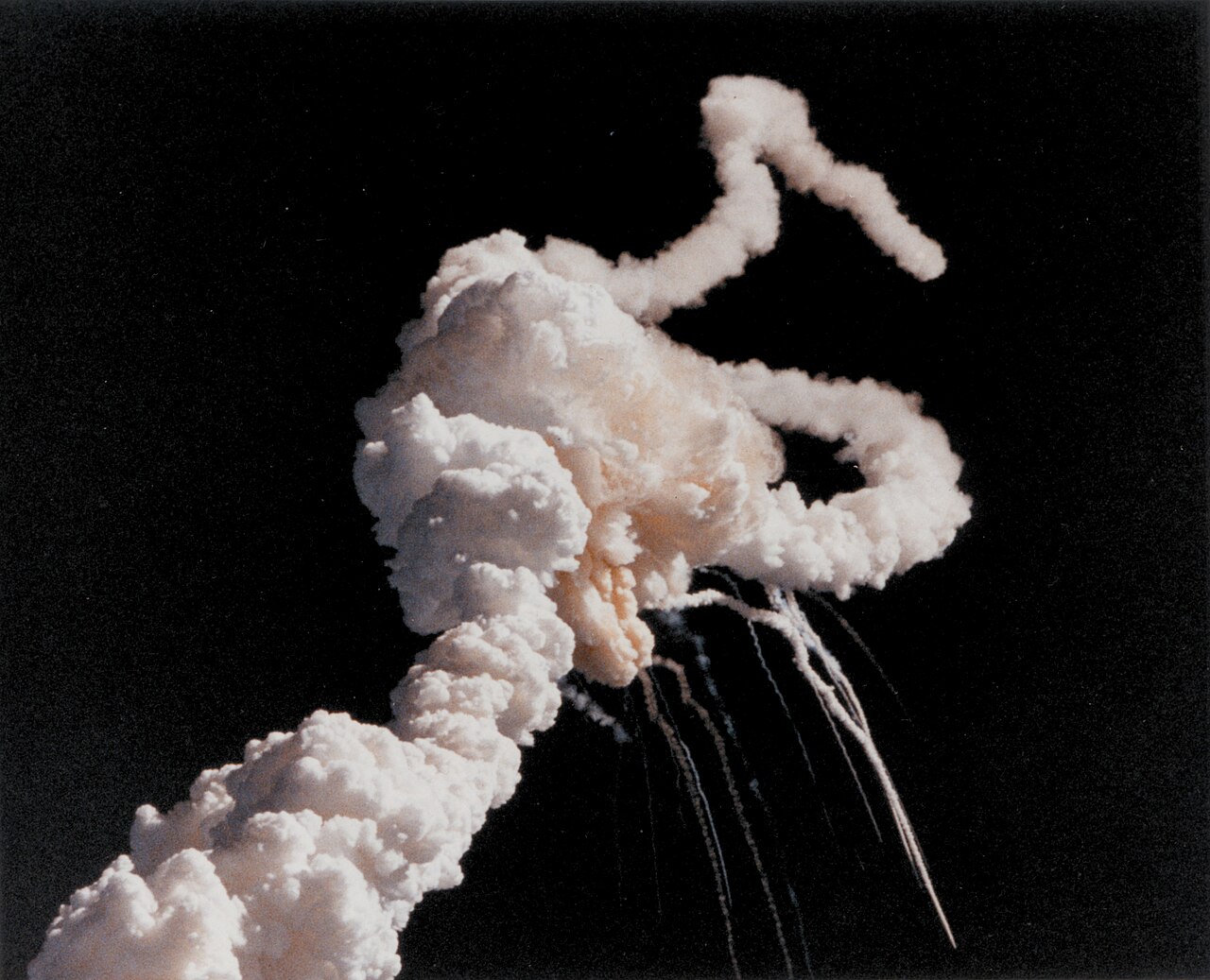




The accident
On 28 January 1986, Challenger broke up 73 seconds after liftoff from Cape Canaveral during mission STS‑51‑L. The vehicle suffered a catastrophic structural failure during ascent. All seven crew members aboard were killed. The event was televised live and had an immediate and profound effect on the United States and on international perceptions of human spaceflight safety.
Technical cause
Investigators identified the immediate mechanical cause as the failure of a sealing element in one of the solid rocket boosters. A resilient sealing ring, commonly described as a rubber tube known as an O‑ring, failed to seal the joint between booster segments. The breach permitted hot combustion gases to escape and to impinge on the external tank and adjacent structures, ultimately compromising vehicle integrity. That failure occurred in a joint of a booster rocket assembly. The O‑ring's performance was degraded by unusually cold ambient temperatures on the morning of the launch, and investigators cited cold weather as a material factor that increased the risk of leakage.
Crew and mission
The seven-member crew included career astronauts, mission specialists and a civilian participant selected to fly as part of an educational program. The loss of the crew was a national tragedy and led to wide public mourning. The orbiter's name, Challenger, honored the 19th‑century research vessel HMS Challenger, notable for global scientific exploration, and echoed earlier spacecraft names including the Apollo lunar module used on Apollo 17.
Investigation and findings
The official inquiry combined engineering analysis with review of management and decision processes. It determined that the booster joint design allowed conditions under which O‑ring erosion and blow‑by could occur, and that communication and organizational shortcomings contributed to the decision to launch despite engineers' expressed concerns. The findings emphasized both technical and cultural causes and recommended substantive changes.
Program changes and legacy
Following the accident, Shuttle flights were suspended while redesigns, testing and procedural reforms were implemented. The booster joints were redesigned, additional testing and inspection regimes were introduced, and agencies reviewed how launch risks and dissenting engineering opinions were handled. The hiatus lasted nearly three years while changes were made to reduce the risk of recurrence. Challenger's loss remains a cautionary example about complex systems, human factors and the need for conservative safety practices in crewed spaceflight.
Memorials and continuing impact
The crew and the event are commemorated by memorials, educational programs and institutional reforms intended to honor the victims and to improve flight safety. The tragedy prompted renewed attention to astronaut safety training, vehicle design reviews and the governance of high‑risk technical programs. For technical reports, timelines and official records, refer to agency archives and authorized historical summaries for primary documentation and analysis.
Questions and answers
Q: What was the name of the second space shuttle used by NASA?
A: The second space shuttle used by NASA was called Space Shuttle Challenger (OV-099).
Q: When did the crash of Space Shuttle Challenger occur?
A: The crash of Space Shuttle Challenger occurred 73 seconds after take-off from Cape Canaveral on 28 January 1986.
Q: How many astronauts were on board when the crash happened?
A: There were seven astronauts on board when the crash happened.
Q: What caused the crash of Space Shuttle Challenger?
A: The crash of Space Shuttle Challenger was caused by a rubber tube called an o-ring not expanding to fill a gap in one of the booster rockets due to cold weather.
Q: Where did the name "Challenger" come from?
A: The name "Challenger" came from a Royal Navy ship that explored the Pacific and Atlantic Oceans from 1872 to 1876, as well as being the name of Apollo 17 Lunar Excursion Module.
Q: Were any survivors in this accident?
A: No, there were no survivors in this accident; all seven astronauts who were on it at the time were killed.
Related articles
Author
AlegsaOnline.com Space Shuttle Challenger (OV-099): history, accident, and legacy Leandro Alegsa
URL: https://en.alegsaonline.com/art/92415
Sources
- spacetoday.org : "Space Today Online - Space Shuttle Stories"