
Blackbuck (Antilope cervicapra)
A slender antelope of the Indian subcontinent, noted for the male's dark coat and spiral horns. Inhabits grasslands and open plains; faces habitat loss, hunting pressure and benefits from protected-area management.
Overview
The blackbuck (Antilope cervicapra) is a medium-sized antelope native to the Indian subcontinent. It is best known for strong sexual dimorphism: adult males develop a darker upper coat and long, spiralled horns, while females and young are paler and generally lack long horns. Blackbuck are adapted to open country—short grasslands, plains and light scrub—and depend on visibility and speed to avoid predators. Populations occur chiefly in India, with smaller, often fragmented populations reported in parts of Pakistan and Nepal. Where local protections and habitat management are effective, populations have shown recoveries, but the species remains sensitive to land‑use change.
Image gallery
10 Images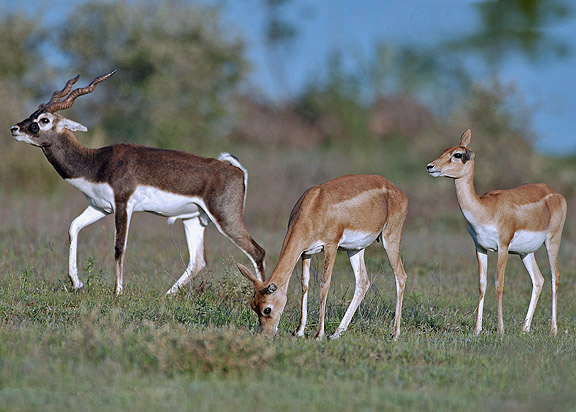


Physical characteristics
Blackbuck show marked sexual dimorphism. Mature males typically have a darker, sometimes nearly black, upper coat contrasted with white underparts and distinctive facial markings; females and juveniles are sandy to tan. Males possess long, ridged horns that spiral in a graceful V-shape; horns are used in display and territorial fights. The species is relatively slender, with long legs and a body built for fast, agile running across open ground.
Behavior and ecology
Blackbuck are social and form loose herds that may change composition seasonally. Herds can be dominated by territorial males during the breeding season, while other males may form bachelor groups. They are most active in the cooler hours of dawn and dusk and feed primarily on grasses, supplementing with leaves, fruits and forbs when available. Key natural predators include large carnivores and feral dogs; human activities are a major source of mortality in many areas.
Habitat, distribution and human interactions
The species favours open grasslands, scrub‑grass mosaics and lightly wooded plains that provide both forage and visibility. Historically widespread across suitable habitats of the subcontinent, blackbuck have experienced range contraction and fragmentation as grasslands have been converted to agriculture, fenced pastures and settlements. They occur in national parks, wildlife sanctuaries and on some private lands where landowners maintain suitable habitat and restrict hunting. Human–wildlife interactions include both conflict, where animals damage crops or compete with livestock for forage, and coexistence through community conservation and ecotourism initiatives.
Threats and conservation
- Habitat loss and fragmentation from agriculture, development and fencing.
- Illegal hunting and poaching in areas with weak enforcement.
- Competition with and disease transmission from domestic livestock.
Conservation actions that have been applied include establishment and management of protected areas, legal protection under national laws, habitat restoration and community‑based programs that promote coexistence and sustainable land use. Reintroduction and population‑management programmes have been used regionally. For regional conservation guidance and status assessments, consult local authorities and resources such as regional conservation resources.
Cultural and scientific significance
Blackbuck have cultural importance in parts of their range, appearing in folklore, traditional art and local symbolism. Their conspicuous sexual dimorphism, social systems and adaptations to grassland environments have made them subjects of ecological and behavioural research. Conserving blackbuck and their habitats helps protect a broader suite of grassland species and ecological processes.
Taxonomy and notes
The blackbuck belongs to the family Bovidae and the genus Antilope. Taxonomic and conservation details can vary by region, and population trends reflect the combined effects of land use, protection measures and local human attitudes. Continued monitoring, habitat management and legal protection remain central to ensuring long‑term viability across its range.
Further information on regional distribution and management may be found through national conservation agencies and local studies in India, Pakistan, and Nepal.
Related articles
Author
AlegsaOnline.com Blackbuck (Antilope cervicapra) Leandro Alegsa
URL: https://en.alegsaonline.com/art/11992