
Blenny (Blennioidei): small benthic fishes of rocky coasts and reefs
Blennies are a diverse group of mostly small, bottom-dwelling teleost fishes (Blennioidei) found in coastal waters worldwide. They show distinctive morphology, varied diets, and close ties to reef and intertidal habitats.
Blennies are members of the suborder Blennioidei, a diverse assembly of mostly marine teleost fish. The suborder contains several hundred species: estimates commonly cite roughly 833 species distributed among many genera. Though varied in appearance and habits, blennies are typically small, benthic fishes associated with shallow coastal environments.
Image gallery
10 Images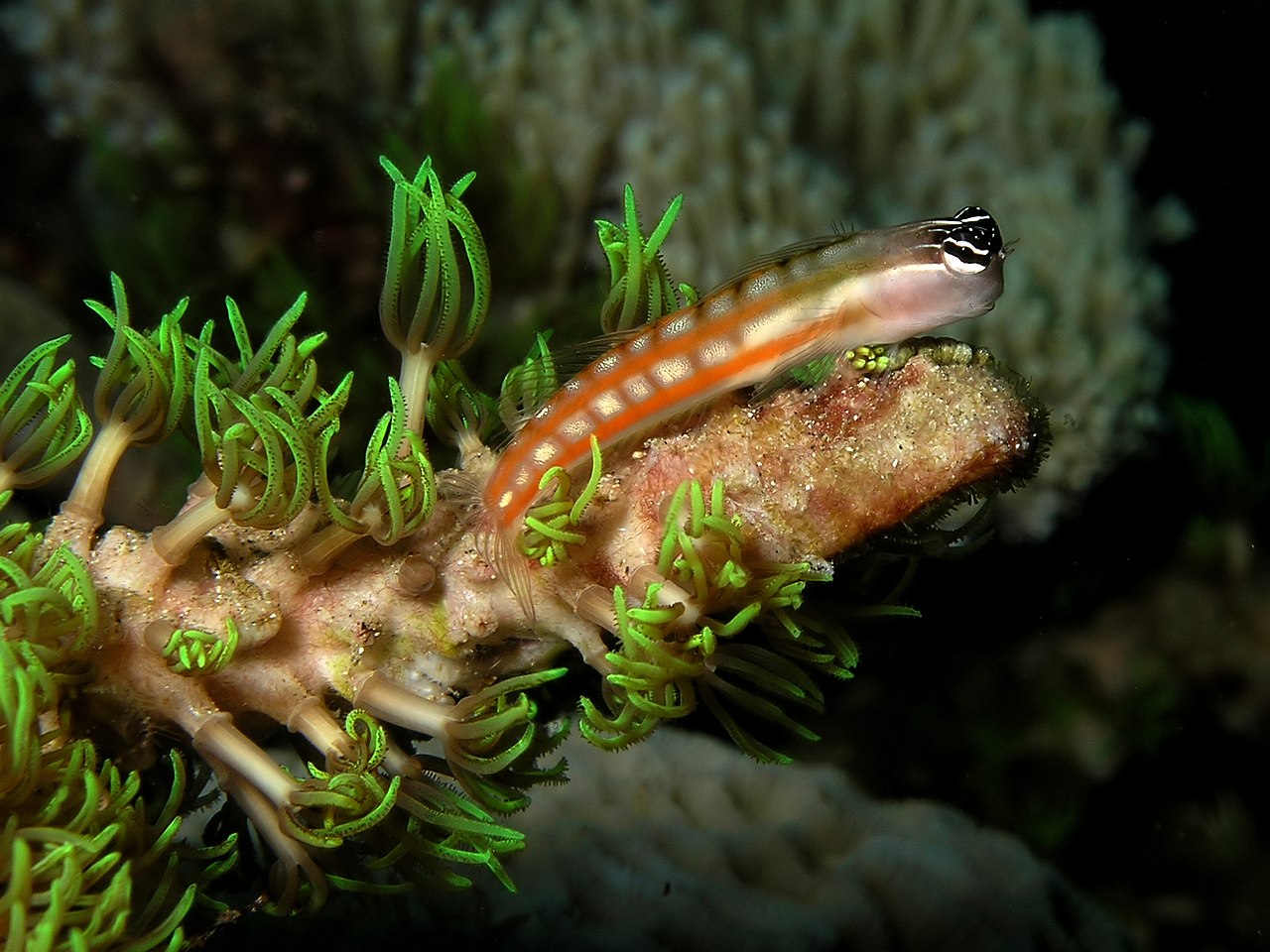




Physical characteristics
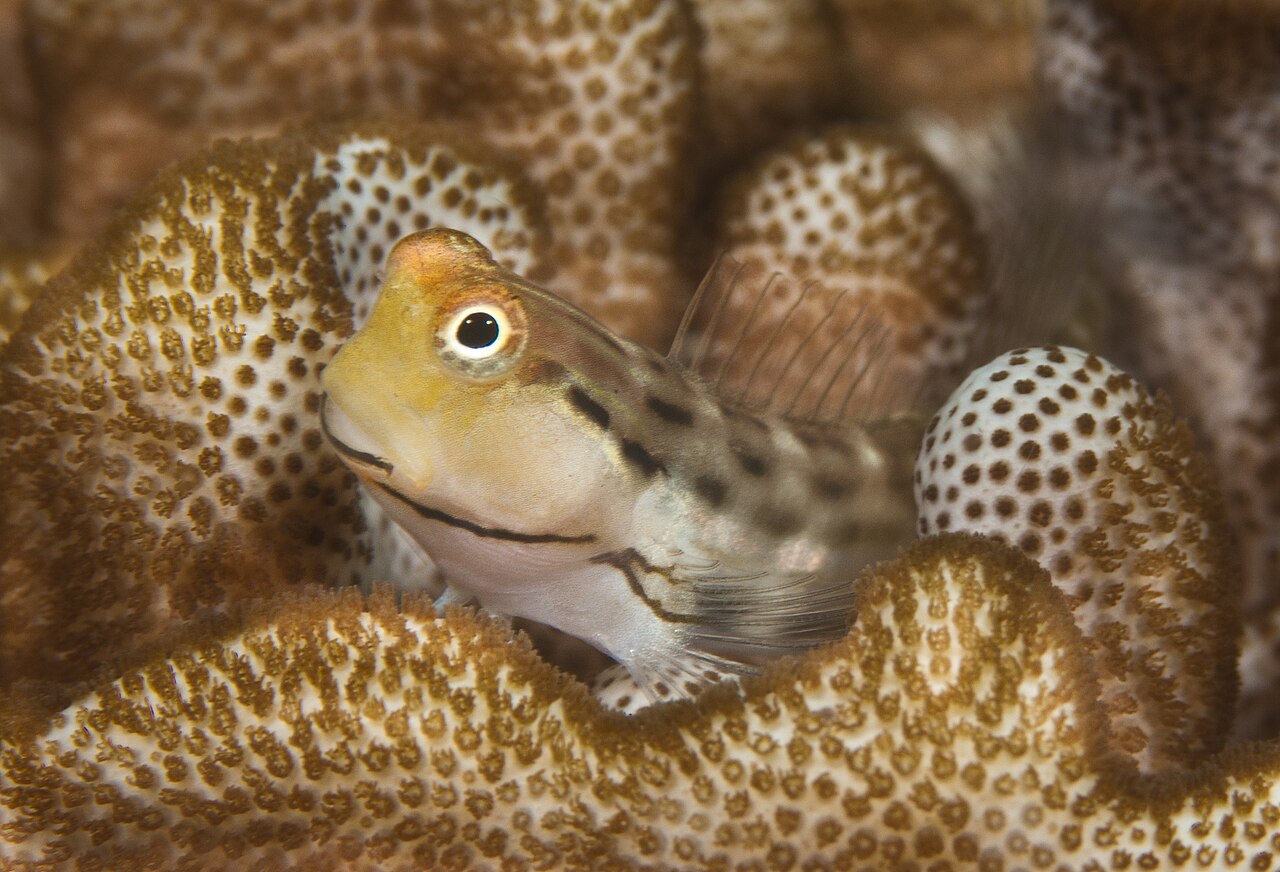
Most blennies have elongated bodies with a continuous, often long dorsal fin and a rounded tail fin. Their heads are blunt, eyes relatively large, and mouths broad. Many species bear short, whisker-like appendages called cirri above the eyes or on the snout; these are sensory or camouflage structures. Some blennies take an almost eel-like form, whereas others are compact and squat. A notable anatomical trait is the pelvic fin structure: pelvic fins are small and slender with a single embedded spine rather than forming a suction disc.
- Typical size: small (a few centimeters to tens of centimeters).
- Dorsal fin: continuous and elongated.
- Pelvic fins: separate, with a single spine.
- Cirri: common on the head, used for sensing and camouflage.
Distribution, habitat and behavior
Blennies occur worldwide in temperate and tropical seas, most commonly in rocky shorelines, coral reefs, tide pools, and seagrass beds. They are primarily benthic: many species shelter in crevices, empty shells, or burrows and spend much of their time perched on the substrate. Diets vary by species; many are omnivorous or herbivorous, grazing algae and biofilm with comb-like teeth, while others feed on small crustaceans and invertebrates. Territoriality and strong site fidelity are typical, and a number of species exhibit parental care, with males guarding eggs until they hatch.
Ecological role and human uses
Blennies contribute to reef and intertidal ecosystems by grazing algae, controlling microalgal growth, and serving as prey for larger predators. Their varied feeding habits make them important in energy transfer on nearshore substrates. Several species are popular in the marine aquarium trade because of their small size, striking behaviors, and algae-eating habits. Scientists also study blennies for research on behavior, ecology, and evolutionary adaptation to intertidal environments.
Distinctions and notable facts
Blennies are often compared with gobies because both groups include small, bottom-dwelling fishes with similar silhouettes. However, a key distinction is that many gobies have pelvic fins fused into a suction disc for clinging to surfaces, whereas blennies retain separate pelvic fins with a spine. Some families within Blennioidei, such as the combtooth blennies, are scaleless or have very reduced scales and possess comb-like dentition adapted for scraping algae from rocks. Their diversity—morphological, ecological and behavioral—makes blennies a recognizable and ecologically significant component of shallow marine communities; for more general context see related groups such as gobies.
For further reading on broader fish classification and related groups see general resources on teleost diversity, species lists and guides at species overviews, or identification pages describing similar forms like the eel-shaped fishes and other small coastal fishes referenced in field guides. Additional summaries and photographic guides are available through regional keys and hobbyist literature for the aquarium trade.
Tags
Related articles
Author
AlegsaOnline.com Blenny (Blennioidei): small benthic fishes of rocky coasts and reefs Leandro Alegsa
URL: https://en.alegsaonline.com/art/12160