
Gary Becker: Economist of Human Behavior and Social Theory
Concise overview of Gary S. Becker’s life, major ideas (human capital, family economics, discrimination, crime, addiction, altruism), academic career, honors, reception, and legacy.
Overview
Gary Stanley Becker (December 2, 1930–May 3, 2014) was an American economist whose research expanded the domain of economic analysis into areas traditionally studied by other social sciences. He was a long‑time faculty member at the University of Chicago, holding appointments in both economics and sociology, and he also taught at the Booth School of Business. Becker received the Nobel Memorial Prize in Economic Sciences in 1992 and the Presidential Medal of Freedom in 2007. He was born in Pottsville, Pennsylvania and died in Chicago from complications following ulcer surgery.
Image gallery
2 Images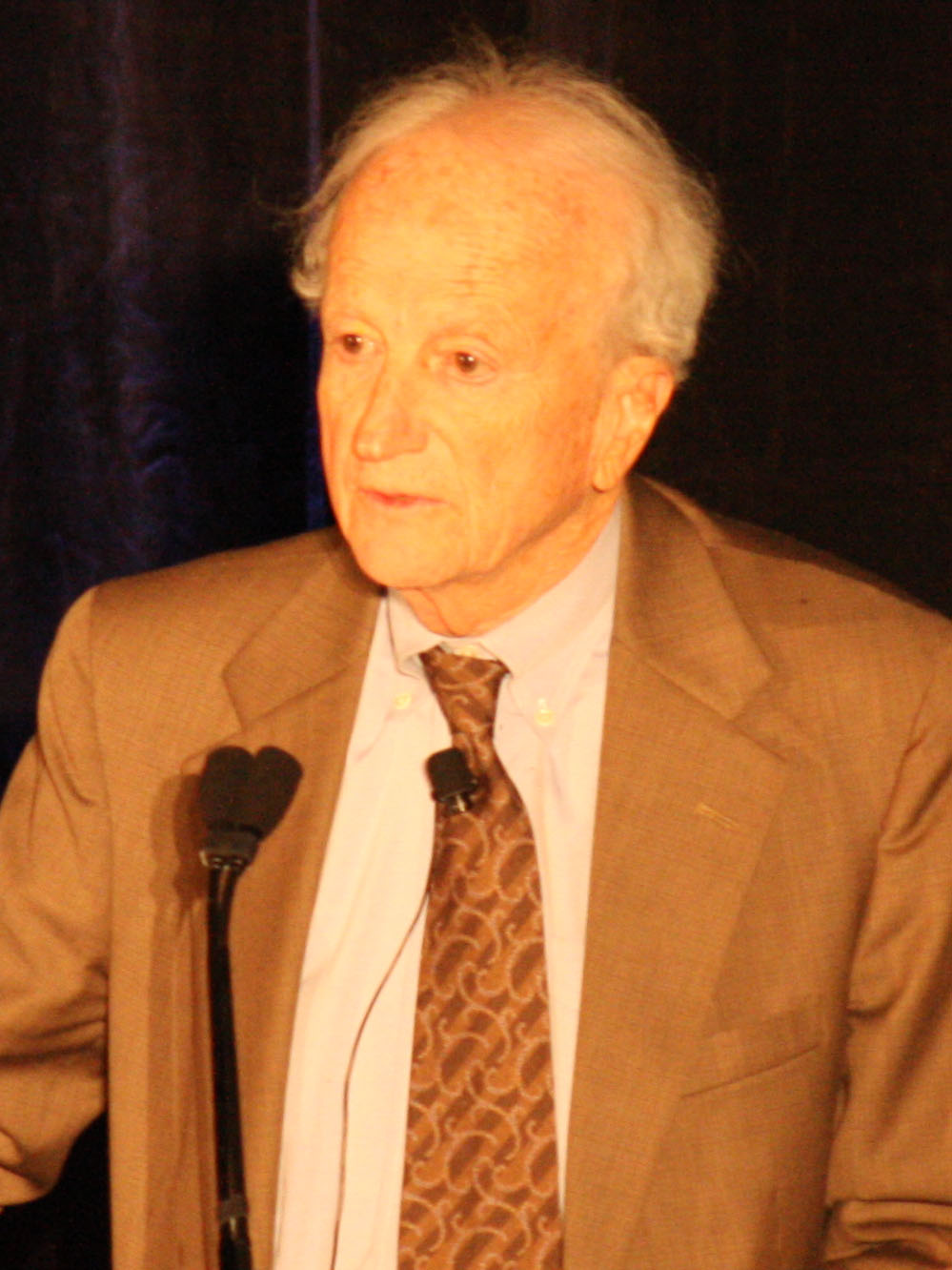

Major ideas and contributions
Becker is best known for applying microeconomic tools—utility maximization, constrained choice, and equilibrium reasoning—to questions about family life, social behavior, and institutions. He helped establish the analysis of human capital as a central concept in labor economics, arguing that investments in education, training, health and on‑the‑job learning raise productivity and earnings over a lifetime.
- Human capital: The view that skills and health are forms of capital whose accumulation affects economic outcomes and distribution of income.
- Family economics: Formal models of marriage, household decision making, fertility, and specialization that treat the family as a setting of cooperative and sometimes conflicting choices.
- Discrimination: Economic models showing how tastes, statistical discrimination, and market competition interact to influence wages and occupation sorting.
- Crime and addiction: Analyses that treat criminal activity and addictive behavior as choices made in response to incentives, probabilities of sanction, and expected benefits—an approach often described as seeing seemingly irrational acts as utility-maximizing under particular constraints.
- Altruism and social preferences: Work that incorporated altruistic motives into models of household behavior and intertemporal choice, illuminating how private and social returns can overlap (altruism).
Method and style
Becker’s hallmark was methodological expansion: he insisted on treating preferences and choices as the basic explanatory primitives across many social phenomena. He favored parsimonious formal models linked to empirical evidence, and his style encouraged economists to generate testable hypotheses about nonmarket behavior. This approach both broadened the questions economists addressed and influenced empirical strategies in labor economics, demography, health economics, and criminology.
Reception, debate, and influence
Supporters praised Becker for clarifying assumptions and producing measurable predictions. Critics cautioned that strict rational choice models can understate the importance of culture, institutions, and historical context. The controversy often reflected broader disciplinary tensions over the proper scope of economic explanation. Nonetheless, many observers, including notable economists such as Milton Friedman, regarded Becker as among the most influential social scientists of his generation.
Empirical applications and policy implications
Becker’s ideas shaped research and policy discussions about education funding, anti-discrimination measures, crime prevention (through deterrence and economic opportunities), and public health interventions aimed at human capital formation. Scholars and policymakers used his frameworks to evaluate trade‑offs, estimate returns to investments, and design incentives intended to alter behavior in predictable ways. Work inspired by Becker continues to inform cost–benefit analyses and empirical estimates of long‑term effects of schooling, training, and early childhood interventions.
Legacy
Beyond any single model, Becker’s enduring contribution is methodological: demonstrating that economic tools can illuminate many aspects of human behavior and social institutions. His students and intellectual heirs spread these methods widely across academic disciplines and policy arenas. Collections of his essays and subsequent empirical literature document both the reach of his approach and the ongoing debates it provoked. For introductions to his work, overviews of related empirical research, and selected writings, see accessible summaries and bibliographies prepared by academic departments and research centers (crime and public policy, selected works, biographical resources).
Further reading and resources
Researchers interested in Becker’s contributions can consult departmental archives, collected volumes, and reviews that assess both the technical innovations and the broader social implications of his theories. Historical and disciplinary perspectives in sociology and economics highlight how his ideas crossed traditional boundaries. Biographical sketches provide context about his early life in Pottsville, academic appointments, and honors; medical notices record the circumstances of his passing after surgery. Analytic critiques and empirical extensions continue to test and refine his core insights (economic analyses, models of choice, studies of altruism).
Overall, Gary Becker remains a central figure in the modern social sciences: his work exemplifies how formal, testable models can be used to explore a wide range of human behavior while also inviting ongoing discussion about the proper limits of economic explanation and the importance of empirical validation.
For archival materials, research guides, and teaching resources related to his career and the literature he inspired, consult university libraries and research institutions that maintain collections of papers, lectures, and annotated bibliographies (honors and awards, institutional repositories, local histories).
Related articles
Author
AlegsaOnline.com Gary Becker: Economist of Human Behavior and Social Theory Leandro Alegsa
URL: https://en.alegsaonline.com/art/119412
Sources
- voanews.com : President Bush Announces 2007 Medal of Freedom Recipients
- news.uchicago.edu : "Gary S. Becker, Nobel-winning scholar of economics and sociology, 1930–2014"
- gregmankiw.blogspot.com : "Very Sad News"