
Ulcer (open wound and mucosal lesion)
An ulcer is an open sore on the skin or a mucous membrane. This article explains types, causes, symptoms, diagnosis, treatment, prevention, and notable distinctions.
Overview
An ulcer is a break in the continuity of an external or internal surface: an open sore that results when the outermost layer of skin or mucous membrane is lost. Ulcers occur on the skin and on mucous membranes, including the lining of the mouth, the gastrointestinal tract and the stomach. They form when protective tissue is damaged, the surface cells die or are removed, and underlying tissue is exposed.
Image gallery
2 Images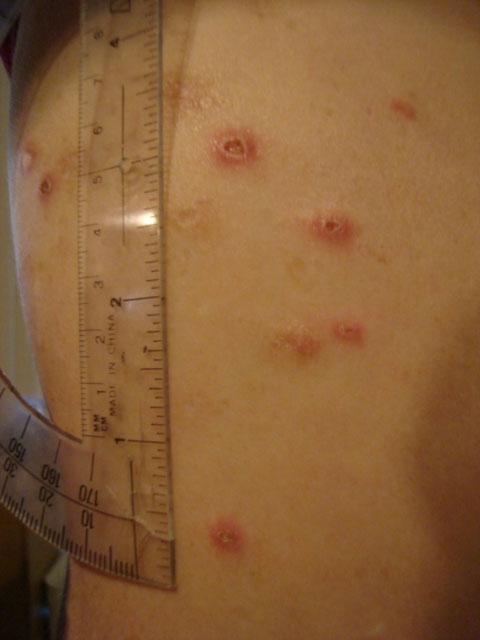

Causes and common types
Ulcers arise from several different mechanisms. Some are primarily infectious, others mechanical, vascular, chemical or neoplastic. Typical categories include:
- Peptic ulcers: sores of the stomach or first part of the small intestine often related to acid exposure and to infection with Helicobacter pylori; the role of acid and bacteria was recognized in the late 20th century. See peptic ulcers and stomach acid for background.
- Pressure (decubitus) ulcers: injuries caused by prolonged pressure over bony prominences, common in immobile people.
- Vascular ulcers: due to poor blood flow, either venous stasis or arterial insufficiency; inadequate circulation delays healing and can produce chronic wounds (blood vessel problems and reduced blood supply are frequent factors).
- Infectious ulcers: bacterial, fungal or parasitic infections can destroy tissue and form sores.
- Chemical or thermal ulcers: caused by corrosive agents, medications or burns that damage the surface layer (surface cell death).
- Malignant ulcers: some cancers ulcerate, producing persistent nonhealing sores; refer to cancer-related ulcers.
- Stress-related: physiological stress or severe illness can contribute to mucosal ulceration in some settings (stress).
Symptoms and complications
Symptoms depend on location. Skin ulcers commonly cause local pain, discharge, odor and visible tissue loss. Gastrointestinal ulcers often cause burning or gnawing abdominal pain and may lead to bleeding, anemia, perforation or obstruction. Chronic ulcers are prone to infection and scarring and may significantly affect mobility and quality of life.
Diagnosis and management
Evaluation aims to determine the underlying cause. Methods include clinical examination, cultures or biopsy of the lesion, endoscopy for digestive tract ulcers, vascular studies for suspected circulation problems, and imaging when deeper structures are involved. Treatment is directed at cause and local wound care:
- Address causative factors: eradicate Helicobacter pylori where present; control acid for peptic disease; improve blood flow for vascular ulcers; relieve pressure for pressure ulcers.
- Local wound management: cleaning, debridement of dead tissue, dressings that maintain a moist healing environment, topical antiseptics or antibiotics when indicated.
- Systemic therapies: antibiotics for infection, pain control, nutritional support, and in some cases surgery (for repair, revascularization or to remove malignant tissue).
Prevention, prognosis and notable distinctions
Prevention focuses on mitigating risk factors: smoking cessation, careful medication use (for drugs that can injure mucosa), good nutrition, control of diabetes, pressure relief in immobile patients, and managing vascular disease. Prognosis varies widely: many ulcers heal with appropriate treatment but chronic ulcers may persist and require long-term care. A useful clinical distinction is between an erosion, which is a more superficial loss of surface cells, and an ulcer, which involves deeper tissue loss.
For further introductory reading and patient-oriented summaries, consult general medical resources linked here: definition, skin, mucous membranes, tissue damage, peptic ulcers, stomach acid, cancer-related ulcers, vascular causes, blood supply issues, and stress-related factors.

Common forms
- Ulcus cruris (open leg, lower leg ulcer, usually due to venous or mixed arterial-venous insufficiency)
- Malum perforans (pressure sore on the feet in polyneuropathy)
- Ulcus (cruris) hypertonicum (Martorell syndrome)
- Ulcus ventriculi (stomach ulcer, more precisely: stomach wall ulcer)
- duodenal ulcer (ulcer of the duodenum)
- Pressure ulcer (decubitus) in case of reduced perfusion of the tissue due to chronic pressure effect
- Ulcus durum (hard chancre), the primary effect in syphilis
- Ulcus molle (soft chancre), a sexually transmitted disease
- Radiation ulcer or ulcus radiologicum
- Ulcus carcinomatosum (cancerous ulcer)
- Ulcus rodens or ulcus terebrans in the case of basal cell carcinoma
- Corneal ulcer (corneal ulcer)
- Aphtae (ulceration of the oral mucosa or gums)
- Ulcus arteriosum (arterial ulcer)
- Ulcus venosum (venous ulcer)

Related articles
Author
AlegsaOnline.com Ulcer (open wound and mucosal lesion) Leandro Alegsa
URL: https://en.alegsaonline.com/art/102658