
Harry Markowitz — Pioneer of Modern Portfolio Theory
Harry Markowitz pioneered Modern Portfolio Theory and mean–variance optimization; his work on diversification and the efficient frontier transformed investment analysis and won the 1990 Nobel Prize in Economics.
Overview
Harry M. Markowitz (born 1927) is an American economist best known for originating Modern Portfolio Theory (MPT). His formalization of portfolio selection and the trade-off between risk and return laid the groundwork for quantitative investment management and won him major honors, including the 1989 John von Neumann Theory Prize and the 1990 Nobel Prize in Economic Sciences.
Image gallery
2 Images
Core ideas and components
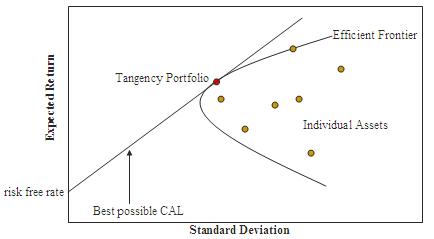
Markowitz introduced a rigorous approach to combining assets into portfolios by focusing on two statistical moments: expected return and variance (risk). Key concepts include:
- Mean–variance optimization: choosing asset weights to maximize expected return for a given level of risk, or minimize risk for a given return.
- Efficient frontier: the set of portfolios that offer the highest expected return for each risk level.
- Diversification: reducing portfolio risk by mixing assets with imperfect correlations.
History and development
Markowitz published his influential 1952 article "Portfolio Selection," which applied statistical and optimization tools to investment decisions. That work introduced the idea that investors should consider the covariance among asset returns, not just individual expected returns. The framework influenced later models, including the capital asset pricing model (CAPM), and ushered in a quantitative era in finance.
Applications and importance
MPT underpins modern asset allocation, pension fund design, mutual fund construction, and risk management. Practitioners use mean–variance methods, quadratic programming and related computational techniques to design portfolios that align with client risk preferences. The approach also informed index investing and risk budgeting practices.
Limitations and criticisms
While foundational, Markowitz's framework relies on simplifying assumptions: returns summarized by mean and variance, stable covariances, and accurate input estimates. Critics note sensitivity to estimation error and that variance may not fully capture investor preferences for downside risk. Subsequent research and practitioners have developed robust, downside-risk, and Bayesian extensions to address these issues.
Legacy and further reading
Markowitz's work remains central to financial economics and portfolio practice; his methods continue to be taught and extended in both academia and industry. For more biographical and technical background, see biographical resources on Harry Markowitz and general discussions of his theory at Modern Portfolio Theory overviews.
Related articles
Author
AlegsaOnline.com Harry Markowitz — Pioneer of Modern Portfolio Theory Leandro Alegsa
URL: https://en.alegsaonline.com/art/120377
Sources
- nobelprize.org : Autobiography