
University of Chicago: Overview, history, and influence
Private research university in Hyde Park, Chicago, founded in 1890. Known for a rigorous Core curriculum, influential research in economics and sociology, and several leading professional schools.
Overview
The University of Chicago is a private research university located in the Hyde Park neighborhood of Chicago, Illinois. It is widely regarded for its emphasis on intellectual rigor, interdisciplinary inquiry, and a distinctive undergraduate Core curriculum that stresses close reading, original writing, and broad exposure to fundamental disciplines.
Image gallery
10 Images




History and founding
The institution traces its origins to a plan led by the American Baptist Education Society and major financial support from philanthropist John D. Rockefeller. Chartered in 1890, the university opened its doors to students in the early 1890s under founding leadership that set an ambitious tone for research and graduate education. From its start the university combined a liberal arts college with professional and graduate programs.
Academic structure and research
Academically, the University of Chicago is organized into a number of professional schools and academic divisions. It is known for strong graduate programs and research centers that span the humanities, social sciences, natural sciences, and professional disciplines. The university places particular emphasis on theoretical work and methods-driven research, and its faculty have shaped fields such as economics, sociology, law, and history.
Major schools and programs
- Booth School of Business (business and finance)
- Law School (legal education and scholarship)
- Pritzker School of Medicine (clinical training and biomedical research)
- Division of the Social Sciences and Division of the Humanities (undergraduate and graduate study)
- Professional schools in public policy, social service, and theology
Campus and culture
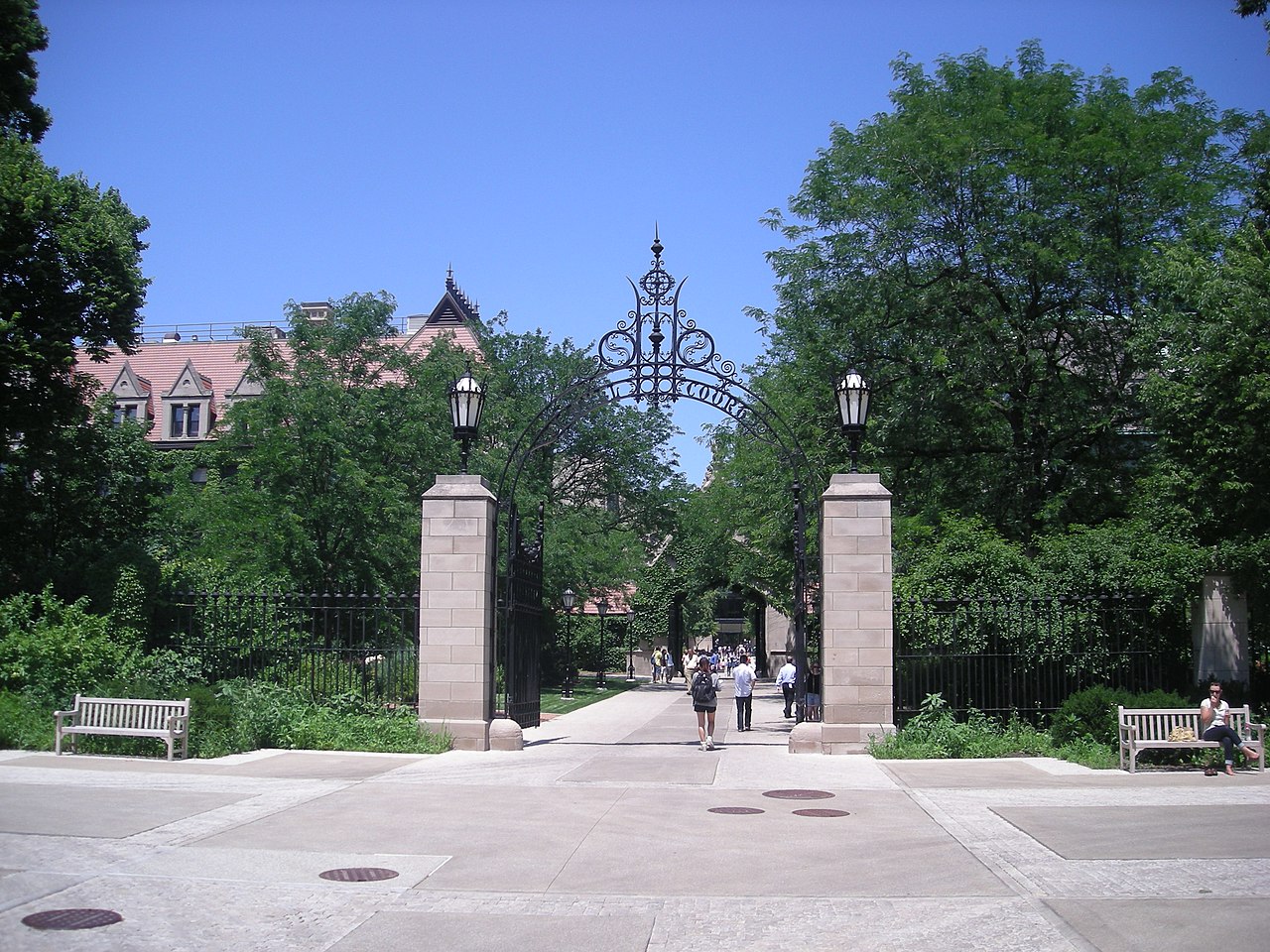
The campus features a mix of Collegiate Gothic architecture, modern research facilities, and public spaces such as the Midway Plaisance. Libraries, museums, and seminar-based teaching remain central to the academic experience. The university cultivates a culture that prizes debate, critique, and formal argument, and it supports a wide range of student organizations and cultural activities.
Contributions and reputation
Over more than a century, the university has made notable contributions to scholarship and public life. Scholars associated with the institution helped develop the Chicago School of Economics and the Chicago School of Sociology, and the university is linked to influential ideas in law and economics, urban studies, and quantitative social science. Its presses, journals, and reference works have also had significant reach. Graduates and faculty have received many high honors, and the university continues to be a major center for research and professional education.
Distinctive features
Distinctive aspects include the Core curriculum, a strong emphasis on research-led teaching, and a compact urban campus that connects academic life to the wider city. For more institutional details, admissions guidance, and program descriptions visit the university's official resources via the links above.
Questions and answers
Q: What is the University of Chicago?
A: The University of Chicago is a university located in Hyde Park, Chicago, Illinois.
Q: How did the University of Chicago come into existence?
A: The University of Chicago was built using money from John D. Rockefeller provided to the American Baptist Education Society.
Q: When did the University of Chicago begin?
A: The University of Chicago began in 1890.
Q: Who was the first president of the University of Chicago?
A: William Rainey Harper was the first president of the University of Chicago in 1891.
Q: When did the first classes take place at the University of Chicago?
A: The first classes at the University of Chicago were held in 1892.
Q: Who provided the funds for the University of Chicago to be built?
A: The funds for the construction of the University of Chicago were provided by John D. Rockefeller.
Q: Where is the University of Chicago located?
A: The University of Chicago is located in Hyde Park, Chicago, Illinois.
Related articles
Author
AlegsaOnline.com University of Chicago: Overview, history, and influence Leandro Alegsa
URL: https://en.alegsaonline.com/art/103230
Sources
- uchicago.edu : "About the University"
- nacubo.org : "U.S. and Canadian Institutions Listed by Fiscal Year (FY) 2018 Endowment Market Value and Change in Endowment Market Value from FY 2017 to FY 2018"
- data.uchicago.edu : "Faculty and Staff, at a glance"
- news.uchicago.edu : "University of Chicago opens groundbreaking sustainable field station"
- news.uchicago.edu : The University of Chicago Identity Guidelines
- doi.org : 10.1336/1573563366
- www-news.uchicago.edu : "University of Chicago Nobel Laureates, University of Chicago Nobel Laureates"