
Economist
A professional who studies economic behavior, builds models, analyzes data, and advises on policy, business strategy, and market outcomes.
Overview
An economist is a person trained to analyze how individuals, firms, governments, and other organizations allocate scarce resources to meet competing wants. The field of economics combines theory and empirical study to explain choices, trade-offs, incentives, and the distribution of goods and services. Economists work in universities, government agencies, central banks, international organizations, think tanks, and the private sector.
Image gallery
2 Images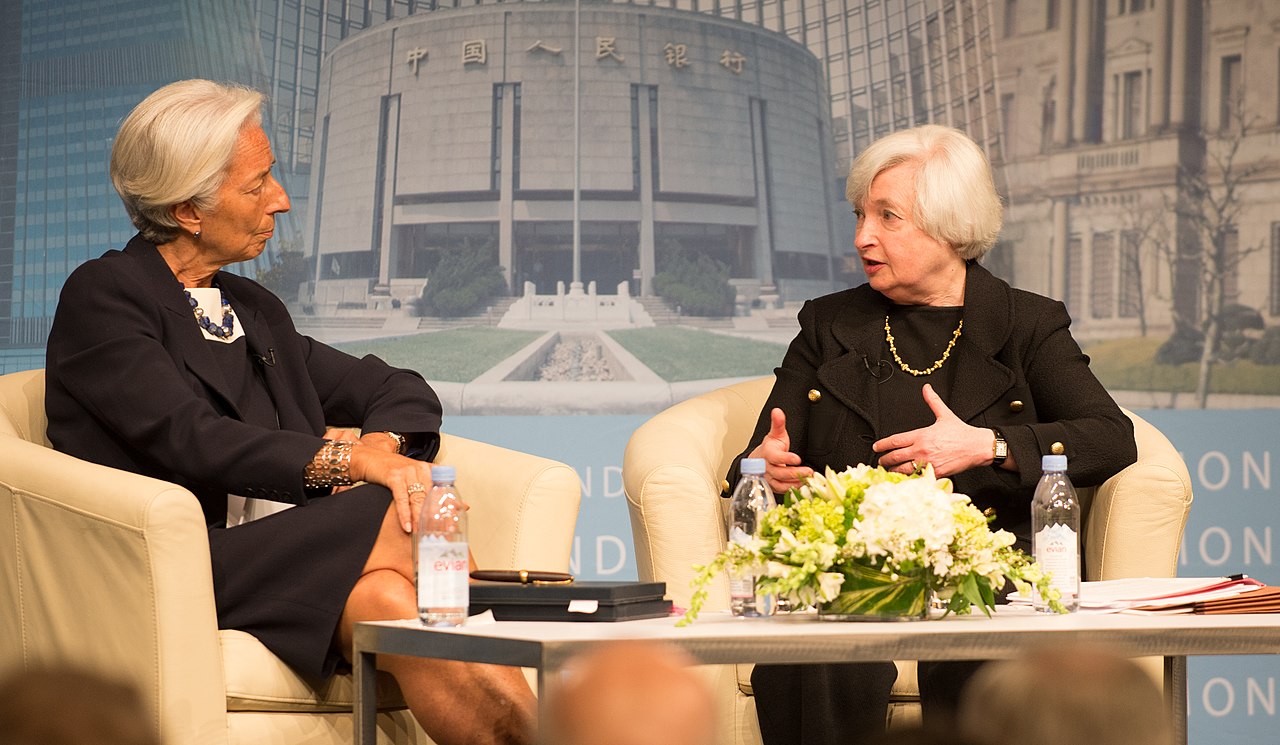

Methods and tools
Economists use a range of quantitative and qualitative tools to study economic phenomena. Common methods include:
- Mathematical models that formalize assumptions and derive implications;
- Statistical and econometric techniques to test hypotheses against data;
- Experiments and natural experiments to identify causal relationships;
- Computational simulations for complex systems and policy evaluation.
History and development
Economic thinking has evolved from early moral and philosophical reflections on commerce and welfare to a systematic discipline with distinct branches such as microeconomics and macroeconomics. Foundational contributors include thinkers who developed the idea of markets, value, and growth. Over the twentieth century, the discipline incorporated more rigorous mathematics, statistics, and computing, broadening its applications and precision.
Roles and applications
Practical work by economists influences public policy, business strategy, and social programs. Typical activities include forecasting inflation and unemployment, designing tax systems, evaluating the effectiveness of education and health interventions, advising on monetary policy, and conducting market analysis for firms. Economists may produce academic research, policy briefs, regulatory impact statements, or financial models for decision makers.
Types and distinctions
Specializations include theoretical economists who develop models, empirical economists who analyze data, econometricians who focus on statistical methods, and applied economists who tackle concrete policy questions. Distinctions are also drawn between economics and related professions: economists emphasize systematic models and population-level analysis, while financial analysts often concentrate on firm-level performance and investment decisions.
For further introductions and resources, see general overviews at relevant economic references.
Related articles
Author
AlegsaOnline.com Economist Leandro Alegsa
URL: https://en.alegsaonline.com/art/29967
Sources
- bastiat.org : "That Which is Seen, and That Which is Not Seen"