
Presidential Medal of Freedom
A leading civilian honor of the United States awarded by the President for especially meritorious contributions to security, world peace, culture, or other significant public or private endeavors.
The Presidential Medal of Freedom is one of the United States' foremost civilian honors, bestowed at the discretion of the President to individuals who have made especially meritorious contributions to the security or national interests of the United States, to world peace, or to cultural or other significant public or private endeavors. It recognizes achievement across a wide range of fields and is not restricted to American citizens. For an official overview see the White House overview.
Image gallery
10 Images


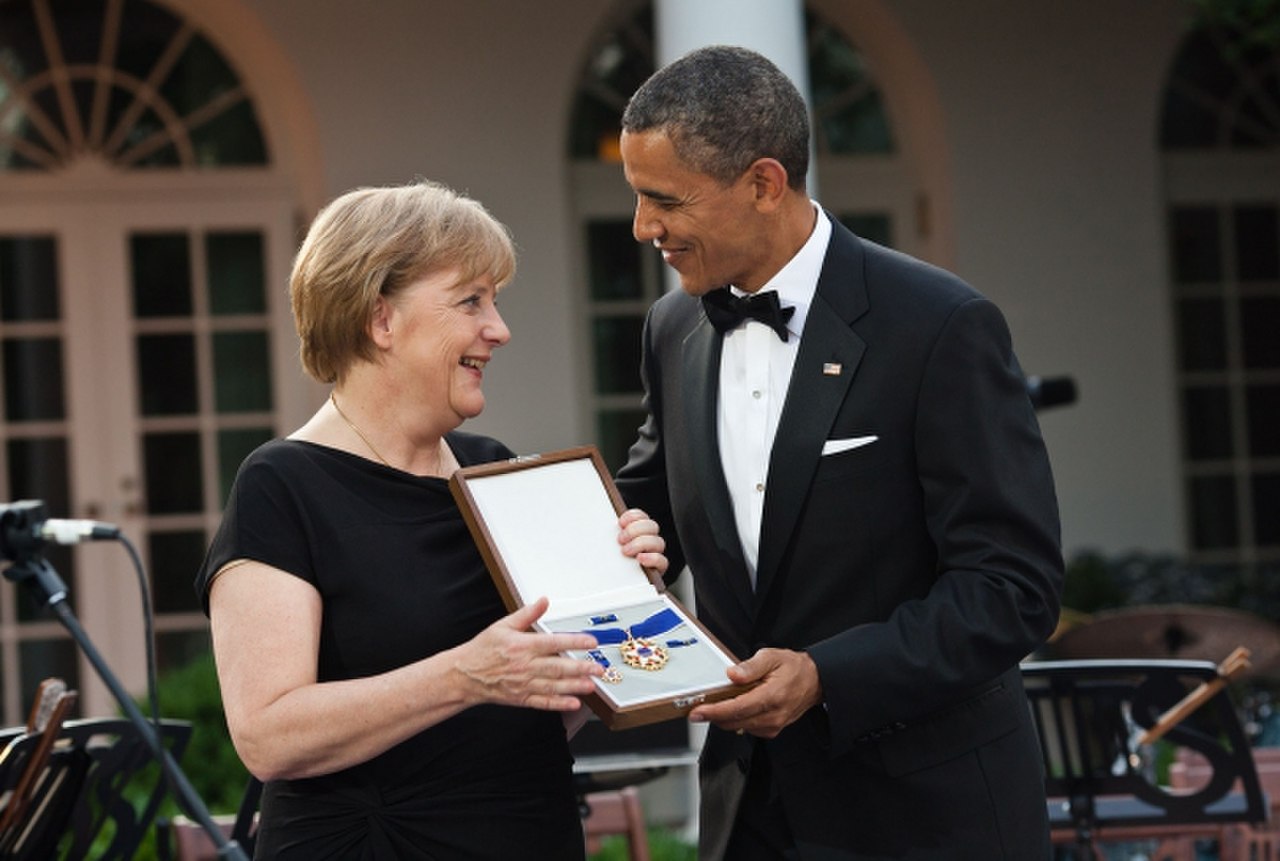

Characteristics and eligibility
The award typically consists of a medal presented with a citation and may be worn on appropriate formal attire; military recipients are authorized to wear the decoration on their uniform under applicable regulations. Although commonly described as a civilian award, it has been granted to people with military service and to foreign nationals when their work is deemed of exceptional importance to U.S. interests or global welfare. The criteria guiding selections are described in public materials and presidential announcements; recommendations often originate from advisors, government officials, or public nominations and are finalized by the President. Further information on criteria and protocol is available at award criteria and guidance.
History and development
The modern Presidential Medal of Freedom was established in 1963 by executive action to create a single, visible honor reflecting contemporary values and national priorities. It replaced an earlier Medal of Freedom created near the end of World War II to recognize civilian service during that conflict. Over time the medal's use has broadened from wartime services to include lifetime achievement in arts, sciences, philanthropy, civic leadership, and international diplomacy. Summaries of the award's origins and evolution are compiled in historical guides and repositories; see history and recipients for context.
Uses, examples, and significance
Recipients have included people from diverse professions—artists, scientists, business leaders, humanitarian activists, educators, and statespersons—whose work had substantial public impact. The medal serves several purposes: it publicly acknowledges exceptional contribution, it signals national values by elevating exemplary conduct, and it helps preserve a record of notable contemporary achievements. Lists of recipients and brief citations are regularly published when awards are announced.
Selection, presentation, and distinctions
Selection is ultimately a presidential decision; announcements are commonly made during ceremonies at the White House or other formal venues. The Presidential Medal of Freedom is distinct from other U.S. honors—such as military combat decorations or congressionally authorized medals—in purpose and tradition. For guidance on presentation, wearing, and administrative aspects consult official resources like administrative guidance.
- Scope: Civilian-oriented but inclusive of military and foreign honorees.
- Purpose: To recognize extraordinary contributions to the nation, world peace, culture, or public life.
- Authority: Conferred by the President and recorded in public announcements and citations.
The Presidential Medal of Freedom remains a prominent means by which the United States formally honors individuals whose work has had lasting influence on society, policy, culture, or international relations.
Related articles
Author
AlegsaOnline.com Presidential Medal of Freedom Leandro Alegsa
URL: https://en.alegsaonline.com/art/78930
Sources
- simple.wikisource.org : Executive Order 9586