
Utility (economics and decision theory)
In economics, utility measures satisfaction or preference for goods, money, or outcomes; used in consumer choice, welfare analysis and decision-making under risk.
Not to be confused with public utility. In economic theory, utility is a numerical representation of the satisfaction, preference or value a person assigns to goods, services or outcomes. Economists use the concept to model and predict choices: higher utility indicates a preferred option. The term "utils" is sometimes used informally to label units of utility, but there is no single objective scale. For general background see economics.
Image gallery
2 Images
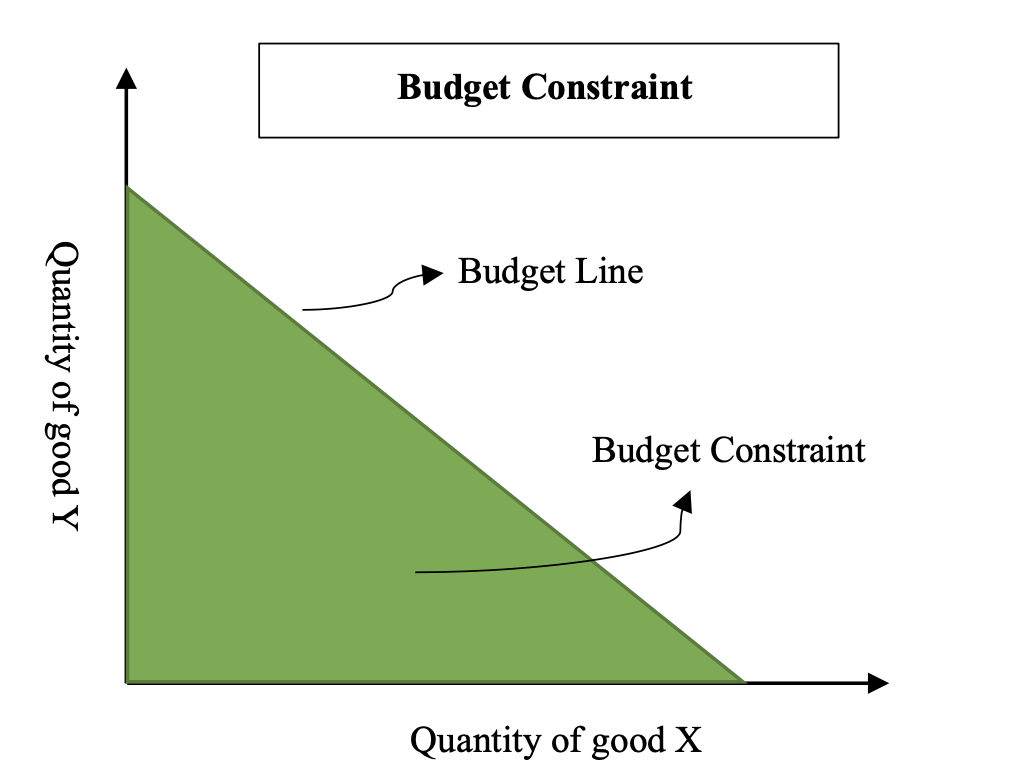
Core ideas and terminology
Utility can be treated in different ways depending on the model. Total utility denotes the overall satisfaction from a bundle of goods. Marginal utility is the change in total utility from a small increase in consumption of one good. A common empirical regularity is diminishing marginal utility: each additional unit of a good typically adds less satisfaction than the previous unit. When models assign numerical values that permit arithmetic comparisons, the approach is called cardinal utility; when only the ordering of preferences matters, it is called ordinal utility. Expected utility combines preferences with probabilities to model choices under uncertainty.
Typical concepts (short list)
- Utility function: a mathematical mapping from outcomes or bundles to numbers representing preference intensity.
- Marginal utility: incremental satisfaction gained from one more unit of a good.
- Diminishing marginal utility: reduction in marginal utility as consumption increases.
- Expected utility: the probability-weighted average of utilities across possible outcomes.
Simple examples help illustrate the idea: choosing between a cup of hot chocolate and a cup of orange juice involves comparing the utilities of each good. A consumer might judge hot chocolate to yield more satisfaction than orange juice; this comparative judgment can be represented numerically for modeling purposes. See goods and products for context: goods and products, and an example beverage reference: hot chocolate.
History and development
The utility concept grew from moral and economic discussions about welfare and choice. Early philosophical uses of "utility" appear in utilitarian moral theory as a measure of pleasure and pain. In economics, the marginalist revolution shifted attention to marginal utility and how it determines demand. Later formalizations introduced utility functions and expected utility theory to handle risk and strategic interaction.
Uses, importance and limits
Utility underpins many parts of economics: consumer demand analysis, welfare comparisons, public policy evaluation and decision theory under risk. The idea that money has utility—often with diminishing marginal utility of wealth—is widely used to explain behavior under uncertainty and to justify progressive taxation or insurance. For discussion of money-related preference, see utility of money.
There are important caveats. Utility measures are theoretically useful but not directly observable; interpersonal comparisons of utility are problematic without strong assumptions. While cardinal utility can simplify analysis in some models, many results can be derived using ordinal preferences alone. Economists choose the formulation that best fits the question: simple ranking for choice, cardinal or expected utility for evaluating risk and welfare.
Related articles
Author
AlegsaOnline.com Utility (economics and decision theory) Leandro Alegsa
URL: https://en.alegsaonline.com/art/103739