
Edmund I of England (922–946)
King of the English from 939 to 946 who reasserted control after Norse incursions, negotiated with northern rulers, and was succeeded by his brother Edred after his violent death.
Overview
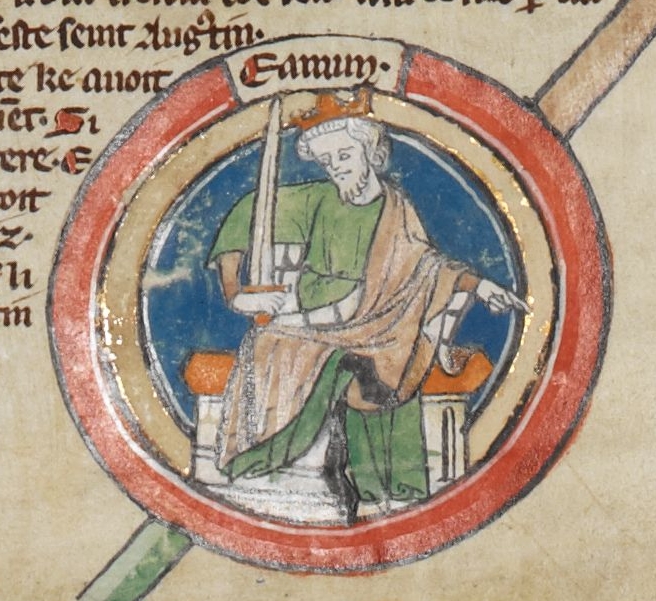
Edmund I (922–26 May 946) was King of the English from 939 until his death. A son of Edward the Elder and a half-brother of Æthelstan, Edmund inherited a kingdom that had been recently unified under his elder relatives. He is often described in later tradition by epithets such as "the Elder," "the Deed-Doer," or "the Magnificent," reflecting a reputation for energetic leadership and military action.
Image gallery
6 Images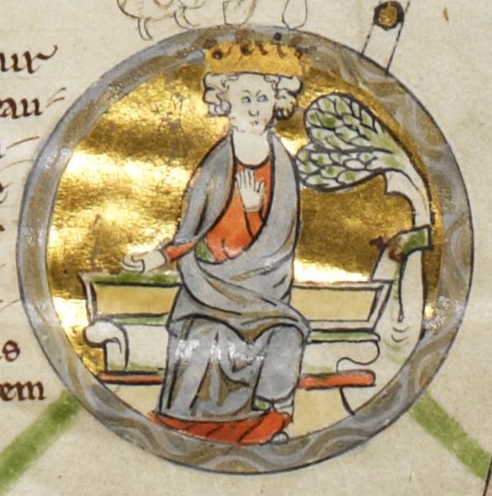



Reign and military activity
Edmund's reign was marked by immediate external challenges. Norse-Gaelic rulers from Ireland and the Isles reasserted control in parts of northern England early in his kingship. Over the next few years he led campaigns to recover territory and to re-establish royal authority in the north. He also confronted unrest on the western borders: Welsh princes resisted English influence and the kingdom of Strathclyde and neighbouring Scots were important regional actors. Medieval sources record conflicts with these polities and negotiations with northern rulers.
Diplomacy, treaties and frontier policy
Edmund sought to stabilize his realm through both force and negotiation. He concluded agreements with neighbouring kings that reduced raiding and created more secure frontiers. One surviving tradition records a treaty with the Scottish ruler Malcolm I, and later chronicles refer to a formal settlement or compact (treaty) that helped define spheres of influence. These arrangements were part of a broader policy to ensure the security of northern and western borders.
Family, succession and domestic affairs
Edmund married twice. With his first wife, often named Ælfgifu (sometimes called St. Ælfgifu), he had two sons who later became kings: Eadwig and Edgar. After her death he took a second wife, Æthelflæd of Damerham (also rendered Ethelflaed), which produced no children. His government issued charters and maintained the institutions that underpinned royal rule in tenth-century England.
Death, burial and legacy
Edmund died on 26 May 946 during a violent incident at a royal feast. Contemporary and later accounts describe him being killed by an intruder or robber at the celebration of the Feast of St Augustine held at Pucklechurch in Gloucestershire. He was succeeded by his brother Edred. Edmund's remains were interred at Glastonbury Abbey, and his reign is seen as a period in which the fragile unity of early medieval England was consolidated after renewed Norse pressure.
Notable events and distinctions
- Accession in 939 following the death of Æthelstan.
- Recovery of northern territories that had been occupied by Norse rulers, including actions against the forces of Olaf Guthfrithson.
- Campaigns and diplomatic contacts with the Welsh, the kingdom of Strathclyde and the Scots.
- Marriage alliances and the succession of his sons Eadwig and Edgar, shaping mid‑tenth‑century English monarchy.
For further reading about Edmund's life, campaigns and the political landscape of tenth-century Britain, see general works on early medieval England and the regional histories of Wales, Scotland and Norse Ireland (Edward the Elder; Æthelstan; Welsh; Scots; Strathclyde; treaties).
Related articles
Author
AlegsaOnline.com Edmund I of England (922–946) Leandro Alegsa
URL: https://en.alegsaonline.com/art/118103
Sources
- earlybritishkingdoms.com : "EBK: Edmund the Magnificent"
- englishmonarchs.co.uk : "Edmund I the Elder"